




MEXICO CITY (AP) — The number of victims killed in an explosion outside a police station in the western Mexican state of Michoacán over the weekend has risen to five, the Attorney General’s Office said Sunday.
Twelve others were injured following Saturday’s explosion, according to the office.
The blast happened at midday in the center of the town of Coahuayana, on the coast of Michoacán, a state where numerous criminal groups operate, including the powerful Jalisco New Generation Cartel. It’s also where the government recently launched a major security operation given the ongoing violence.
The state prosecutor’s office said the vehicle that exploded was a pickup truck and that the remains of two people were found at the scene. Authorities said three of those killed and five of those injured were members of a community police force.
One of the people who died at the scene was the driver of the truck that exploded, officials have said.
The use of explosives — dropped from drones, buried like mines or hidden along roads — has been an increasingly common technique used by criminal groups in the region, although it is not typical for them to be placed in cars.
According to Héctor Zepeda, commander of the community police, the explosion was so powerful that human remains were scattered throughout the area.
The police force is one of several that formed more than a decade ago during a civilian self-defense movement to fight the cartels. The community police forces were later formalized by the state, although in some areas they had been infiltrated by criminals.
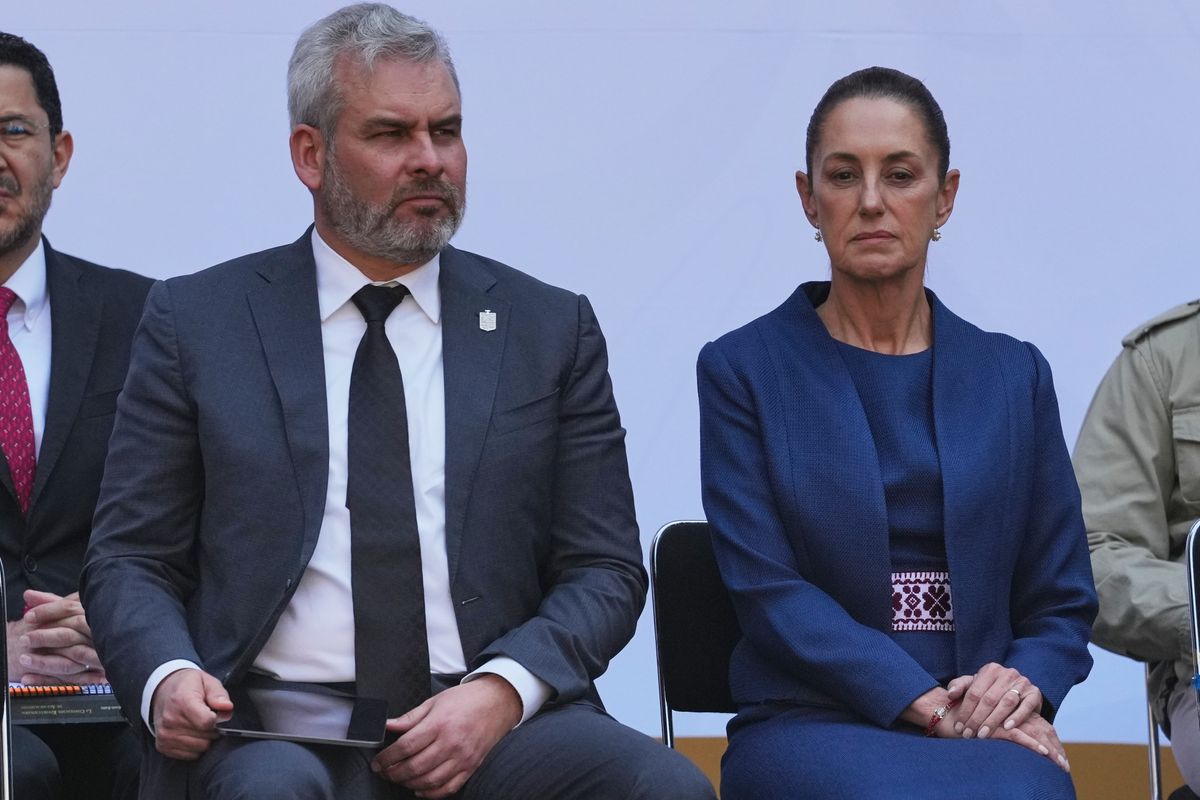
The explosion happened while the state governor, Alfredo Ramírez Bedolla, was participating in a public event with President Claudia Sheinbaum in Mexico City to celebrate seven years of government by the ruling Morena party.
For two decades, various organized crime groups have fought for control of the territory because Michoacán is a gateway for chemical precursors used in the manufacture of synthetic drugs. They also have another lucrative business: extortion.
At least three of the six drug cartels that the Trump administration has designated as terrorist organizations — Jalisco New Generation, United Cartels and The New Michoacan Family — operate in Michoacán, in addition to a slew of homegrown armed splinter groups, some supported by the Sinaloa Cartel.