




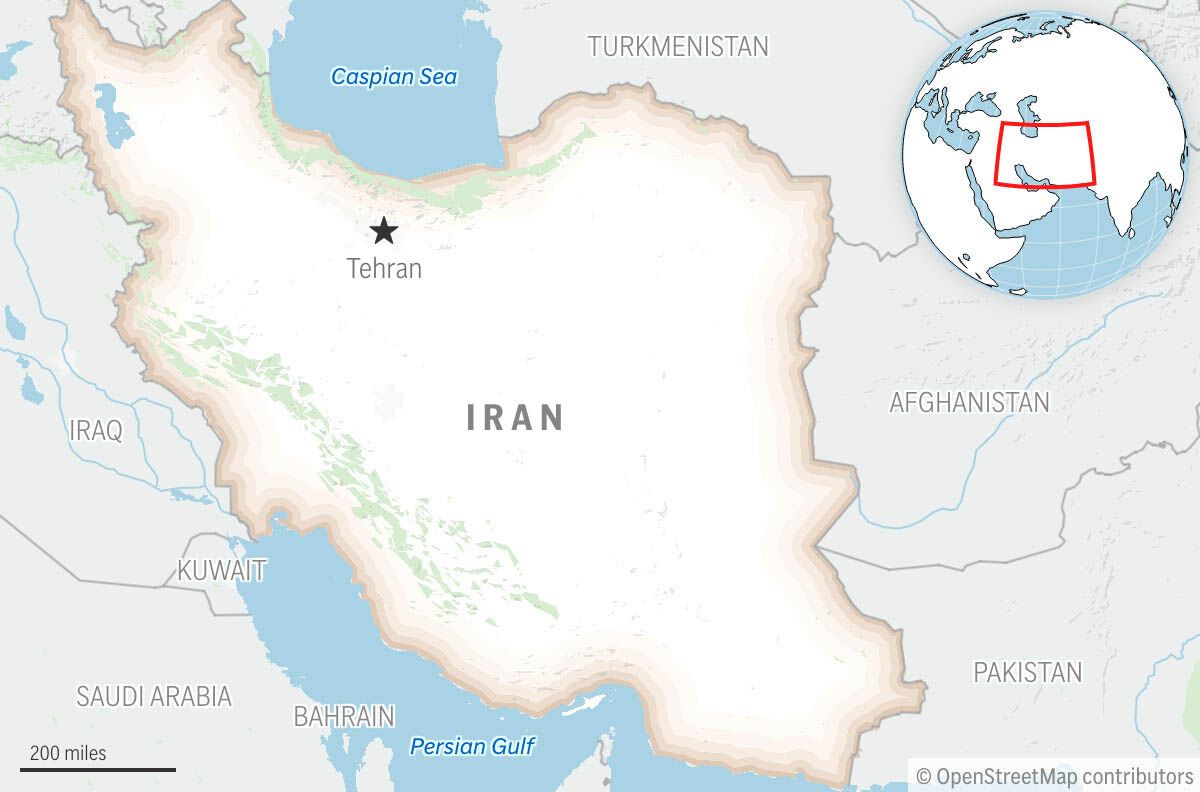
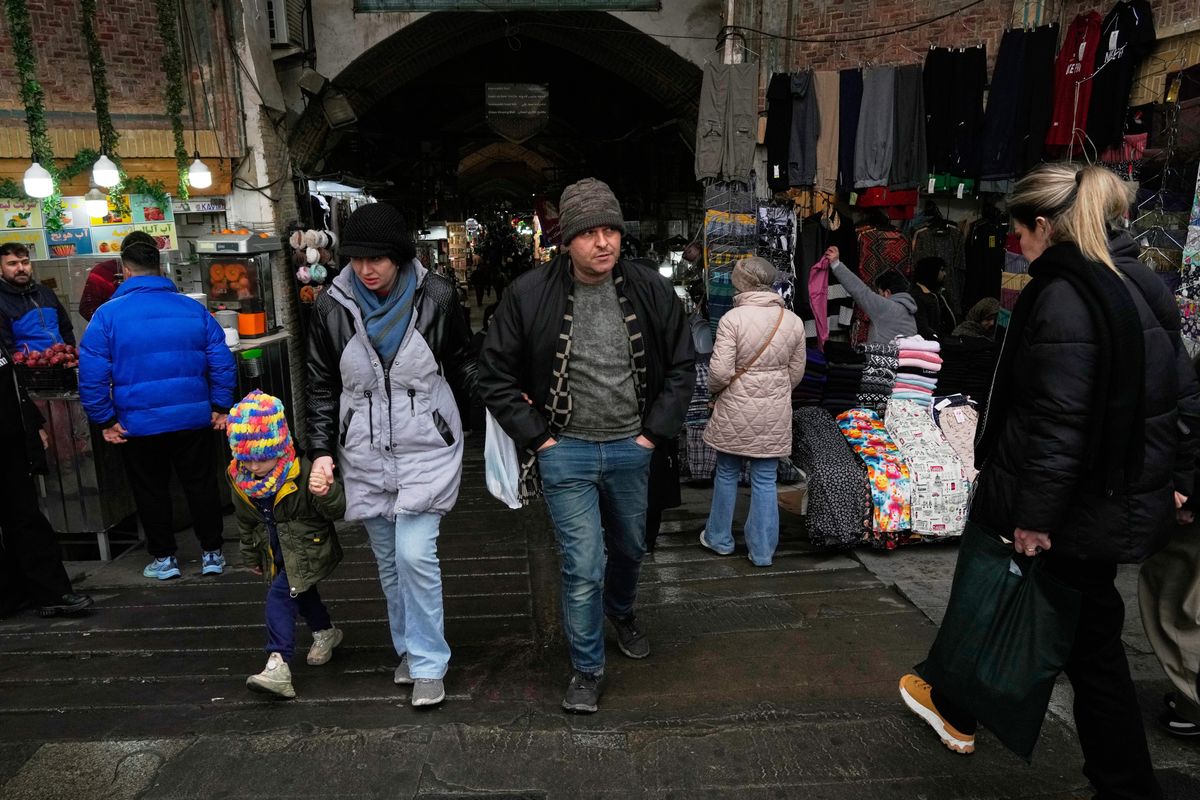
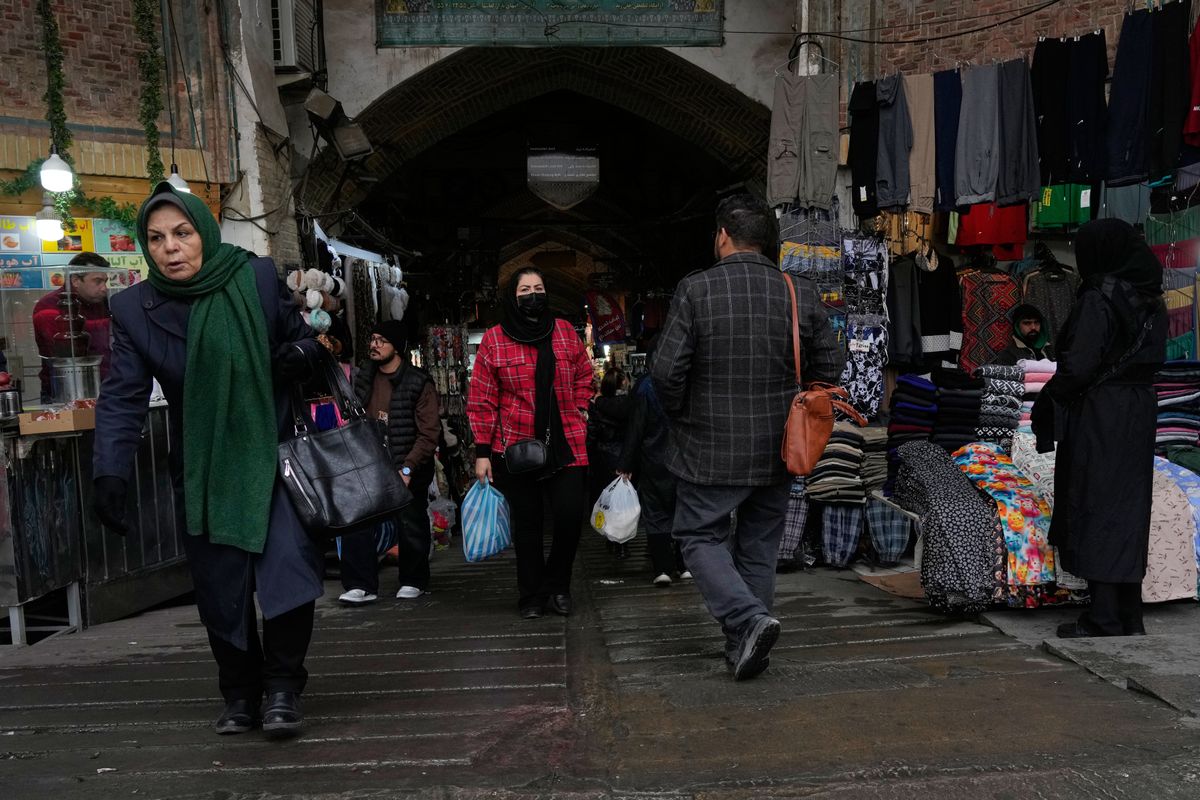
DUBAI, United Arab Emirates (AP) — Iran’s top prosecutor on Friday called U.S. President Donald Trump’s repeated claims that he halted the hangings of 800 detained protesters there “completely false.” Meanwhile, the overall death toll from a bloody crackdown on nationwide demonstrations rose to at least 5,032, activists said.
Activists fear many more are dead. They struggle to confirm information as the most comprehensive internet blackout in Iran’s history has crossed the two-week mark.
Tensions remain high between the United States and Iran as an American aircraft carrier group moves closer to the Middle East, something Trump likened to an “armada” in comments to journalists late Thursday.
Analysts say a military buildup could give Trump the option to carry out strikes, though so far he’s avoided that despite repeated warnings to Tehran. The mass execution of prisoners had been one of his red lines for military force — the other being the killing of peaceful demonstrators.
“While President Trump now appears to have backtracked, likely under pressure from regional leaders and cognizant that airstrikes alone would be insufficient to implode the regime, military assets continue to be moved into the region, indicating kinetic action may still happen,” New York-based think tank the Soufan Center said in an analysis Friday.
Prosecutor denies Trump claim
Trump has repeatedly said Iran halted the execution of 800 people detained in the protests, without elaborating on the source of the claim. On Friday, Iran’s top prosecutor Mohammad Movahedi strongly denied that in comments carried by the judiciary’s Mizan news agency.
“This claim is completely false; no such number exists, nor has the judiciary made any such decision,” Movahedi said.
His remarks suggested Iran’s Foreign Ministry, led by Abbas Araghchi, may have offered that figure to Trump. Araghchi has had a direct line to U.S. envoy Steve Witkoff and conducted multiple rounds of negotiations over Iran’s nuclear program with him.
“We have a separation of powers, the responsibilities of each institution are clearly defined, and we do not, under any circumstances, take instructions from foreign powers,” Movahedi said.
A White House official disputed Movahedi’s assertion later Friday, and reasserted that planned executions were called off as a result of Trump’s warnings. The official, who was not authorized to comment publicly and spoke on condition of anonymity, underscored that Trump was watching the situation in Iran closely and “all options are on the table if the regime executes protesters.”
But the official did not provide any evidence or details backing Trump’s claim.
Iranian judiciary officials have called some of those being held “mohareb” — or “enemies of God.” That charge carries the death penalty. It had been used along with others to carry out mass executions in 1988 that reportedly killed at least 5,000 people.
At a U.N. Human Rights Council special session on Iran held in Geneva Friday, Volker Türk, the U.N.’s high commissioner for human rights, expressed concern over “contradictory statements from the Iranian authorities about whether those detained in connection with the protests may be executed.”
He said Iran “remains among the top executioner states in the world,” with at least 1,500 people reportedly executed last year — a 50% increase over 2024.
Meanwhile, Mohammad Javad Haji Ali Akbari, the Friday prayer leader in Tehran, mocked Trump as a “yellow-faced, yellow-haired and disgraced man” who is “like a dog that only barks.”
“That foolish man has resorted to threatening the nation, especially over what he said about Iran’s leader,” the cleric said in comments aired by Iranian state radio. ”If any harm were to occur, all your interests and bases in the region would become clear and precise targets of Iranian forces.”
Iran’s foreign ministry lashed out at a European Parliament resolution adopted Thursday which slammed “repression and mass murders being perpetrated by the Iranian regime against protesters in Iran.” The resolution called for the release of those detained and urged the European Council to designate Iran’s paramilitary Revolutionary Guard, which was key in putting down the nationwide protests, as a terrorist organization.
The foreign ministry expressed “its strong revulsion at the insulting assertions” of the resolution. In a statement issued Friday, it stressed that “any illegal or interventionist decision or position concerning the armed forces of the Islamic Republic of Iran and the country’s security defenders will be met with reciprocal action by Iran, and responsibility for the consequences will rest with those who initiate such actions.”
Death toll rises
The latest death toll was given by the U.S.-based Human Rights Activists News Agency, which reported that more than 4,700 of the dead were demonstrators. It added that more than 27,600 people had been detained.
The group’s figures have been accurate in previous unrest and rely on a network of activists in Iran to verify deaths. That death toll exceeds that of any other round of protest or unrest there in decades, and recalls the chaos surrounding Iran’s 1979 Islamic Revolution.
Iran’s government offered its first death toll Wednesday, saying 3,117 people were killed. It added that 2,427 of the dead in the demonstrations that began Dec. 28 were civilians and security forces, with the rest being “terrorists.” In the past, Iran’s theocracy has undercounted or not reported fatalities from unrest.
The Associated Press has been unable to independently assess the death toll, in part because of authorities cutting access to the internet and blocking international calls into the country.
US warships on the move
The American military meanwhile has moved more military assets toward the Mideast, including the aircraft carrier USS Abraham Lincoln and associated warships traveling with it from the South China Sea.
A U.S. Navy official, who spoke on condition of anonymity to discuss military movements, said Thursday the Lincoln strike group is in the Indian Ocean.
Trump said Thursday aboard Air Force One that the U.S. is moving the ships toward Iran “just in case” he wants to take action.
“We have a massive fleet heading in that direction and maybe we won’t have to use it,” Trump said.
Trump also mentioned the multiple rounds of talks American officials had with Iran over its nuclear program prior to Israel launching a 12-day war against the Islamic Republic in June, which saw U.S. warplanes bomb Iranian nuclear sites. He threatened Iran with military action that would make earlier U.S. strikes against its uranium enrichment sites “look like peanuts.”
“They should have made a deal before we hit them,” Trump said.
The U.K. Defense Ministry separately said its joint Eurofighter Typhoon fighter jet squadron with Qatar, 12 Squadron, “deployed to the (Persian) Gulf for defensive purposes noting regional tensions.”
___
Konstantin Toropin and Aamer Madhani in Washington, Geir Moulson in Berlin and Elena Becatoros in Dubai contributed to this report.
By JON GAMBRELL
Associated Press