




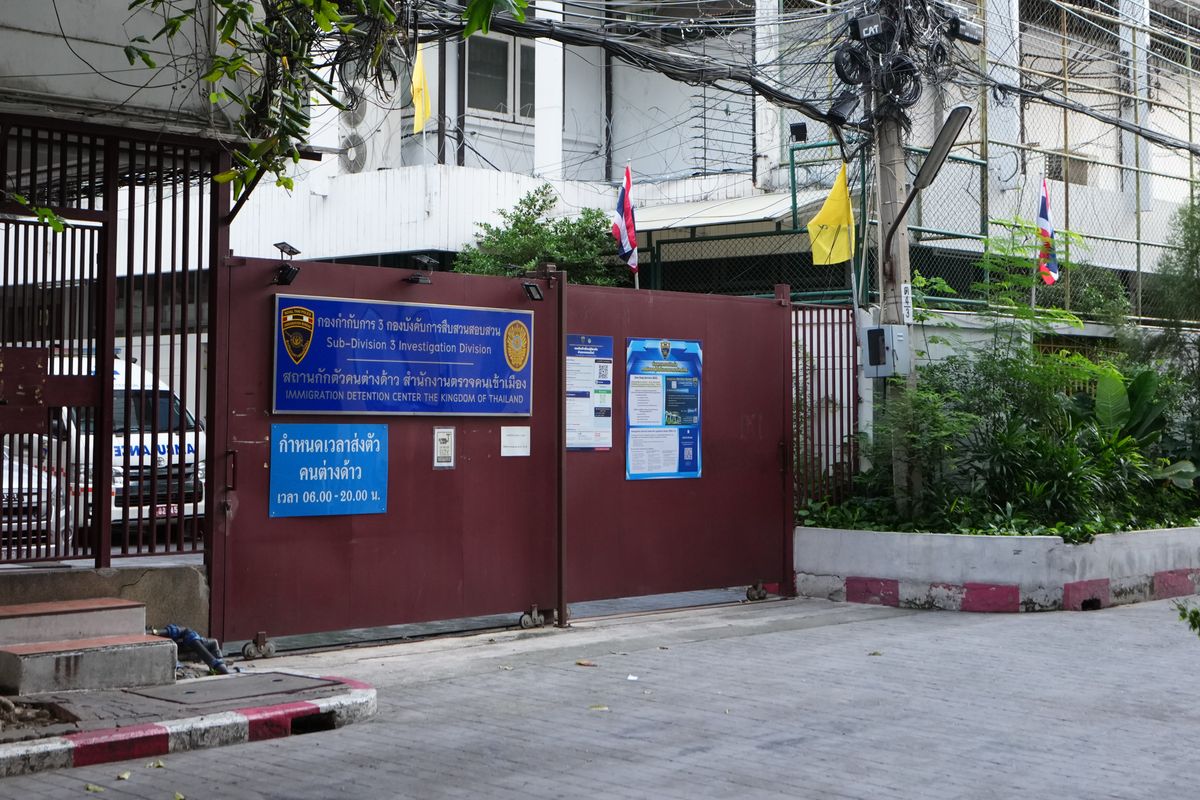
BANGKOK (AP) — Two Uyghur men held in Thailand for more than a decade are pleading to not be sent back to China, fearing abuse or torture.
Human rights activists and some Thai politicians warn the men could be sent to China following their release from prison in late October.
Uyghurs are a Turkic, majority Muslim ethnic group native to Xinjiang in China’s northwest. After decades of conflict with Beijing over discrimination and suppression of their cultural identity, the Chinese government launched a brutal crackdown on them that some Western governments have called a genocide.
The two men were among more than 300 Uyghurs fleeing China detained by Thai authorities in 2014 near the Malaysian border. China has consistently pushed for their return, saying they were terrorists.
The two men, ages 26 and 35, told the Office of the National Human Rights Commission on Wednesday that they do not want to be sent back to China, according to a source with direct knowledge of the meeting who requested anonymity for fear of retribution. They made the same plea in a letter published last week.
In response to the concerns, Thailand said Wednesday that China must make a formal extradition request if it wants the two Uyghur men returned.
National Security Council chief Chaipruak Doungprapat said the courts would decide on whether to deport the two, unlike the case of 40 Uyghur men sent back to China last year, and that the men would be able to defend themselves. A ruling in their favor could allow them to resettle in another country.
“But if the court rules against them, they will be extradited according to the treaty. This is the judicial process,” he said.
China’s Ministry of Foreign Affairs spokesperson Mao Ning didn’t comment on whether China had sent an extradition request.
“China and Thailand’s cooperation in combating cross-border crimes, including illegal immigration, is in accordance with the laws of both countries, as well as international law and international practice,” Mao said Wednesday.
Men wrote letters asking not to be sent back
Of the group of more than 300 Uyghurs detained over a decade ago, Thailand sent mostly women and children from the group to Turkey. In 2015, Thailand deported 109 to China against their will, prompting an international outcry. The Thai embassy in Turkey was ransacked in protest.
In February 2025, Thailand sent back another 40 despite pleas from the men themselves, Thai lawmakers and U.N. officials not to.
Today that fear is front and center for the two men.
“Every time we are worrying from China to take back us,” one of the Uyghur men wrote in English in the letter shared by Kannavee Suebsang, a former lawmaker and founder of the Peace Rights Foundation, a human rights group that represents them. “We aren’t terrorist,” he wrote.
Sasinan Thamnithinan, a lawmaker from the opposition People’s Party, said Thailand is obligated by both domestic and international law to ensure that no individual is returned to a country where they could face torture or inhumane treatment.
“Maintaining international relations is important, but it must not take precedence over human rights and the rule of law. No one should be sent back to face danger simply because the government wants to end a problem,” Sasinan said in a statement Tuesday.
The fate of the 40 Uyghurs returned to China is unknown
Up until the very last moments before the previous group was deported, the Thai government denied they would be sending the men to China.
The Thai government said the men had signed forms in Chinese to return voluntarily. China then took select Thai media groups on an official tour, but they did not have independent access to speak to the individuals who were returned.
Thailand’s Office of the National Human Rights Commission said last year that Thai officials involved failed to provide evidence that the men consented to be sent back or an assurance of the group’s safety upon their return.
“The assertion that the Uyghurs returned voluntarily remains a one-sided claim … despite reports assessing human rights concerns in the Xinjiang Uyghur Autonomous Region, which document instances of torture and cruel treatment against the Uyghur population,” the office said in a statement.
Kannavee said he made official attempts while still in office to determine what happened to the 40 men, but received no reply. He said Thailand’s Ministry of Foreign Affairs and others also attempted to follow up. The ministry declined to comment.
By HUIZHONG WU and JINTAMAS SAKSORNCHAI
Associated Press