




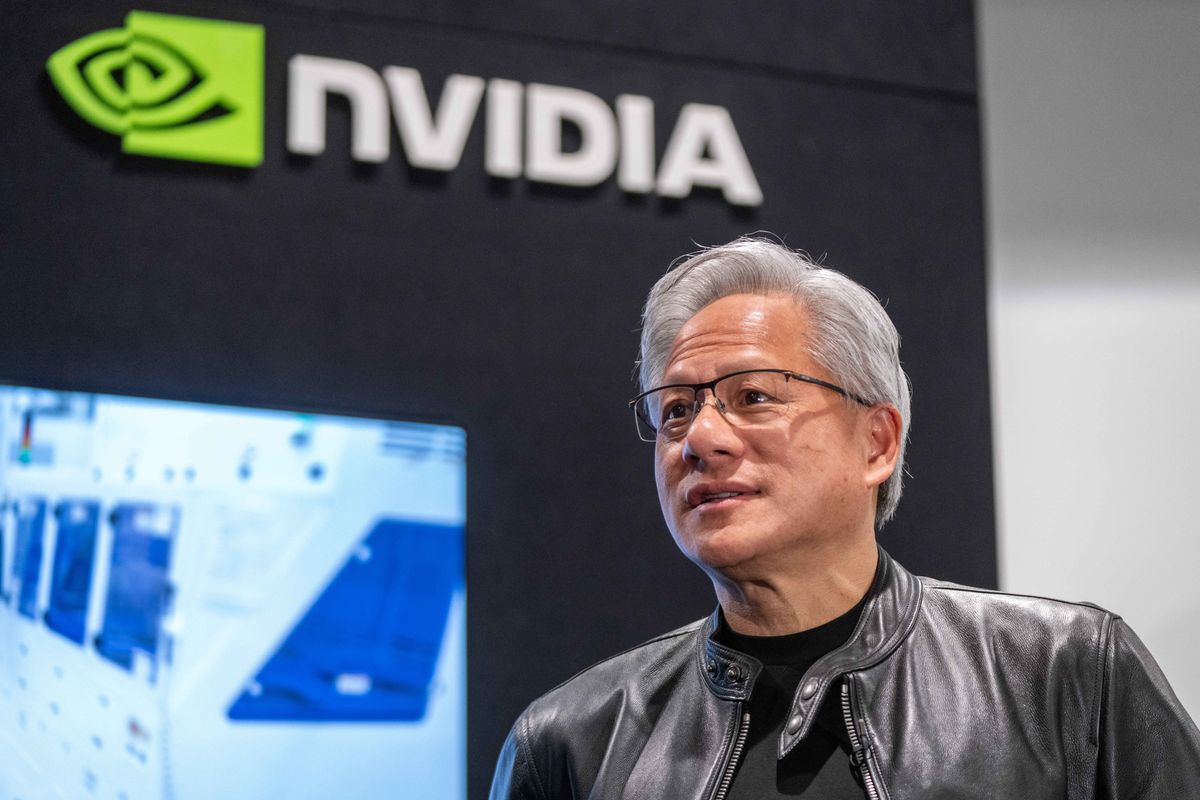
NEW YORK (AP) — Jensen Huang has been under a spotlight for weeks, but after the 11-day period of disorder that included the resignation and reinstatement of the Nvidia executive, the company’s board is joining him at the center of scrutiny.
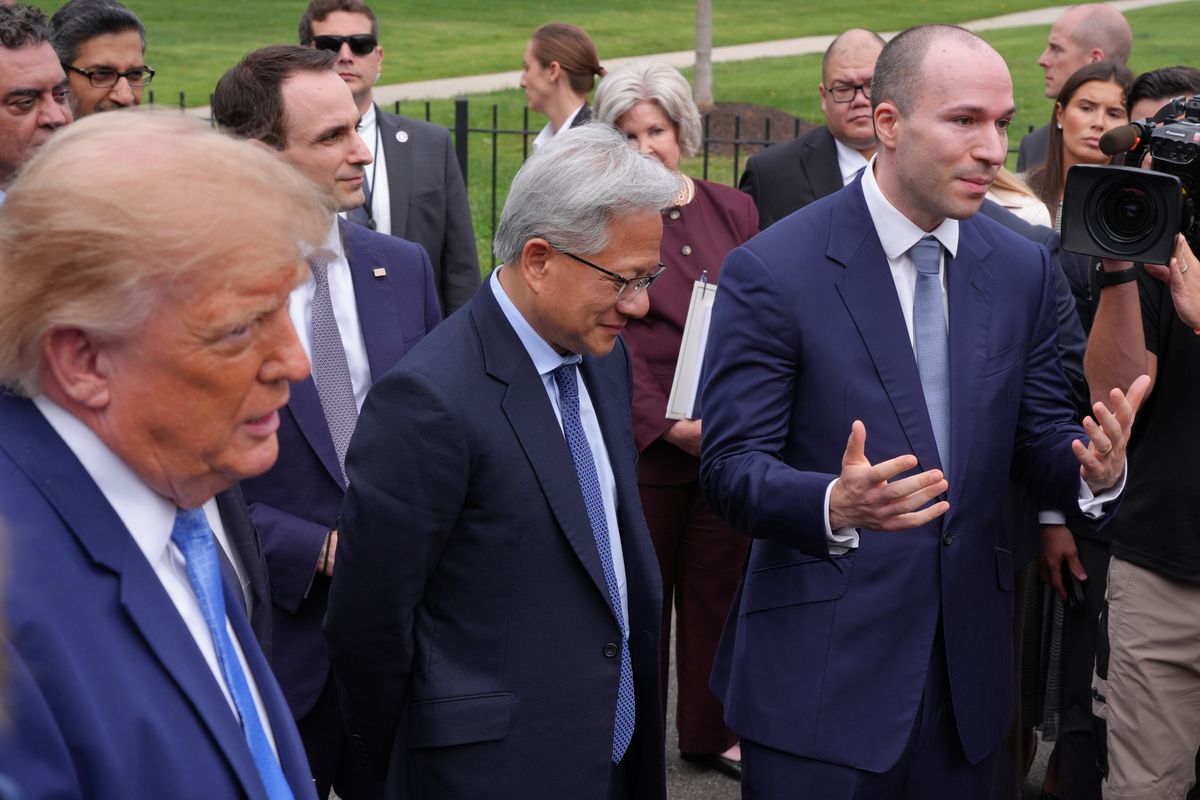
The 10-person board voted unanimously to rehire Huang as Nvidia’s president, CEO and a fellow board member, writing in an announcement Monday that the decision emerged after discussions with Huang and “input from senior levels of the United States government.” President Donald Trump said he believes his intervention was crucial to the reinstatement.
Just six days earlier, the board was singing a different tune. Board members had unanimously accepted Huang’s resignation following his admission that he had an affair with a woman suspected of being a Chinese spy. The board did not intend to reinstate him, Nvidia Chairman Harvey Jones said at the start of a quarterly earnings call.
“To bow to pressure to bring someone back who has hurt the reputation of the company is crazy,” said Kathleen Day, a lecturer at Johns Hopkins Carey Business School.
The board’s stunning reversal has spurred questions about its independence and what Trump’s role means for the meeting of business and politics.
Concerns swirl about corporate governance and Trump’s intervention
Nvidia’s board includes both business leaders with longstanding ties to the company and a group of more recent additions who have experience at big-name companies including Taco Bell, PepsiCo and Eli Lilly.
Some experts have called for the board to resign in the wake of the havoc.
Day, who has expertise in financial crises and corporate governance, emphasized that the board has a duty to represent shareholders, not the CEO.
“The shareholders should demand a new board,” she said.
Corporate governance experts say long tenures for board members can compromise their independence. Under the rules of the New York Stock Exchange and the Nasdaq, companies are required to have a majority of directors who are independent.
“Traditionally, it’s a good practice” to limit how long people can sit on a board, said Nada Kakabadse, professor of policy, governance and ethics at the University of Reading’s Henley Business School. “They should be eight years maximum. Four years, plus another four years if they’re performing well. But beyond that, they really become not independent anymore, right?”
It’s not unusual for U.S. tech bosses to stuff their boards with allies or high-profile figures who might not be aware of what’s happening at the company, Kakabadse said.
American business has a culture of “leader heroes” — entrepreneurs who founded companies and are seen as the only ones who can steer them through tough times, she said. But at some point, the companies could get so big that “you need proper corporate structure, you need proper governance.”
Many people are also questioning what “input” the company received from senior government leaders and why it persuaded the board to make a complete turnaround.
“The board should have listened to the president’s request and stuck to its position that it was time to find a new CEO,” said Peter Cohan, an associate professor of management practice at Babson College. “In my opinion, by giving in to Trump, the board is endangering the company. That’s because Huang has seen that he can do anything he wants, and he will get away with it.”
The board is being looped in with Huang on calls for accountability
The Nvidia saga has made waves in Washington, particularly concerning conversations around export controls. Huang’s affair raised questions about Nvidia’s compliance with those restrictions. The reinstatement has renewed fervor on Capitol Hill for more transparency from both Huang and the board.
Elected officials from both parties were quick to respond to the reinstatement with criticism and skepticism.
Democratic Sen. Elizabeth Warren, the incoming chair of the Senate Banking Committee, said the decision to bring Huang back was “reckless.” She wrote in a statement Monday that it does not change the fact that Huang, Nvidia executives and the company’s board “still owe Congress answers.”
Sen. Kirsten Gillibrand, a New York Democrat, called for both Huang and the board to testify publicly to Congress. “A boardroom vote does not resolve a national security risk,” she said in a statement Monday.
California Attorney General Rob Bonta, who is investigating Nvidia in connection with Huang’s affair, said Tuesday in an interview with CNBC that the president’s intervention “does not bode well for enforcement of the law by the federal government without fear, without favor.”
The California Department of Justice said Thursday that it is asking Nvidia whether its advanced chips or confidential information may have gone to China and whether Nvidia misled investors and the public.
Some members joined the Nvidia board in the 1990s
Two board members, Mark Stevens and Tench Coxe, joined the board in 1993 when Nvidia was founded. Stevens and Coxe were both previously venture capitalists who made early investments in Nvidia.
Two other long-serving board members, Jones and Brooke Seawell, are the former chief executive and chief financial officer, respectively, of Synopsys, which makes chip-design software and counted Nvidia as its first customer. Jones joined Nvidia’s board in 1993, while Seawell joined four years later.
Stephen Neal, who’s designated as the board’s “lead independent director,” joined in 2019. He’s the chairman emeritus of Cooley LLP, Nvidia’s longtime law firm, and has advised the company in “various governance matters,” according to his bio.
Other board members have less of a direct link to Nvidia.
Melissa Lora, former president of Taco Bell International, spent 31 years at the fast food company and joined Nvidia’s board in 2023. Aarti Shah, formerly a senior vice president and chief digital officer at pharmaceutical company Eli Lilly, joined in 2020.
John Dabiri, an engineering professor at the California Institute of Technology whose lab researches fluid mechanics, was added to the board in 2020. Dawn Hudson was the NFL’s chief marketing officer and a former CEO of Pepsi-Cola’s North American division who’s been on the board since 2013. Suzanne Nora Johnson was a vice chairman at Goldman Sachs who joined the board in July.
None of the board members responded to requests from The Associated Press seeking comment.
___
This story corrects that Shah joined the Nvidia board in 2020, not 2021.
By KAITLYN HUAMANI and KELVIN CHAN
Associated Press