




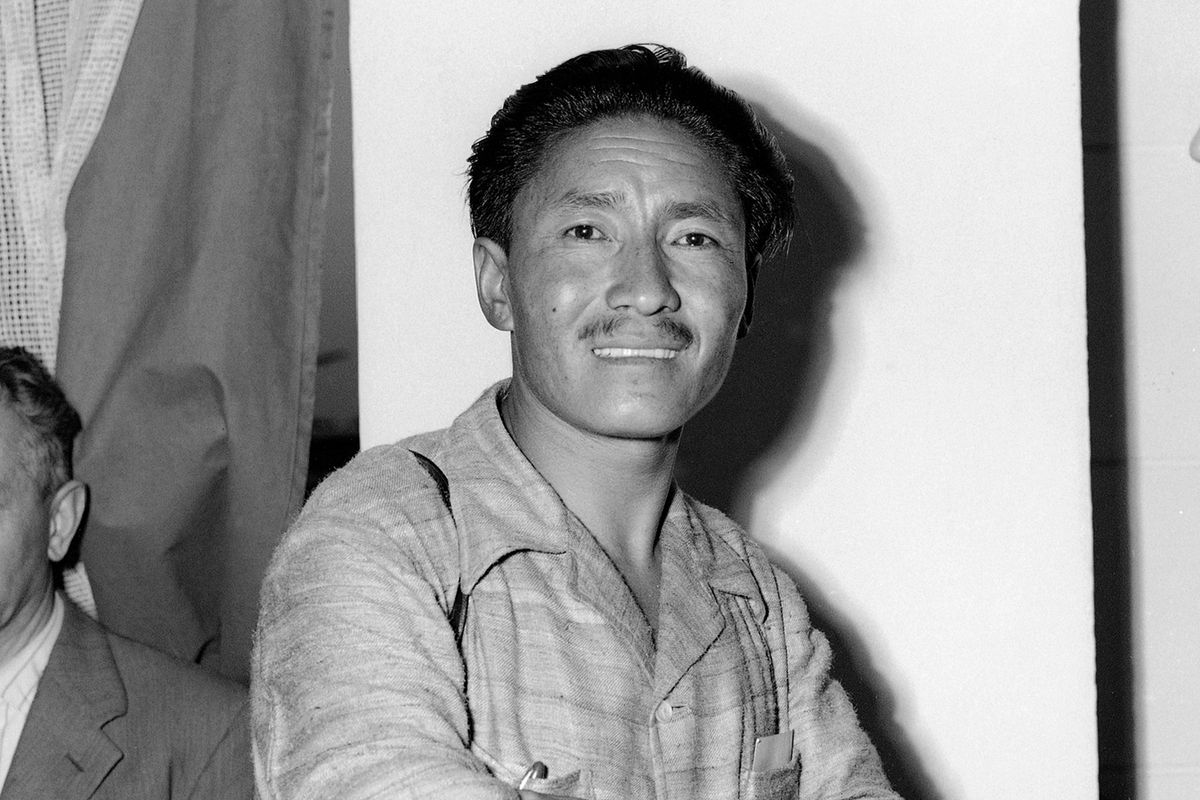


TORONTO (AP) — The first image ever taken of a human being standing atop Mount Everest was of Tenzing Norgay.
When he and Edmund Hillary reached the summit of the world’s highest mountain on May 29, 1953, one of the first things Hillary did was take out his camera and aim it at his fellow climber, the Sherpa Norgay, as he waved an ice ax tied with flags for Britain, India, Nepal and the United Nations.
Since that moment, camera lenses have seldom been pointed at Norgay, or the many Sherpa who have followed in his history-making footsteps. But the new Apple Studios film “Tenzing,” directed by Jennifer Peedom, puts Norgay back in the center of the frame, telling the life story of the Nepalese-Indian Sherpa mountaineer.
“Tenzing’s story is the ultimate underdog heroic story but had been pushed to the margins,” Peedom says. “Everest occupied such a large part of our imaginations. It’s become this icon of human achievement, yet the story of one of the first men to climb to the summit was largely unknown.”
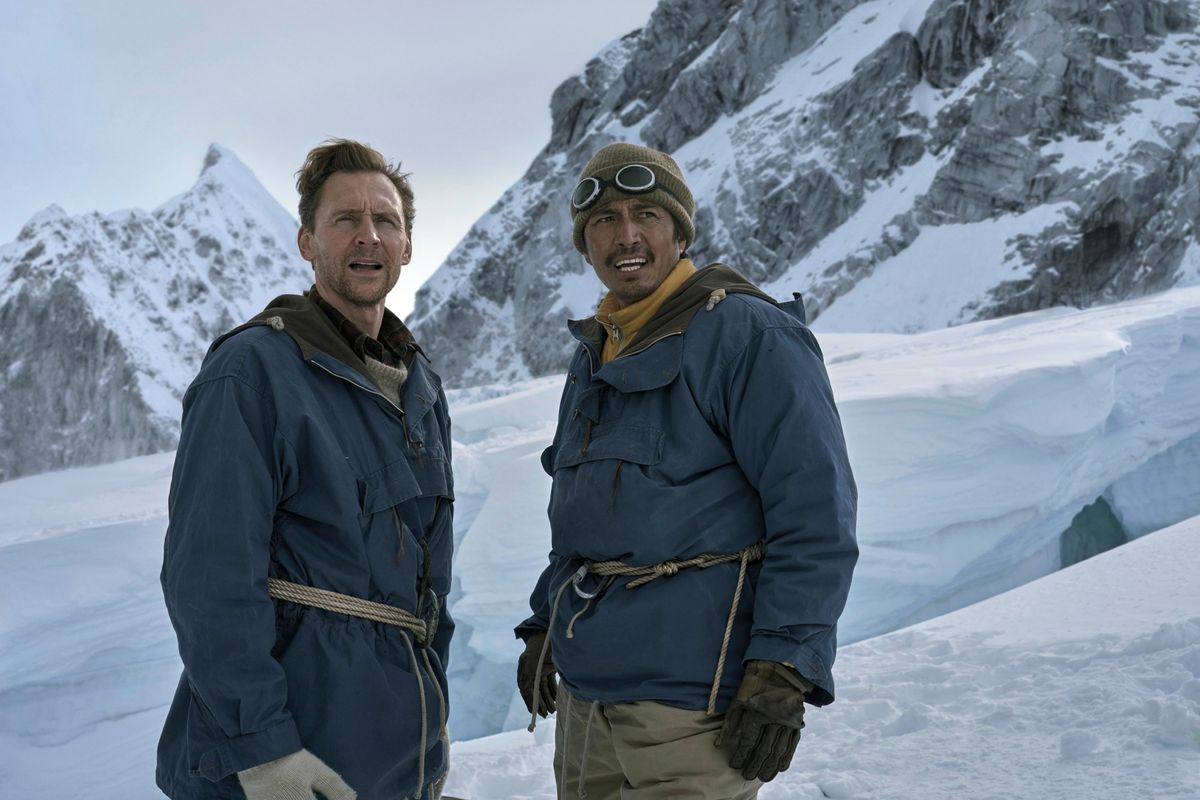
“Tenzing,” which opens Friday in theaters before streaming Oct. 16 on Apple TV, chronicles Norgay’s path leading up to Everest and the daring ascent that he and Hillary (played by Tom Hiddleston) made in 1953. Both were outsiders — Norgay was born in Tibet before moving to the Khumbu region of Nepal — in a British expedition led by Col. John Hunt (Willem Dafoe).
The film is a rousing mountain adventure and biopic but one made with uncommon authenticity. Tenzing’s son Norbu Tenzing is an executive producer. Cultural consultants Dr. Lhakpa Norbu Sherpa and Dr. Nima Namgyal Sherpa were leaned on. Most of the Sherpas portrayed in the film are played by real mountaineering Tibetan people.
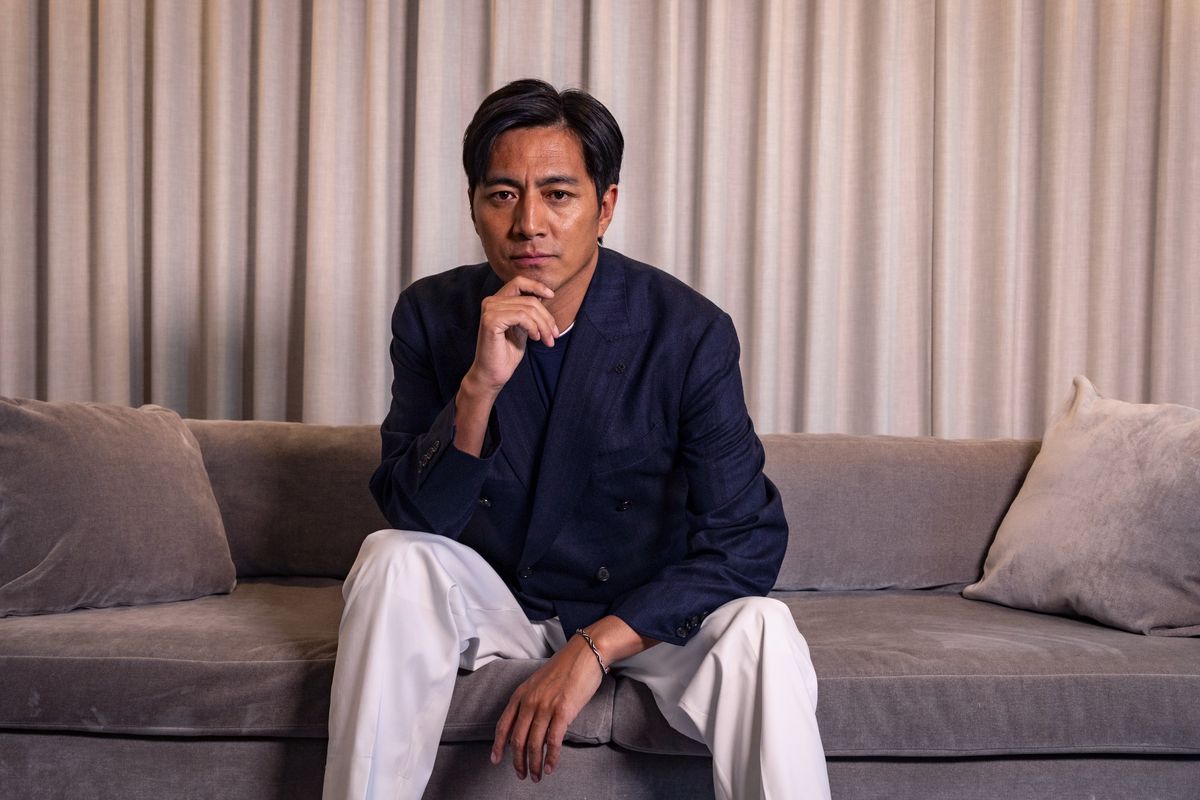
And Norgay, a role shared across time frames, is principally played by Genden Phuntsok, a Chinese actor of Tibetan descent. Phuntsok had appeared in two acclaimed films by the Tibetan filmmaker Pema Tseden. But “Tenzing” is his first Hollywood film. To prepare for the role, he lived for 10 days with Phurba Tashi Sherpa, the subject of Peedom’s 2015 documentary “Sherpa.”
“From the top of the hill outside his village, you can see the top of Everest,” Phuntsok says. “All the people in the village were really kind to me. For them, Tenzing Norgay is their hero.”
Hiddleston’s Hillary takes a supporting role
Hiddleston plays Hillary, the New Zealand climber, with the kind of dashing charisma that many Hollywood productions would have put front and center. Instead, “Tenzing,” about an international expedition, itself became an operation of multiculturalism. At the center is the friendship between Norgay and Hillary, a relationship forged on the southeast ridge of Everest and that continued after their ascent.
For Phuntsok and Hiddleston, making “Tenzing” was likewise a partnership.
“Genden and I saw Everest with our own eyes for the first time at the same time,” Hiddleston says. “Jennifer’s insistence and inspiration was for us to trek as far as we could toward base camp when we started.”
For Peedom, the terrain was familiar. The Australian filmmaker has spent much of her career as a documentarian shedding light on the Sherpa, including “Sherpa,” about the avalanche in the Khumbu Icefall that killed 16 Nepali mountain workers. To her, it was surprising that more documentarians hadn’t focused on Sherpa stories before her.
“Being a young camera operator, I’d notice the extent to which the Sherpa were written out of the story or would end up on the cutting room floor,” Peedom says.
“Tenzing” crucially reorients the ascent of Everest as less a conquering of nature than a spiritual quest. The historic Tibetan name for the mountain is Chomolungma, and, for Norgay, climbing it was a religious experience. For Phuntsok, it was similar.
“In my culture, this is a holy mountain,” Phuntsok says. “The first time you see it, it looks small because it’s very far away. I thought, ‘My god, Tenzing summited that.’”
Hiddleston believes Norgay’s legacy is not just his feat of mountaineering but this regard for nature as something to pay homage to, not conquer.
“We can learn a huge amount from the spiritual attitude toward the mountains as presented in this film, especially by Tenzing,” Hiddleston says. “The respect for the mountains by Tenzing and the Sherpas is the respect afforded to a goddess, to a divine presence of magnificence and power in front of which you feel only humility and awe.”
“I hope the film stands as a testament to the beauty of Nepal and the beauty of the culture there, and reminds us of our delicate balance with nature,” he adds.
‘Tenzing’ opens in the wake of tragedy in Nepal
That balance was tragically felt in August when a deadly flood tore through a Himalayan river valley in Nepal. The destruction, in which at least 1,400 people were killed, was set off by a 2,000-foot-wide (609.6-meter-wide) chunk of ice that broke off a mountain glacier due to the effects of climate change.
Last month, Nepali Prime Minister Balendra Shah addressed the U.N. General Assembly, noting that Nepal, where electricity is overwhelmingly generated from hydropower, has contributed less than one-tenth of 1% of the heat-trapping gases behind climate change. He called it “not just a local tragedy, but a warning to the world.”
As Peedom has screened “Tenzing” at fall festivals, she has reminded viewers of the tragedy in Nepal, and the possibility of more like it to come.
“Those mountains are starting to crumble,” Peedom says. “There are 15,000 glaciers alone in Nepal, 1,500 of them have glacier lakes in front of them. When those things collapse, there’s going to be more and more of these catastrophes.”
Meanwhile, record numbers of climbers ascend Everest. After China closed the ascent route from Tibet, numbers swelled on the Nepal side. Kami Rita Sherpa, a renowned guide who has summited the mountain more than 30 times, urged authorities to limit the endless stream of climbers on Everest. In May, a record 274 climbers reached the summit in a single day.
By JAKE COYLE
AP Film Writer