




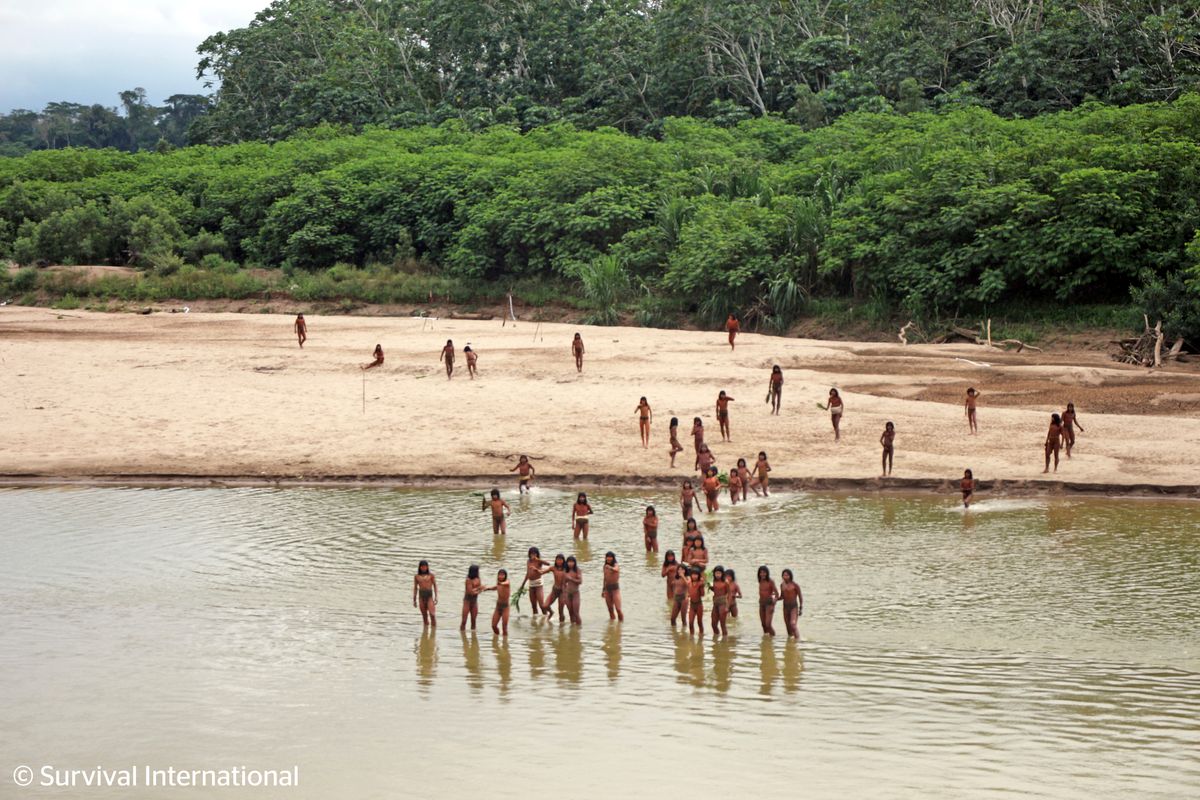
MEXICO CITY (AP) — Indigenous leaders in Peru are warning that a government decision to reconsider protections for one of the world’s largest uncontacted Indigenous groups could expose more of their Amazon rainforest territory to logging, raising fears of violent encounters and the spread of life-threatening diseases.
The Mashco Piro, who live deep in the forests of southeastern Peru and avoid contact with outsiders to preserve their traditional way of life, have increasingly been spotted near encroaching logging concessions in recent years, highlighting growing pressure on their ancestral lands.
Eusebio Rios Iviche, vice president of the Indigenous organization FENAMAD, told The Associated Press on Monday the decision threatens to reverse years of efforts to protect the Mashco Piro, exposing them to greater risks of encounters with outsiders and diseases to which they have little immunity.
The controversy centers on a 2016 government study that recommended expanding the Madre de Dios Territorial Reserve, a protected area established in 2002 for the Mashco Piro and other Indigenous peoples living in isolation.
A government commission responsible for protecting isolated Indigenous peoples decided last week to revisit that study rather than proceed with the proposed expansion, according to Indigenous organizations and the advocacy group Survival International.
The move has raised concerns that logging concessions overlapping with the proposed expansion could continue operating in areas Indigenous organizations say are essential to the Mashco Piro’s survival.
Peru’s Ministry of Culture, which oversees protections for Indigenous peoples living in isolation, did not respond to a request for comment by the time of publication.
Ramon Rivero, who headed the Peruvian government office responsible for protecting isolated Indigenous peoples in 2014, questioned the decision, saying authorities should complete the reserve’s expansion rather than revisit studies already approved. He said the government should also consider compensation for logging companies whose concessions could be affected.
Growing pressure on isolated communities
Images released by Survival International in 2024 showed dozens of Mashco Piro people near logging concessions in Madre de Dios, a region bordering Brazil and Bolivia.
That same year, violent encounters involving the Mashco Piro and loggers left at least two loggers dead. It remains unclear whether any Mashco Piro were killed or injured.
Following the confrontations, the Forest Stewardship Council, an international organization that certifies responsibly managed forests, suspended certification for Maderera Canales Tahuamanu, a logging company operating in the area. The certification was withdrawn permanently in 2025.
Survival International says logging has continued in the region despite the loss of certification.
Caroline Pearce, the organization’s executive director, condemned the government’s decision, saying it effectively put the Mashco Piro’s territory up for sale and prioritized commercial interests over Indigenous lives.
The dispute comes as Peru faces increasing scrutiny over its protection of Indigenous peoples in isolation.
In September, FENAMAD and the environmental legal organization EarthRights International brought a case before the Inter-American Court of Human Rights, accusing Peru of failing to protect the Mashco Piro’s ancestral territory and their right to remain isolated.
Rios Iviche urged the government to honor the 2016 agreement, expand the reserve and remove overlapping logging concessions.
“The lives and survival of the Mashco Piro people must not come second to economic interests,” he said.
___
The Associated Press’ climate and environmental coverage receives financial support from multiple private foundations. AP is solely responsible for all content. Find AP’s standards for working with philanthropies, a list of supporters and funded coverage areas at AP.org.
By STEVEN GRATTAN
Associated Press