




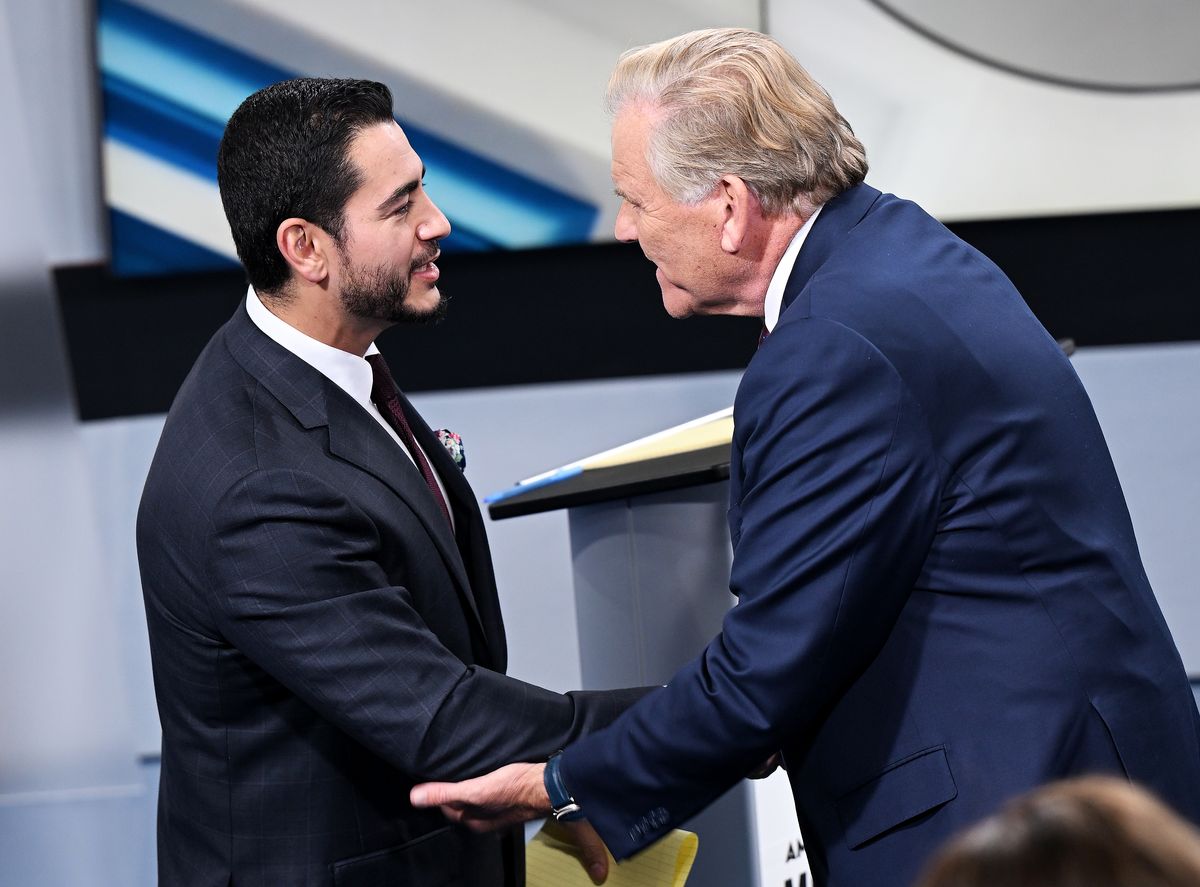
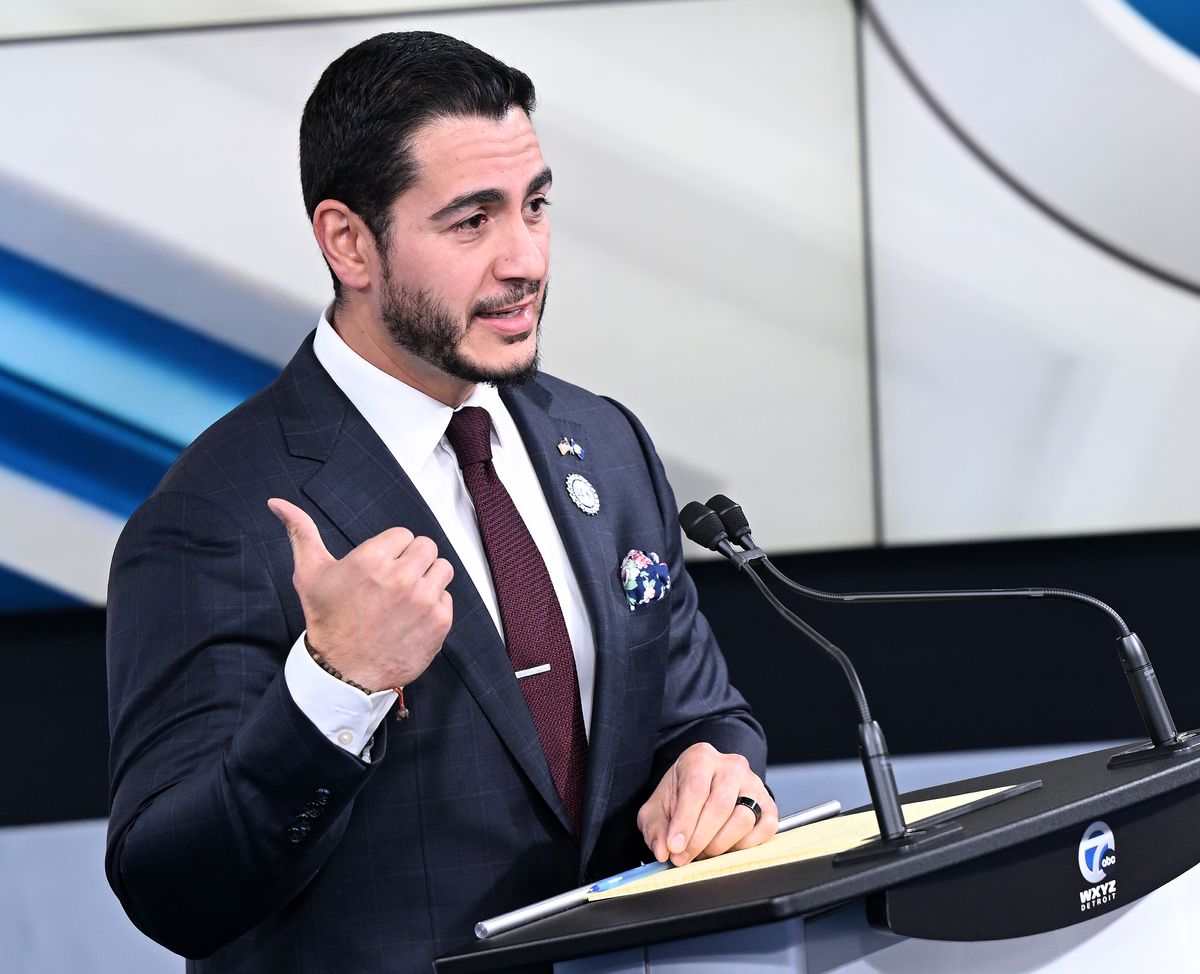
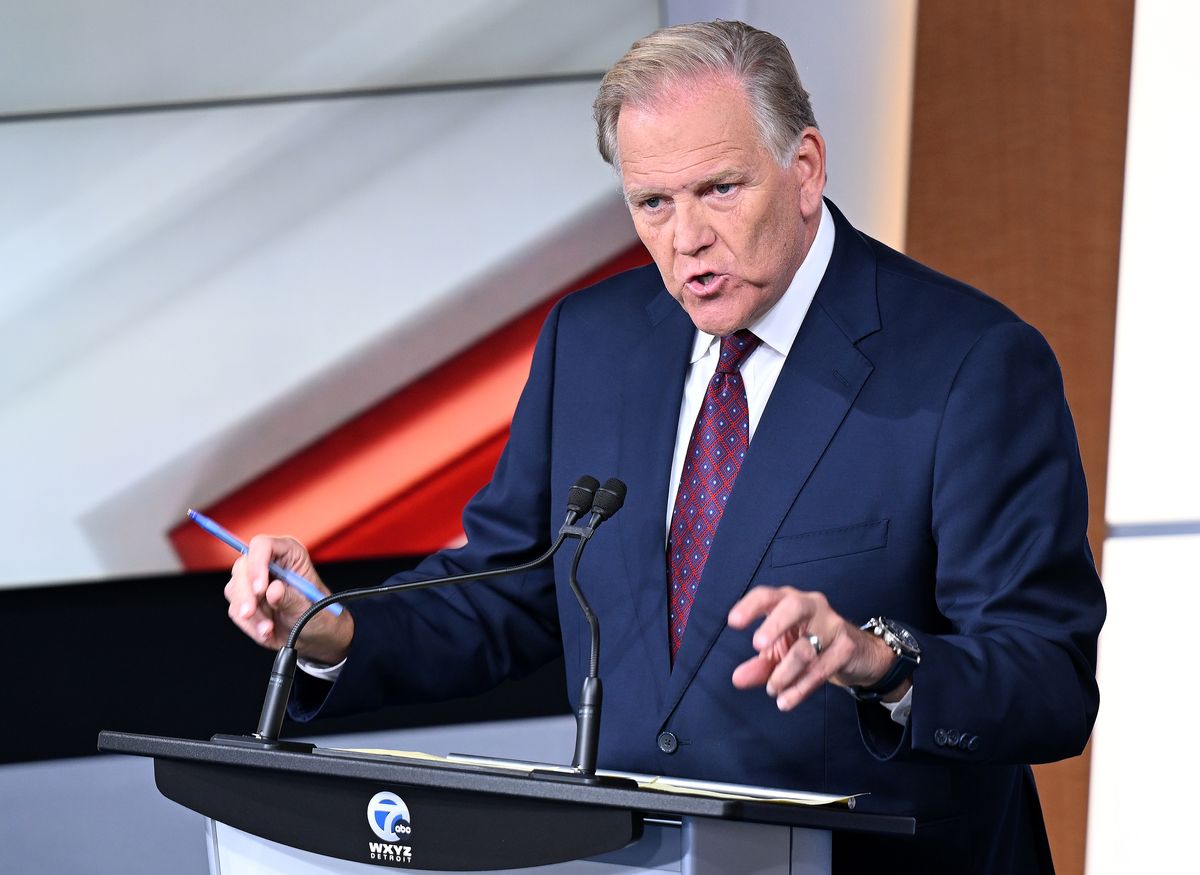
WASHINGTON (AP) — Democrat Abdul El-Sayed and Republican Mike Rogers clashed in their final Senate debate Wednesday, with El-Sayed trying to tie his opponent to President Donald Trump and Rogers saying his rival’s progressive policies would be too extreme for Michigan.
The debate kicked off a breakneck final stretch in one of the nation’s most closely watched and competitive Senate races. Former President Barack Obama will rally in Detroit on Saturday, followed by Trump on Sunday.
Wednesday’s hourlong debate followed one on Oct. 8 that devolved into personal insults and attacks, with the candidates continuing to argue even during a commercial break. This time, the exchanges were slightly less contentious and focused on policy, though both candidates repeatedly returned to their central attacks.
“Those playing MAGA bingo at home, you just heard like three of the buzzwords,” El-Sayed said after Rogers criticized his policies. Rogers later shot back: “The bingo game ought to be how many times can he put the word Trump in any answer.”
The most contentious exchange came when Rogers again tried to link El-Sayed to the Muslim Brotherhood, repeating an allegation he and Trump have raised in recent weeks. El-Sayed has denied any affiliation with the group.
“If you are going to go to the United States Senate, we need to know: Are you for America, or are you for these terrorist groups overseas?” Rogers said.
El-Sayed, who would be the country’s first Muslim senator, called Rogers’ questioning of his commitment to the Constitution “shameful.”
“I’m proud to be an American,” El-Sayed said. “I’m proud of our Constitution that guarantees all of us the right to pray as we choose to pray.”
Rogers offered qualified criticism of Trump’s tariffs, calling them a “mixed bag” and questioning those imposed on Canada because of the close ties between the two countries’ auto industries. But he also praised Trump’s immigration enforcement and defended the threat posed by Iran, while El-Sayed blamed the president’s war there for higher gas and grocery prices.
By JOEY CAPPELLETTI
Associated Press