




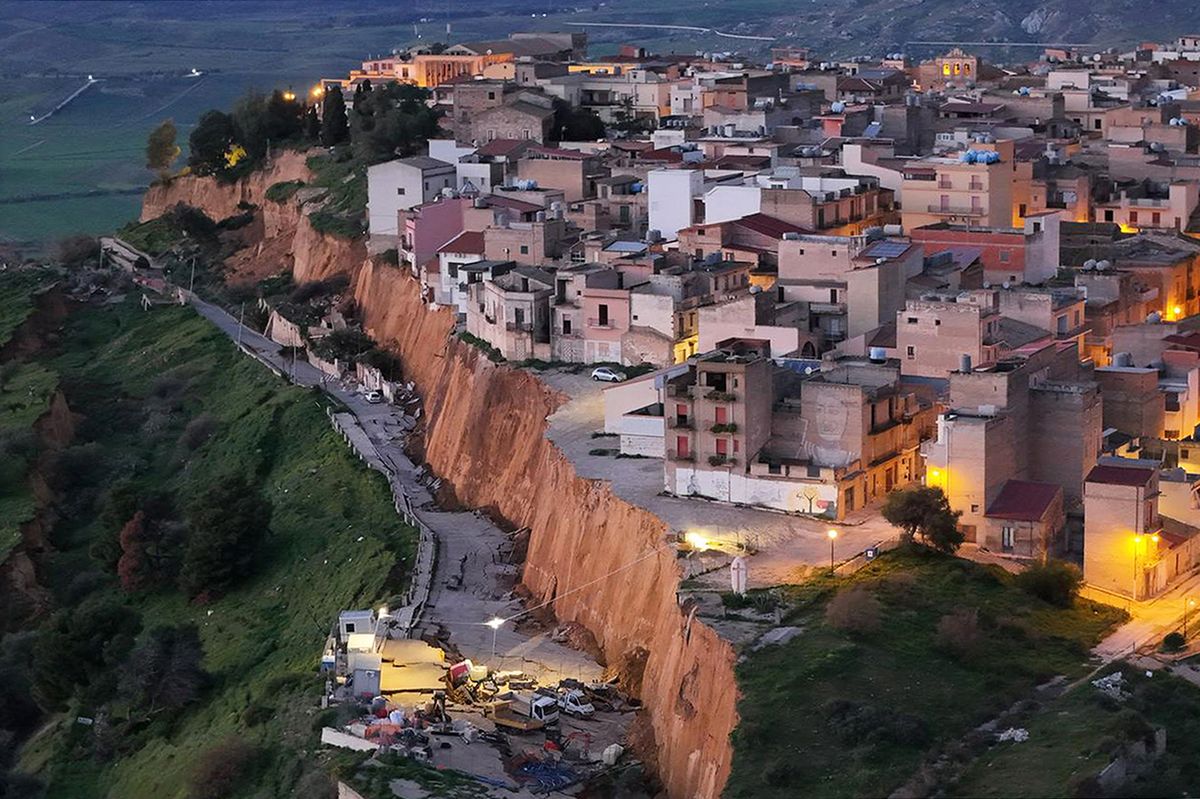
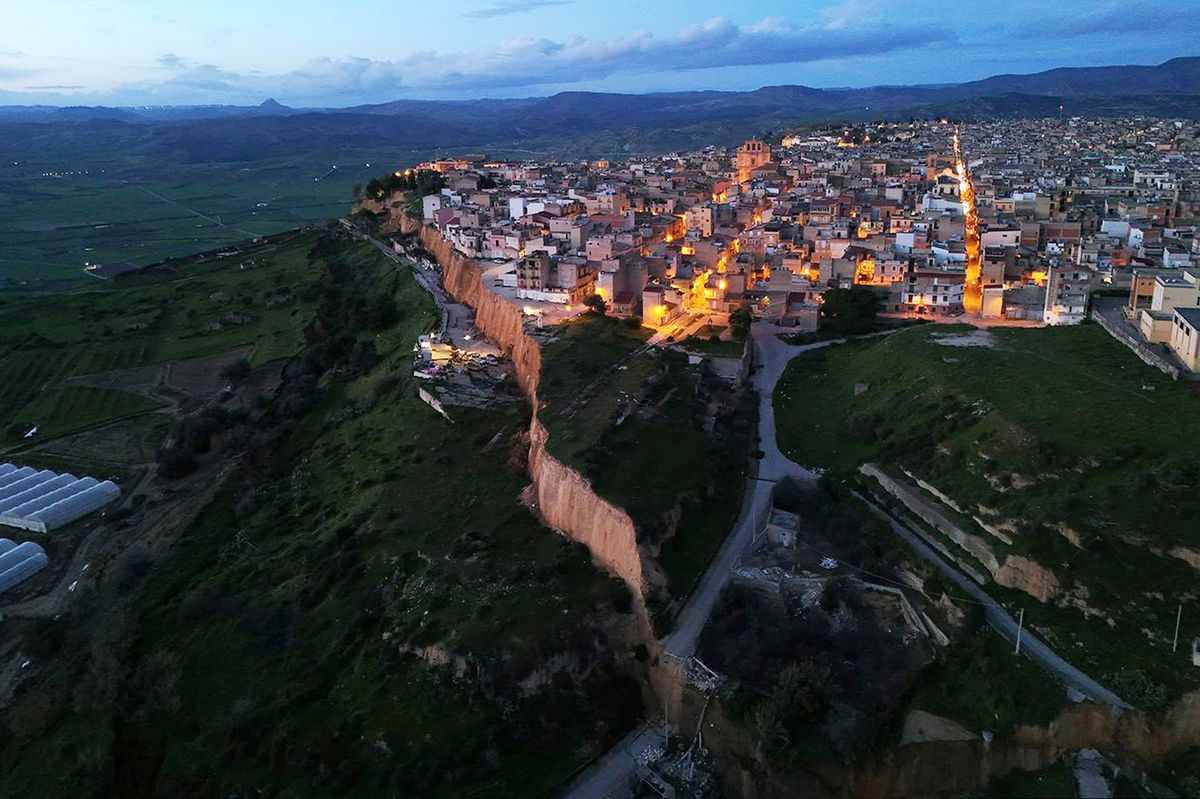
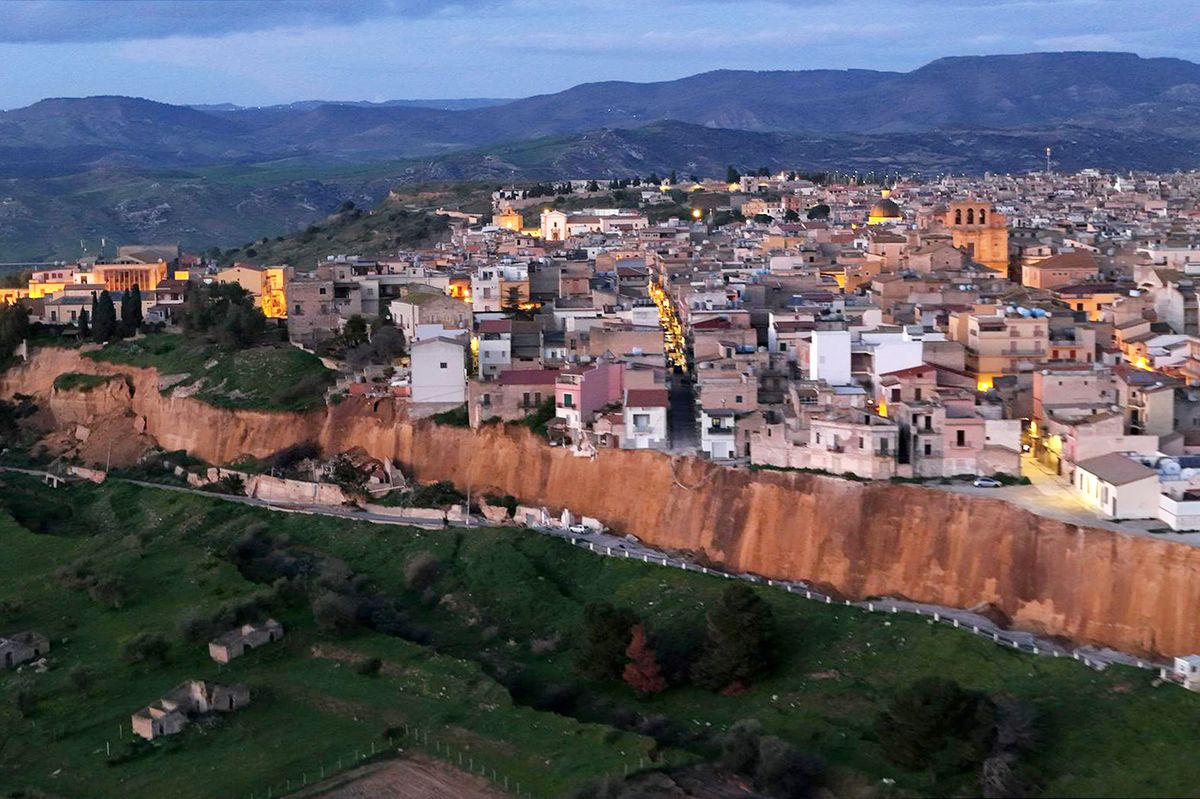
ROME (AP) — Italian Premier Giorgia Meloni visited a southern town in Sicily on Wednesday that has been left teetering on the edge of a cliff after days of heavy rains from a cyclone triggered a huge landslide that brought down properties and forced the evacuation of over 1,500 people.
The landslide in Niscemi, a town in the southwest of the island, spanned 4 kilometers (2.5 miles). Images showed cars and structures that had fallen 20 meters (yards) off the newly formed cliff, while many other homes remain perched perilously on the cliff edge.
Civil protection crews have created a 150-meter wide “no go zone” in the town, which is just inland from the coastal city of Gela.
“The entire hill is collapsing onto the plain of Gela,” civil protection chief Fabio Ciciliano said. “To be honest, there are houses located on the edge of the landslide that obviously can no longer be inhabited, so we need to work with the mayor to find a permanent relocation for these families.”
Authorities have warned that residents with homes in the area will have to find long-term alternatives to moving back since the water-soaked ground was still shifting and too unstable to live.
The federal government included Niscemi in a state of emergency declaration on Monday for three southern regions hard hit by Cyclone Harry and set aside an initial 100 million euros ($120 million) to be divided among them. Sicilian regional officials estimated on Wednesday the overall damage to Sicily stood at 2 billion euros.
Meloni took a helicopter tour of the landslide area and met with local, regional and civil protection officials at the town hall. She vowed that the initial emergency funding was just the first step in addressing the immediate financial needs of displaced residents and that more was coming.
In a statement, her office said the government was committed to helping residents find alternative housing and to restoring road access, utilities and school activities in town.
“The situation is complicated by the fact that, as long as the landslide remains active, it is impossible to identify the exact area to be treated and therefore to establish the methods of intervention,” it said.
Niscemi was built on a hill on layers of sand and clay that become particularly permeable in heavy rain and have shifted before, most recently in a major 1997 landslide that forced the evacuation of 400 people, geologists say.
“Today, the situation is repeating itself with even more significant characteristics: the landslide front extends for about 4 kilometers and directly affects the houses facing the slope,” warned Giovanna Pappalardo, professor of applied geology at the island’s University of Catania.
The latest landslide, which began on Sunday with Cyclone Harry thrashing southern Italy, has revived political mud-slinging about why construction was allowed on land which, because of its geological makeup, had a known high risk of landslides.
Renato Schifani, the center-right regional president of Sicily, acknowledged such questions were legitimate. But he noted he had only been in office for a few years and said the main issue was an institutional response to help residents immediately affected.
Elly Schlein, the opposition center-left Democratic Party leader, called on the government to reallocate 1 billion euros approved for its controversial bridge from Sicily to the Italian mainland and direct it toward storm-hit regions, since the bridge project is currently tied up in court challenges.
By NICOLE WINFIELD
Associated Press