




WASHINGTON (AP) — Once a presidential battleground state, Ohio has shifted sharply toward the right over the last decade. The state’s 2026 midterm races, which include some of the country’s most competitive and expensive, will tell whether Republicans can maintain their dominance.
Up for grabs are a U.S. Senate seat, the state’s 15 U.S. House seats and the governor’s office, along with seats in the Legislature and local offices. For Democrats at the national level, Ohio may be crucial for their bid to retake Congress from Republican control.
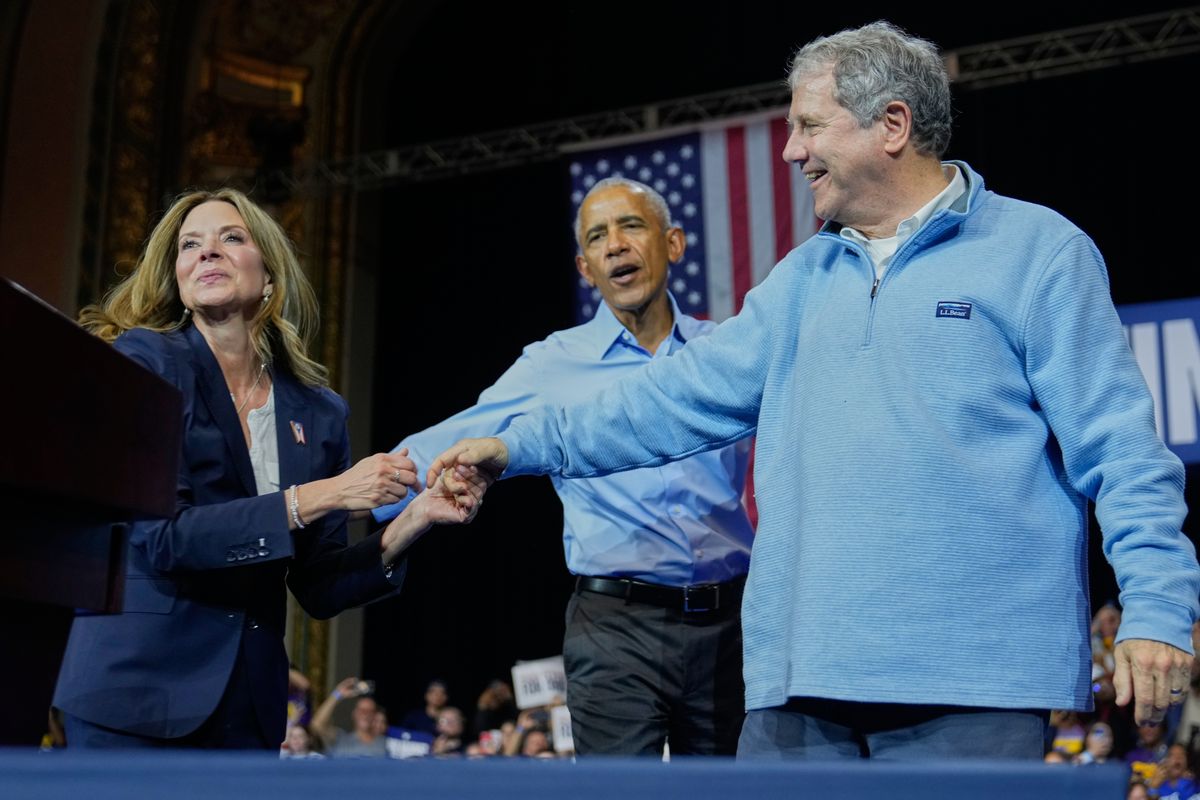
In a special election for Senate, Republican incumbent Jon Husted is facing Sherrod Brown, a Democrat who held the state’s other Senate seat for three terms until 2025, when he was ousted in a tight race by GOP U.S. Sen. Bernie Moreno. Husted was appointed to his Senate seat in 2025 by Republican Gov. Mike DeWine to fill a vacancy left by JD Vance when he became vice president. The winner will serve out the remaining two years of the term.
Though President Donald Trump carried Ohio in the last three presidential elections, and both the governor’s office and state Legislature have been controlled by Republicans for more than a decade, polls suggest a competitive Senate race. Husted, who received the president’s endorsement – along with unconventional praise for his physique – is contending with a national political climate that appears less favorable to Republicans than when Trump was elected in 2024.
The cost of living has been a core issue of the race. Brown has tied Trump’s war in Iran to climbing gas prices and attacked Husted for his repeated votes against war powers resolutions that could have directed the president to end the conflict. In September, Husted said that the war “needs to come to an end as quickly as possible so that we can lower gas prices.”
Brown has also labeled Husted “the face of data centers,” a reference to his support for data center projects as Ohio’s lieutenant governor, a position he held until 2025. In August, the National Republican Senatorial Committee warned in a memo that Husted could lose because of data centers.
Ohio’s Senate race has been one of the country’s most expensive this cycle. Brown raised over $68.4 million as of mid-October, significantly exceeding the $19.9 million raised by Husted. But hundreds of millions of dollars more have been spent by outside groups to oppose both candidates’ campaigns.
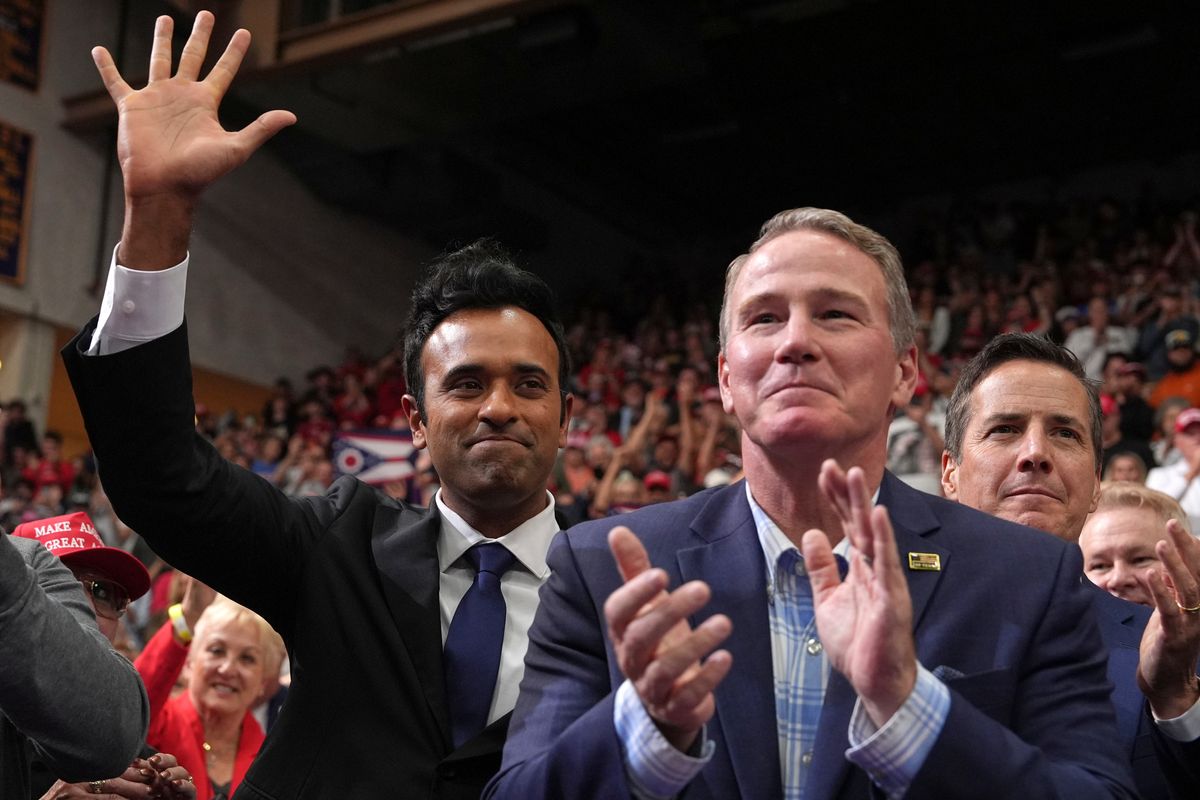
Ohio’s gubernatorial race has also received significant national attention. Democrat Amy Acton, a physician, is running against former Republican presidential candidate and Trump ally Vivek Ramaswamy in the race. DeWine cannot run for reelection in 2026 because of term-limit rules.
Acton has had to contend with her former role as Ohio’s public health director, a position DeWine appointed her to early in the pandemic. Acton implemented strict public health measures that prompted a backlash.
Ramaswamy, a billionaire biotech entrepreneur, has in the weeks leading up to the election defended his campaign’s decision to publish an ad featuring Acton’s estranged mother calling Acton a “liar.” Acton was removed from her mother’s custody at 12 years old after her stepfather was indicted for raping her. Trump has stood by Ramaswamy since the ad made national news, while DeWine called for it to be taken down. On Thursday, Ramaswamy said that the ad’s planned run was over.
Certain U.S. House races in Ohio have become more competitive after mid-decade redistricting favoring Republicans. In the 9th Congressional District in the state’s northwest, Democratic Rep. Marcy Kaptur will be defending the seat she has held since 1983 in a rematch with GOP opponent Derek Merrin, a former state House member and real estate investor. In 2024, before redistricting, Kaptur barely eked out a win over Merrin, carrying the race by less than 1 percentage point.
In the 7th Congressional District, in the state’s northeast, incumbent GOP Rep. Max Miller is up against Brian Poindexter, a union organizer and ironworker. Though Miller, a senior adviser to President Donald Trump during his first term, won the seat by a comfortable margin in 2022, he faces a harder-than-expected battle to keep his seat after his ex-wife, Emily Moreno, alleged that Miller abused her. Moreno’s father, Sen. Bernie Moreno, and Husted have called on Miller to drop out of the race.
Here are some of the key facts about the election and data points the AP Decision Team will monitor as the votes are tallied:
When do polls close?
Polls close at 7:30 p.m. ET.
What’s on the ballot?
The Associated Press will provide vote results and declare winners in races for the U.S. Senate special election, governor, U.S. House, attorney general, secretary of state, state Supreme Court, state Senate, state House, auditor and treasurer.
How many people voted in the last midterm election?
About 4.1 million votes were cast in the 2022 race for the U.S. Senate in Ohio.
How much of the vote is cast early or by absentee ballot?
About 35% of votes in the 2022 race for the U.S. Senate in Ohio were cast early or by absentee ballot.
The latest advance vote totals for Ohio can be found in the AP’s advance vote tracker.
When are early and absentee votes released?
All 88 counties in Ohio tend to release all or almost all of their early and absentee voting results in the first vote update of the night, in most cases before any in-person Election Day results are released.
How long does vote counting usually take?
The first results of the 2024 election were reported starting at 7:36 p.m. ET, six minutes after polls closed. The state reached 50% of votes reporting at 9:01 p.m. ET, and 90% of votes reporting at 11:03 p.m. ET.
When will the AP declare a winner?
The Associated Press does not make projections and will declare a winner only when it’s determined there is no scenario that would allow a trailing candidate to close the gap. If a race has not been called, the AP will continue to cover any newsworthy developments, such as candidate concessions or declarations of victory. In doing so, the AP will make clear that it has not yet declared a winner and explain why.
How do recounts work?
Recounts in Ohio are automatic if the margin is less than 0.25% of the total vote in statewide races or 0.5% in congressional district races. The AP may declare a winner in a race that is eligible for a recount if it can determine the lead is too large for a recount or legal challenge to change the outcome.
___
Follow the AP’s coverage of the 2026 election at https://apnews.com/projects/elections-2026/.
By CAMILLE BAKER
Associated Press