




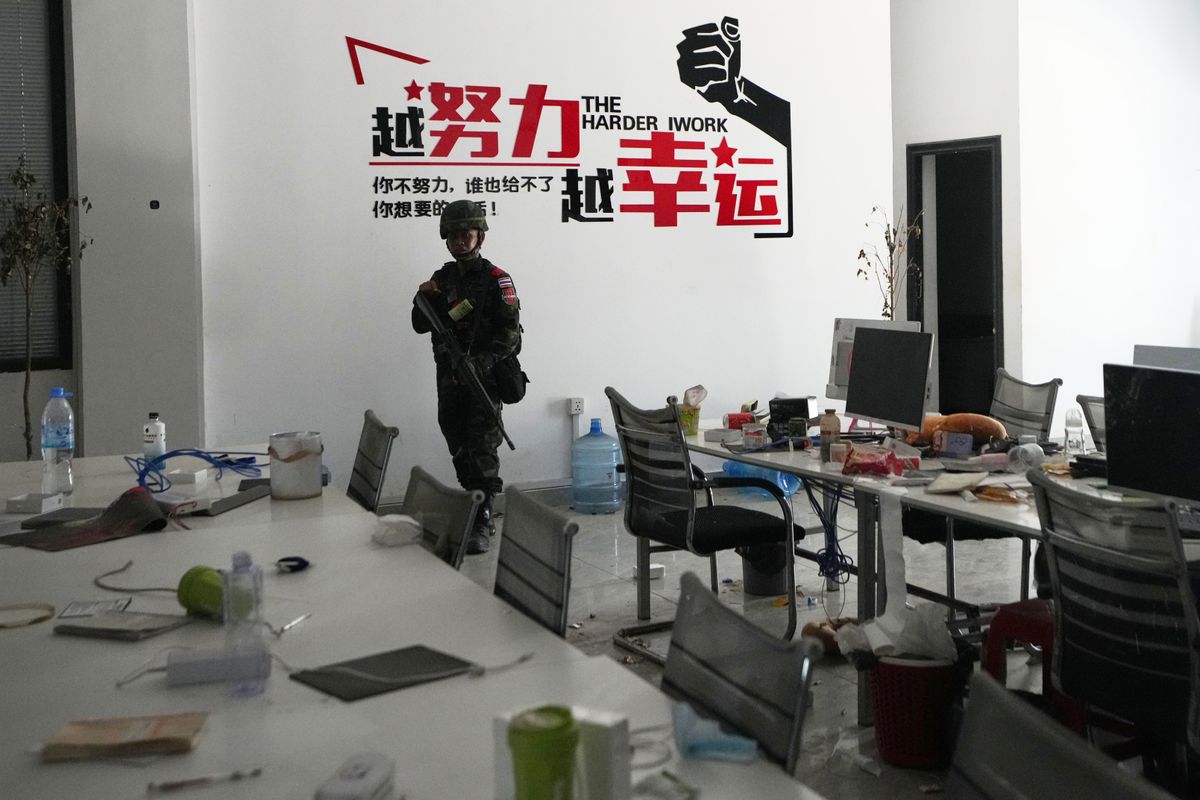
PHNOM PENH, Cambodia (AP) — In response to building international pressure, Cambodia stepped up a crackdown to shut down the scam centers that have flourished in the country.
The nationwide campaign to close the criminal operations ramped up early this year, leading to the release of tens of thousands of former scam workers onto the streets and creating a humanitarian crisis.
The Associated Press interviewed former workers, nonprofits dedicated to investigating human trafficking and other experts who revealed the magnitude of the crisis created by the Cambodian crackdown.
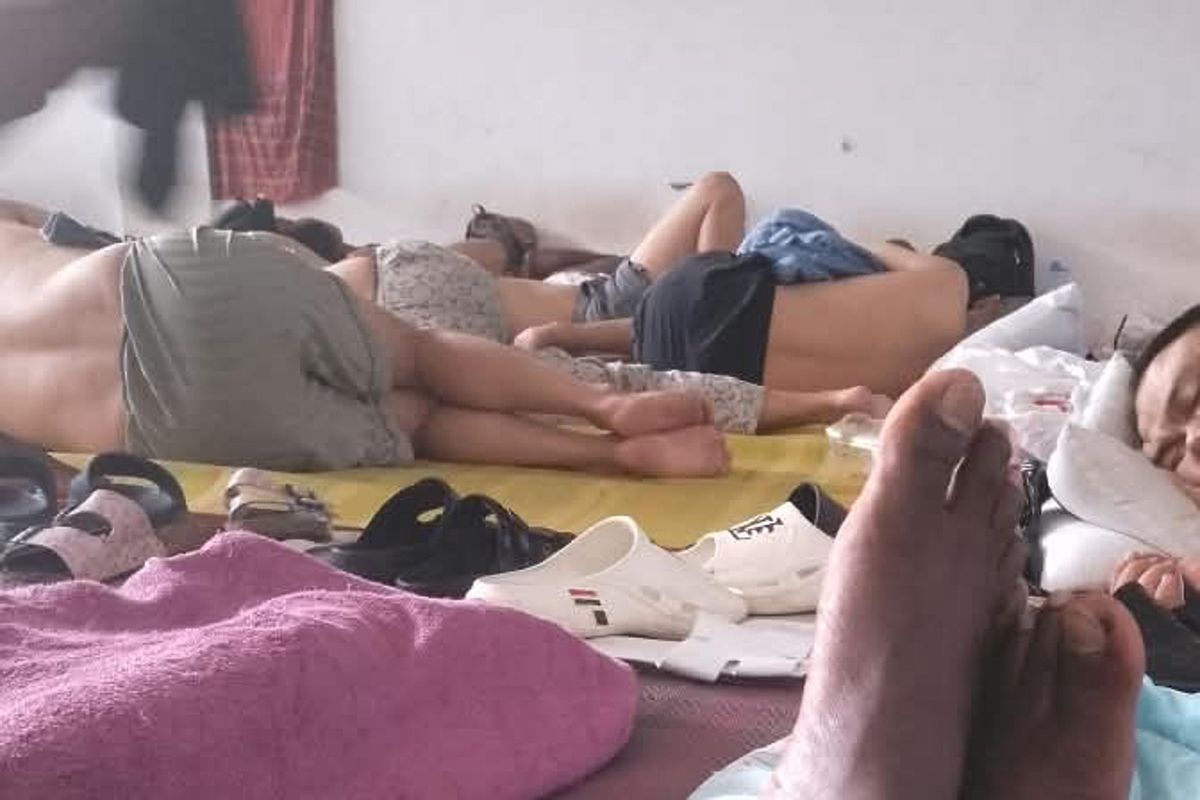
The former workers said they faced arbitrary detentions, police harassment and were forced to sleep in the streets because of a government ban on providing them housing. Nearly a year later, hundreds remain stranded.
Critics say many of the former workers were victims of human trafficking and should be interviewed by the government to see if they suffered abuse while inside the compounds.
“The government generally treats migrants found trapped in scam centers as offenders, and we have seen no evidence of adequate efforts to screen them for internationally recognized indicators of human trafficking,” said Li Ling, of the Eos Collective, a nonprofit dedicated to investigating human trafficking.
Here are takeaways from the AP’s report.
Critics say Cambodian elites have not been touched in crackdown
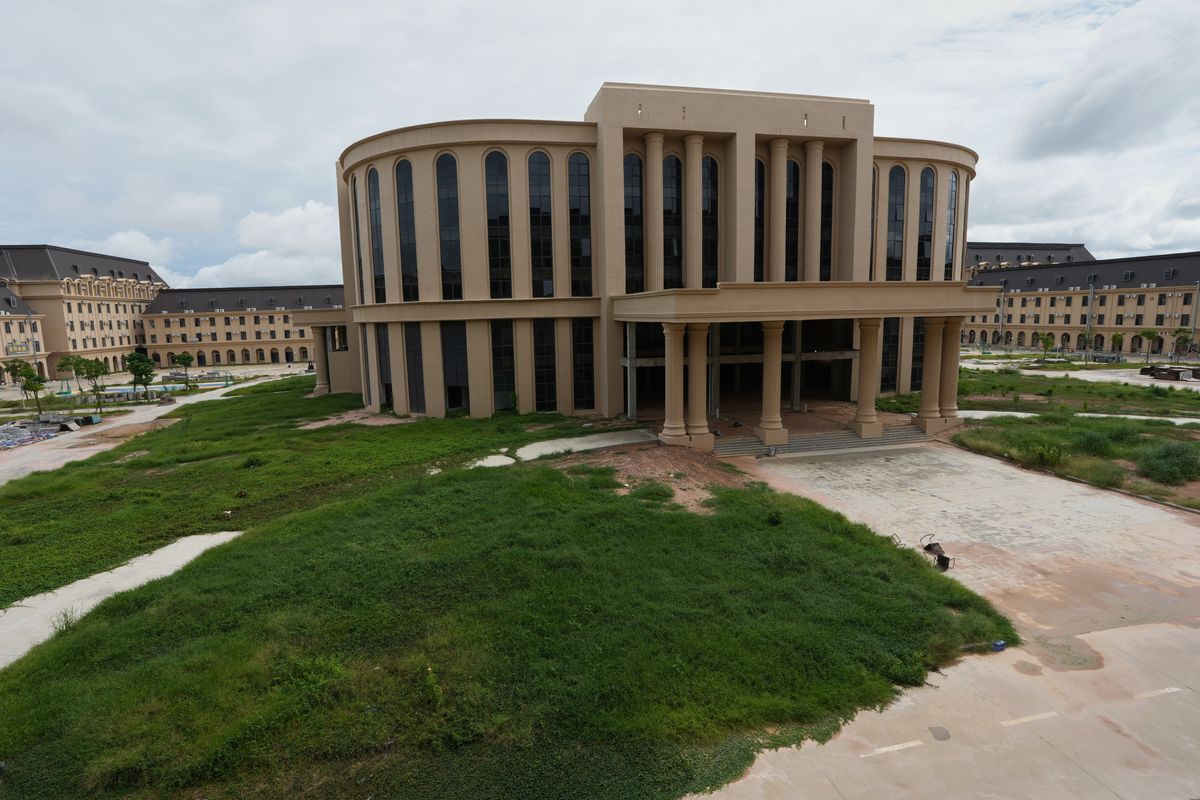
Online scam operations were a multi-billion dollar industry in Cambodia, where an estimated 100,000 workers carried out web-based scams from inside massive fortified complexes, living in dormitories they weren’t allowed to leave. Some came knowing they were signing up for something illegal. But many were baited with false promises of high-paying jobs through complex human trafficking webs.
Cambodia was home to at least 182 confirmed scam locations, according to data collected by CyberScamMonitor, a watchdog that tracks them, though it has evidence of roughly 300.
In late 2025, the operations drew global attention after the death of a South Korean student forced into one, and the U.S. indictment of the Chinese-born founder of a Cambodian conglomerate behind a massive cryptocurrency scam.
In September, Cambodia announced it had dismantled all the larger compounds and was prosecuting cases linked to the scams. Last month, it said it seized assets worth $1 billion from one alleged scam network and called on Interpol to help track down 29 ringleaders.
But it has provided no evidence it is taking action against the criminal operatives behind the schemes or the Cambodian political and business elites that helped them flourish by providing financing, facilities and connections to the highest echelons of Cambodia’s government — including senior politicians and relatives of Prime Minister Hun Manet, according to the U.S. Congress, which has called for sanctions.
“They need to begin holding accountable evidenced elite perpetrators, not concocted, mid-level token investigations, but the … Cabinet-level members, senators and members of the prime minister’s family,” said Jacob Daniel Sims, a transnational crime expert and visiting fellow at Harvard University’s Asia Center.
Cambodian Information Minister Neth Pheaktra did not respond to detailed AP questions sent via Telegram concerning Cambodia’s treatment of scam workers, the calls for prosecutions of its senior politicians, or any criminal cases it is carrying out.
In response to AP questions earlier this year about the treatment of former scam workers caught up in the crackdown, Pheaktra said Cambodia “rejects claims that it is failing trafficking victims or tolerating abuse linked to scam compounds.”
“All individuals are screened to separate victims from perpetrators, with victims receiving protection, shelter, medical care and assistance for safe return,” he said, without providing evidence of any such process.
Many former workers are stranded
As police raided the compounds, workers fled, with tens of thousands flocking to Phnom Penh. Many former workers did not have money to pay for a flight home and got little help from their embassies.
While there are no comprehensive figures for how many workers left the compounds, reports from nearby countries provide a glimpse into the size and diversity of the workforce. China said in June it had repatriated more than 20,000 workers linked to scam centers, according to state broadcaster CCTV. One border province in Vietnam said it received more than 1,700 ex-workers in the first half of 2026.
The Indonesian Embassy said in September it had received requests from 12,940 Indonesians for help getting home and that another 700 remain in the country. The Ugandan ambassador to the region said she has helped 1,000 Africans return home.
Changing government policies are a major obstacle
Many former workers had their passports seized by the scam operators and faced fines for remaining in Cambodia without proper visas.
Even if they could afford to pay, the Cambodian government banned lodgings from renting to former workers. Many wound up in the streets and went without food for days.
There were roundups by police in which ex-workers were taken to detention centers, where they’d be stuck until they could get a ticket home.
Two workers told the AP they were held at a detention center known as Mango 2. There, they slept on the floor crowded with other ex-workers until they were able to get tickets home from aid groups.
.
By HUIZHONG WU
Associated Press