



What does “head of the fire” mean? What’s a “flank”? And does “forward progress stopped” mean the fire is out? CAL FIRE explains some common wildfire terms.
CAL FIRE states fire departments work to communicate in plain language and you may still hear some specialized terms. The specialized terms used by firefighters, aircraft crews and partner agencies help them communicate quickly and accurately.
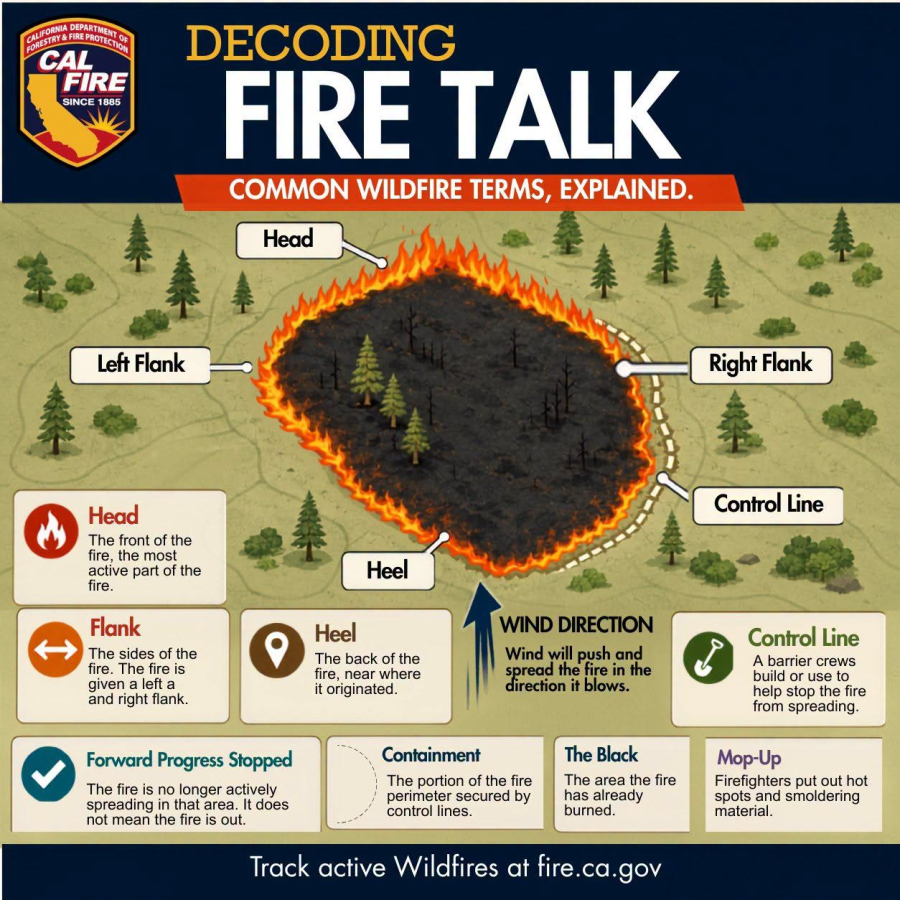
CAL FIRE released a quick guide seen below to some of the most common wildfire terms you may hear during an incident.
- Head- The front of the fire, the most active part of the fire.
- Flank – The sides of the fire. The fire is given a left and a right flank.
- Heel – The back of the fire, near where it originated.
- Wind Direction – Wind will push and spread the fire in the direction it blows.
- Control line – A barrier crews build or use to help stop the fire from spreading.
- Forward Progress Stopped – The fire is no longer actively spreading in that area. It does not mean the fire is out.
- Containment – The portion of the fire perimeter secured by control lines.
- The Black – The area the fire has already burned.
- Mop-Up – Firefighters put out hot spots and smoldering material.
Ever wonder how wildfires get their names?
CAL FIRE says “It’s not about size or severity: it’s about location.” The first responding agency names the fire, usually after nearby roads. The name must be simple, unique, and appropriate. It may also be named after significant creeks, ridges, or landmarks. This system helps firefighters, dispatchers, partner agencies, media, and the public quickly identify and track an incident, especially when multiple fires are burning at once.