




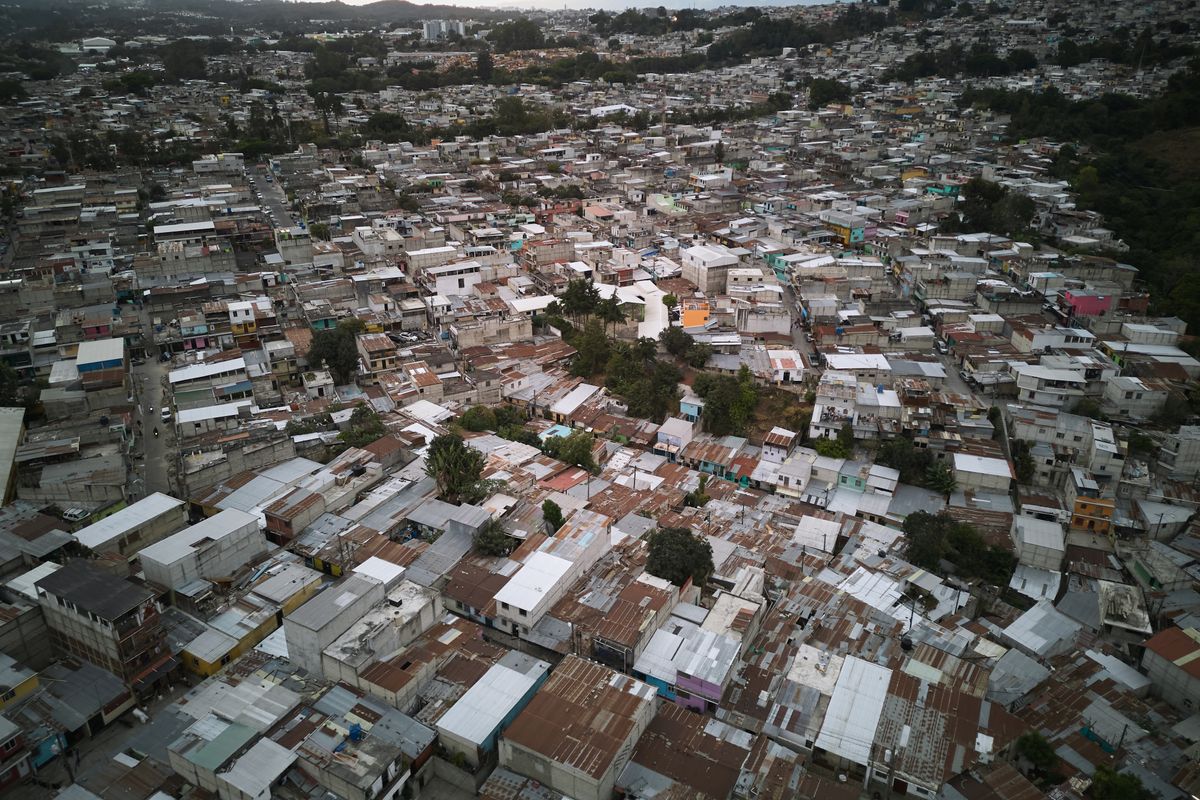
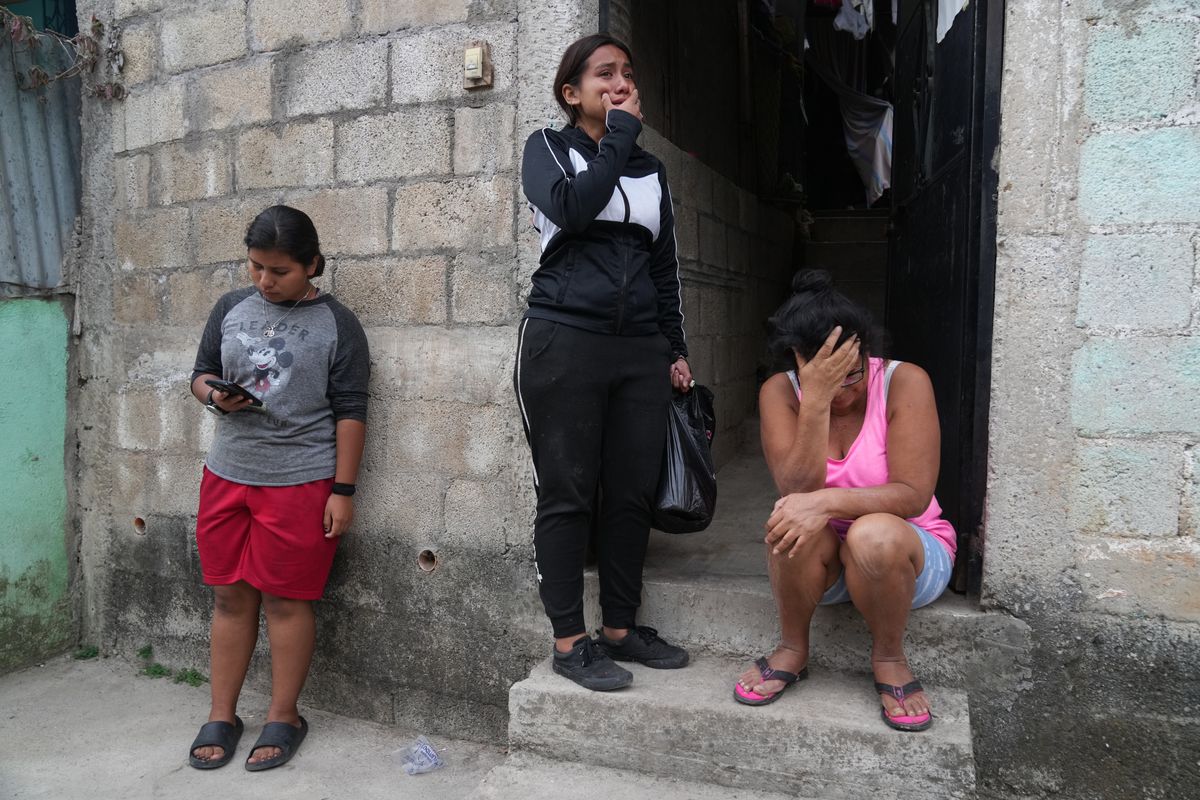
GUATEMALA CITY (AP) — Days after suspected gang members killed 10 Guatemalan police officers, police and soldiers took their new powers granted under a state of emergency to the Barrio 18 gang’s center of operations in the north of the capital.
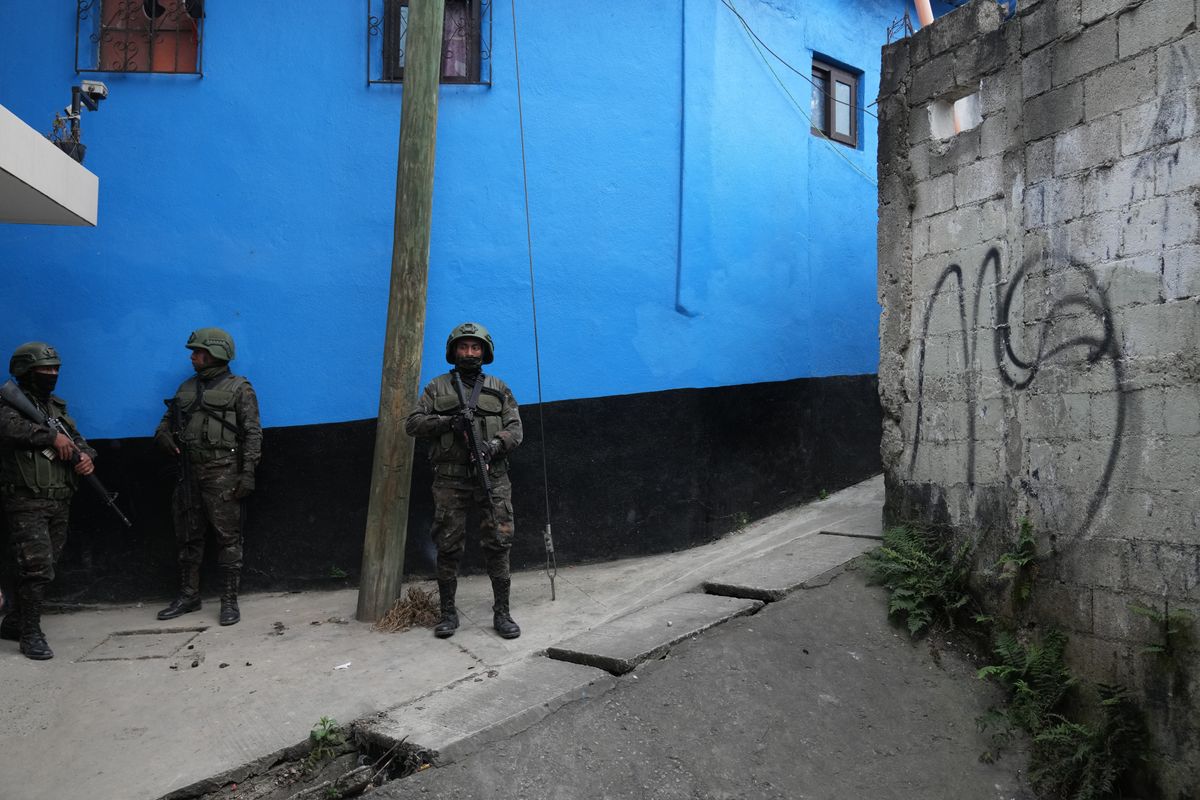
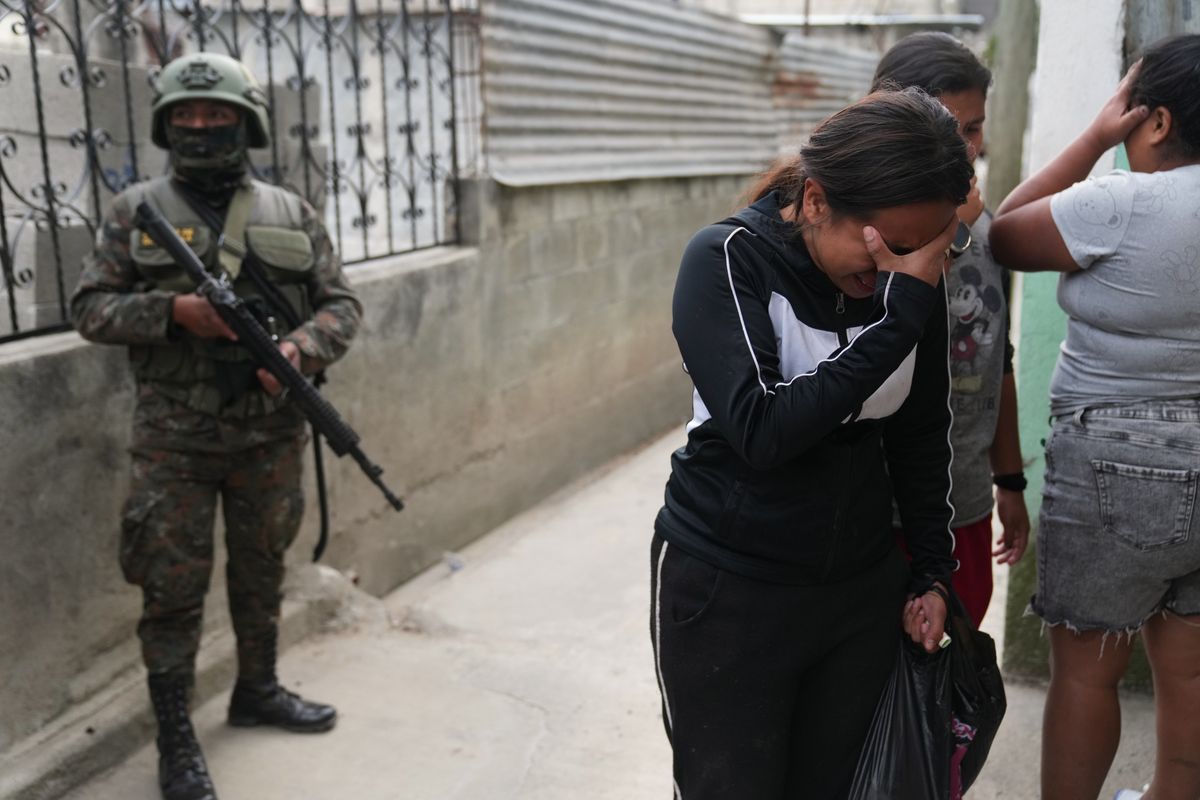
Dozens of police officers and soldiers, some carrying rifles and wearing bulletproof vests or with their faces covered, patrolled the narrow warren of streets in the cluster of neighborhoods called Zone 18 on Tuesday. At a checkpoint, they asked for identification of passing motorists and told some to stand against a wall to be patted down for weapons.
On Wednesday, Guatemalan President Bernardo Arévalo said in a press conference that during the first 48 hours of the state of emergency he declared to deal with the gangs, some 293 people had been detained, including 23 gang members, among others caught in the act of committing crimes or who had pending arrests orders.
There were 126 homicides in Zone 18 last year, the most of any of the capital’s 24 districts. Police say it is a “red zone” where the gang dominates. Early Tuesday, the bodies of three females, one pregnant and including two teens, were found shot in the street.
“This state of emergency is focused on head-on confrontation with the Barrio 18 and Mara Salvatrucha criminal structures,” said Jorge Aguilar, National Civil Police spokesman.
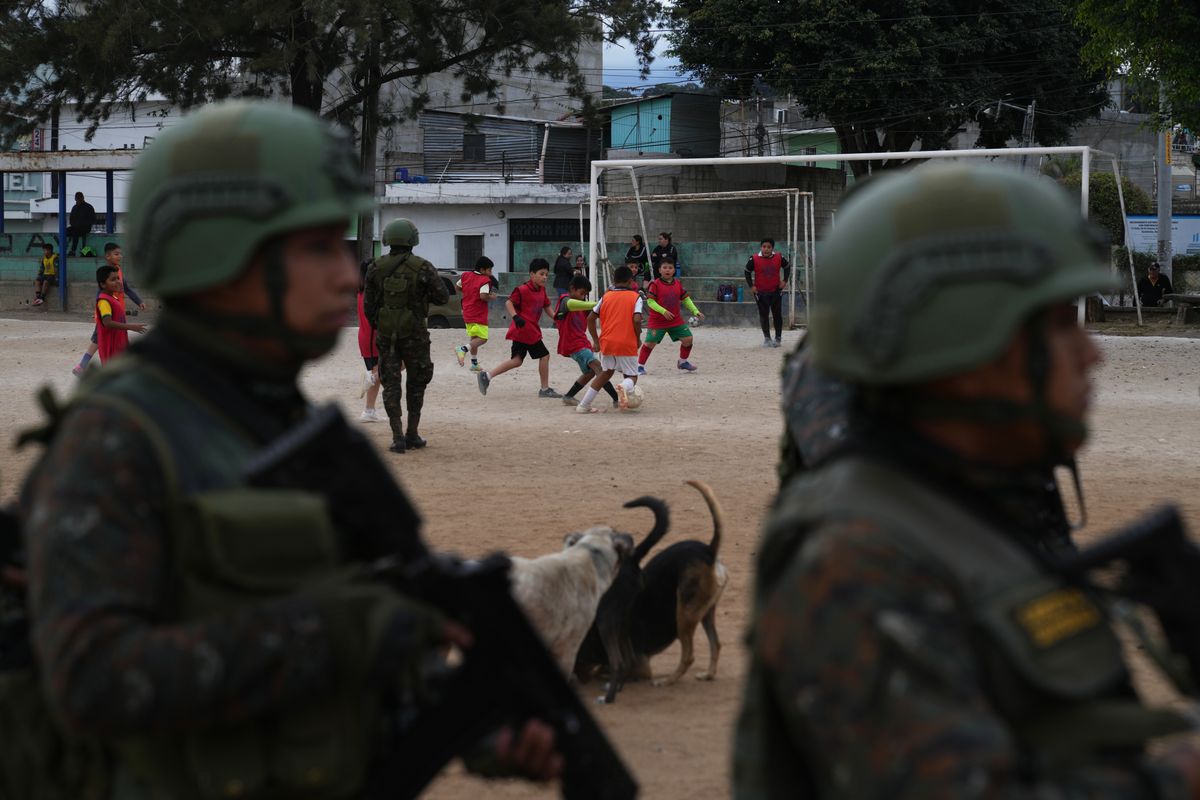
By Tuesday evening, dozens of police and soldiers lined up on a dusty soccer pitch where children kicked about a ball.
“We’re in a high risk moment. Don’t get separated from the group, we have the soldiers accompanying us, we’re going to work together, may God be with you,” a police commander told officers before the patrol.
Gangs have long oppressed neighborhoods in Guatemala where they recruit children, extort businesses and execute rivals. The problem came to a head over the weekend when gang members rioted in seemingly coordinated actions in three prisons on Saturday, taking dozens of guards hostage. On Sunday, police retook control of the prisons and freed the hostages, but almost immediately police around the capital were attacked.
So far 10 police officers have died and several more remain hospitalized.
Arévalo declared a 30-day state of emergency Sunday and on Monday the Congress overwhelmingly approved it. It restricts some rights of movement and assembly, as well as allowing police to detain people on suspicion of gang activity without a judge’s arrest order.
In Zone 18, several people asked about the gang presence declined to speak.
Diana González, who works as a cleaner, has lived in the area for 15 years. She conceded the area was dangerous, but “it’s where I have to live.”
She said that while she had not personally had problems with the gangs, the area carries a stigma. “When I have looked for work people don’t hire me because I live in this zone,” said González, 34. “They think that if you live here you’re a gangster, it marks all of us.”
Guatemala’s homicide rate per 100,000 residents rose last year to 17.2 from 16.5 the previous year, according to data compiled by the nongovernmental organization Dialogues.
Arévalo has been under pressure to bring the violence under control. Last year, the Congress approved a new anti-gang law that designated Barrio 18 and Mara Salvatrucha as terrorist groups and increased prison sentences for gang members convicted of crimes. It followed the escape of 20 Barrio 18 members from a prison and the subsequent resignations of three top security officials. Last year, the United States government also designated both gangs as foreign terrorist organizations.
The state of emergency is a tool President Nayib Bukele in neighboring El Salvador has used for nearly four years to decimate the gangs in his country. More than 90,000 people have been detained there on suspicion of gang ties, and Bukele’s administration has faced international criticism for a lack of due process and violation of human rights.
Arévalo has said that “political criminal mafias” are trying to destabilize his administration.
___
Follow AP’s coverage of Latin America and the Caribbean at https://apnews.com/hub/latin-america
By SONIA PÉREZ D.
Associated Press