




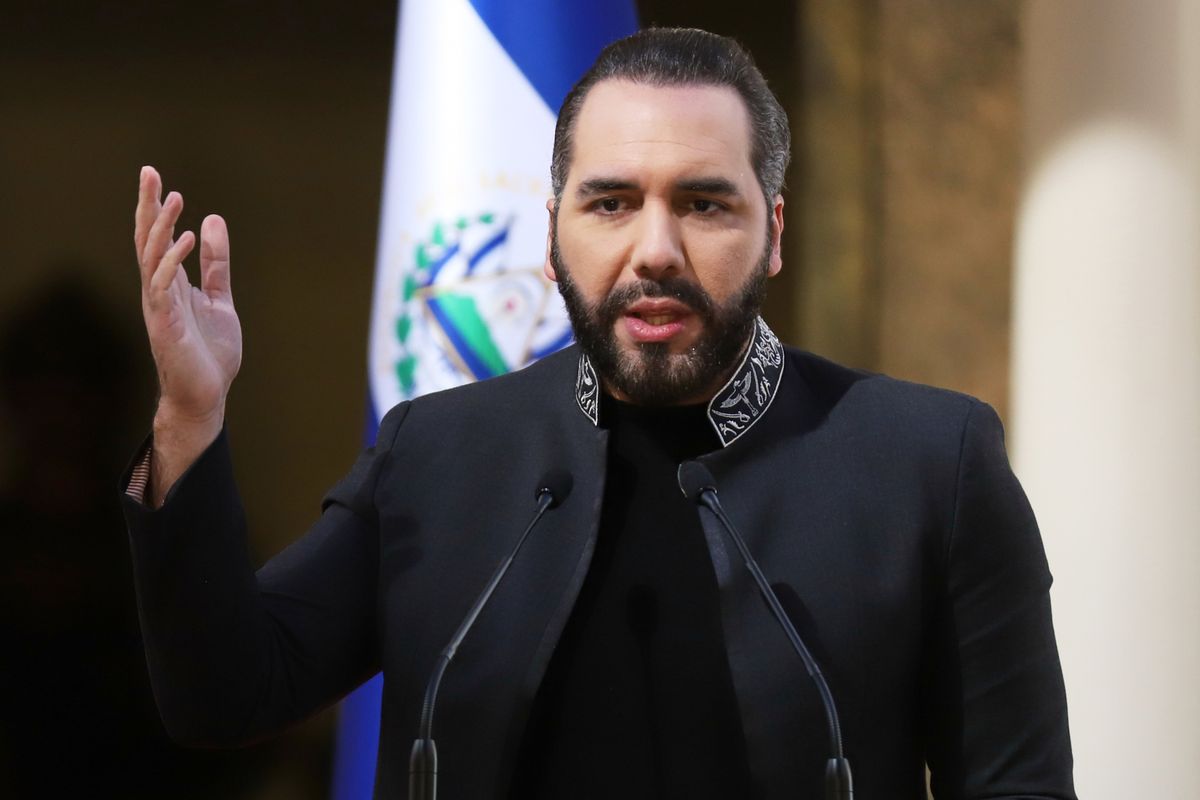
SAN SALVADOR, El Salvador (AP) — Salvadoran President Nayib Bukele announced a plan to release up to 50% of the people imprisoned under a state of emergency under which authorities arrested more than 90,000 people since March 2022 in a campaign to wipe out violent criminal gangs.
The emergency, which was declared after a spike in violence, has drastically reduced the country’s homicide rate while also suspending fundamental rights, including the right to be informed of the reasons for detention, the right to access legal counsel and the right to visitation.
Human rights groups have condemned the emergency, saying it has led to widespread arbitrary arrests, and they have repeatedly called on Bukele to end the measure. The president has justified the measure as necessary to reign in warring gangs MS-13 and Barrio 18.
The president’s plan announced Tuesday night would focus on releasing people who were considered gang collaborators, a blanket term that can include anyone from gang lookouts to people who make extortion payments.
“There are many people who have indeed committed crimes, but their crime was collaborating with gangs,” Bukele said. “They deserve to be in jail, but we come from a country where collaborating with gangs wasn’t so unusual, and if we were to arrest everyone who collaborated with gangs, we would have to arrest 20% of the population.”
Without going into details, the president indicated that authorities plan to analyze cases to determine potential early release with monitoring, which could benefit half of those detained during the state of emergency.
Human rights organizations have registered more than 6,000 complaints during the emergency and documented the deaths of at least 575 people in government custody.
For some, the potential release of thousands of prisoners doesn’t go far enough to repair the damage of their prolonged imprisonment.
“The victims of arbitrary detentions don’t just deserve to recover their freedom, but they also deserve to be compensated for the harms caused by the State of El Salvador: the physical and mental harm that imprisonment causes, family suffering, loss of work or studies, reputational damage, among others,” wrote exiled Salvadoran lawyer Bertha Deleón on X.
Bukele dismissed criticism from national and international rights groups, saying that they should take the side of the victims of gang violence.
He defended the need to maintain the state of emergency, but expressed his intention to end it eventually.
Homicides have drastically decreased under Bukele, according to government figures, down from a peak of more than 100 murders per 100,000 residents in 2015 to 1.3 per 100,000 in 2025. However, the government has narrowed the definition for homicides to exclude killings by police, murders in prisons and bodies found in unmarked graves.
___
Follow AP’s Latin America coverage at https://apnews.com/hub/latin-america