




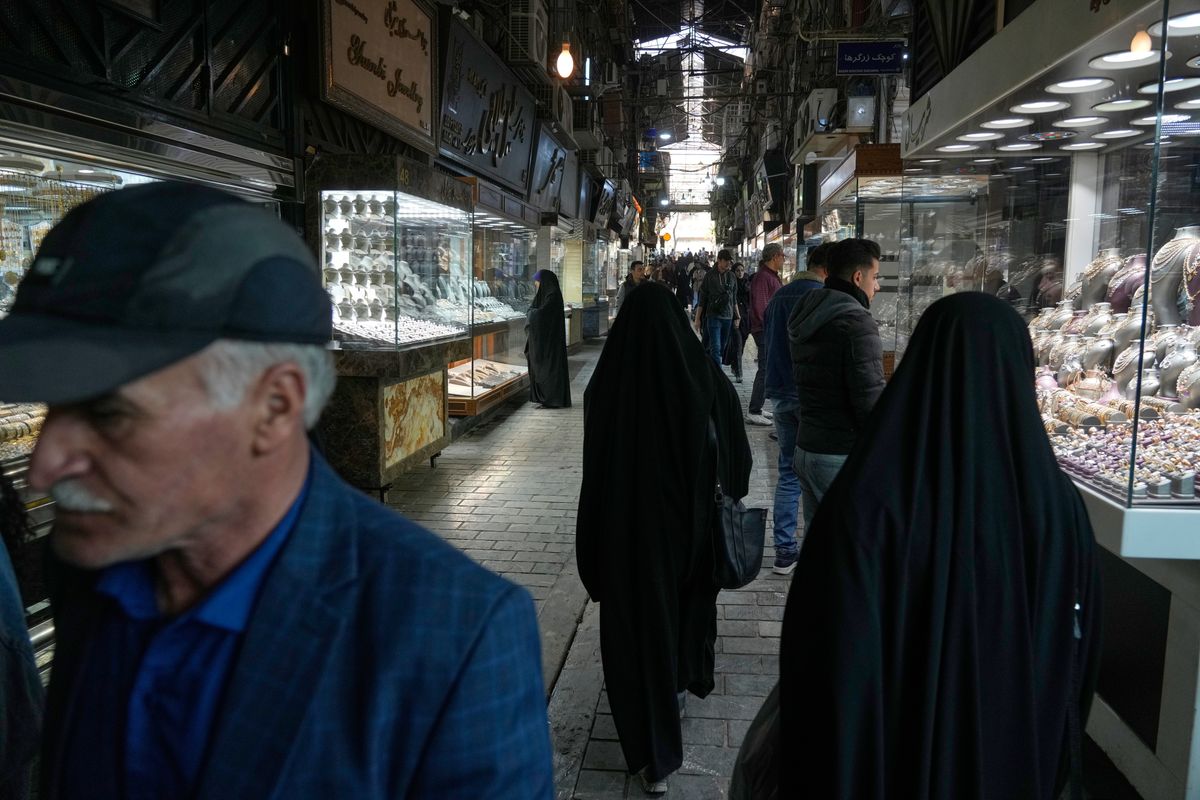
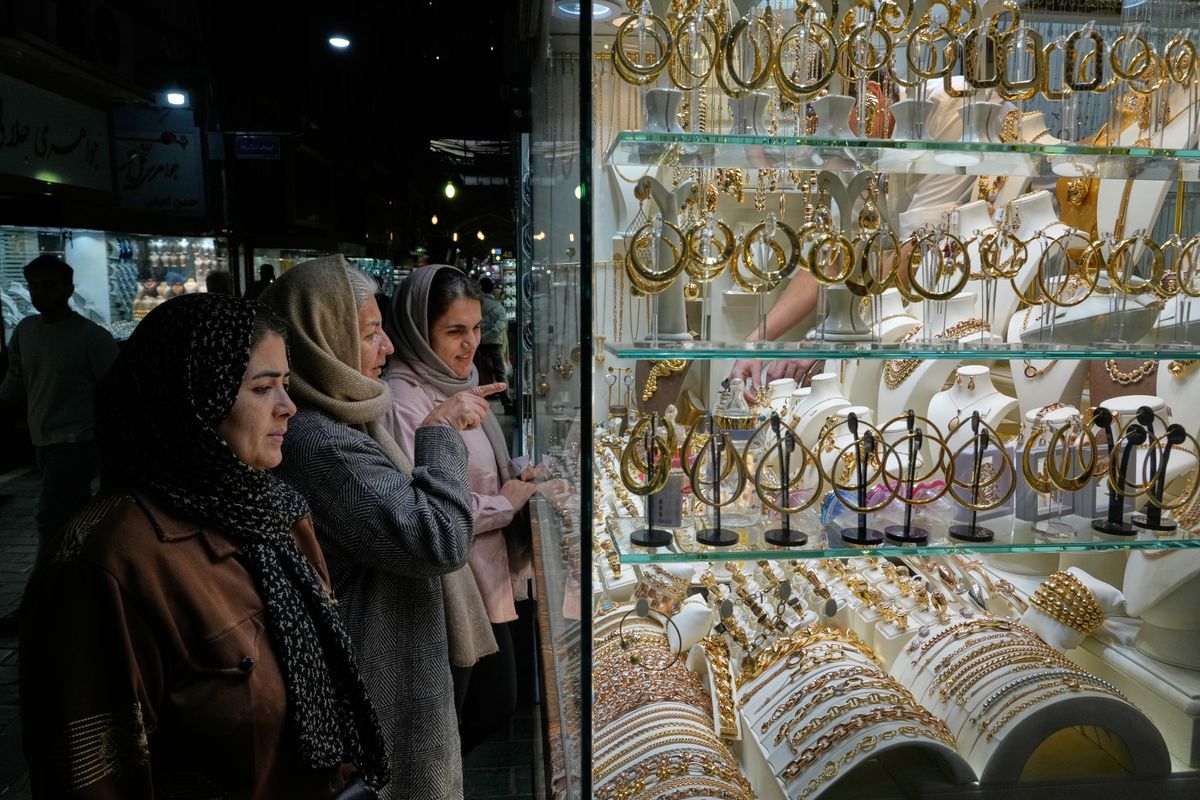
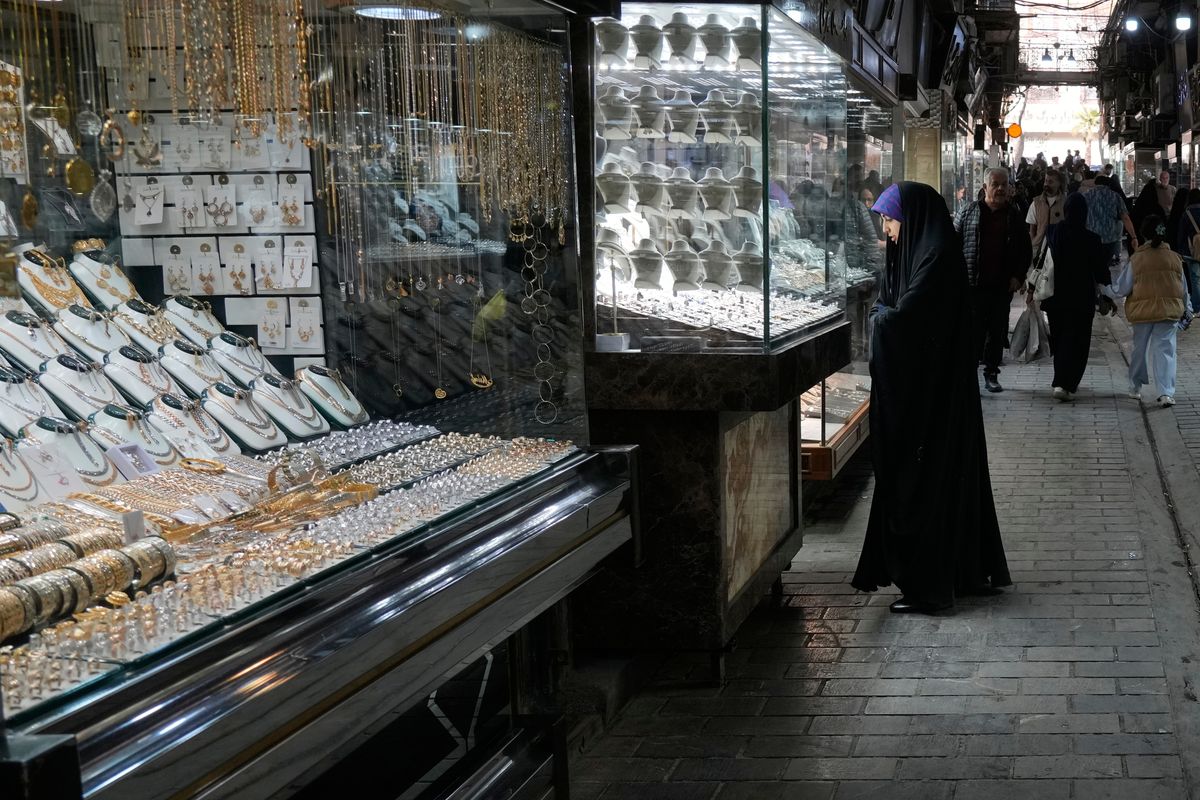
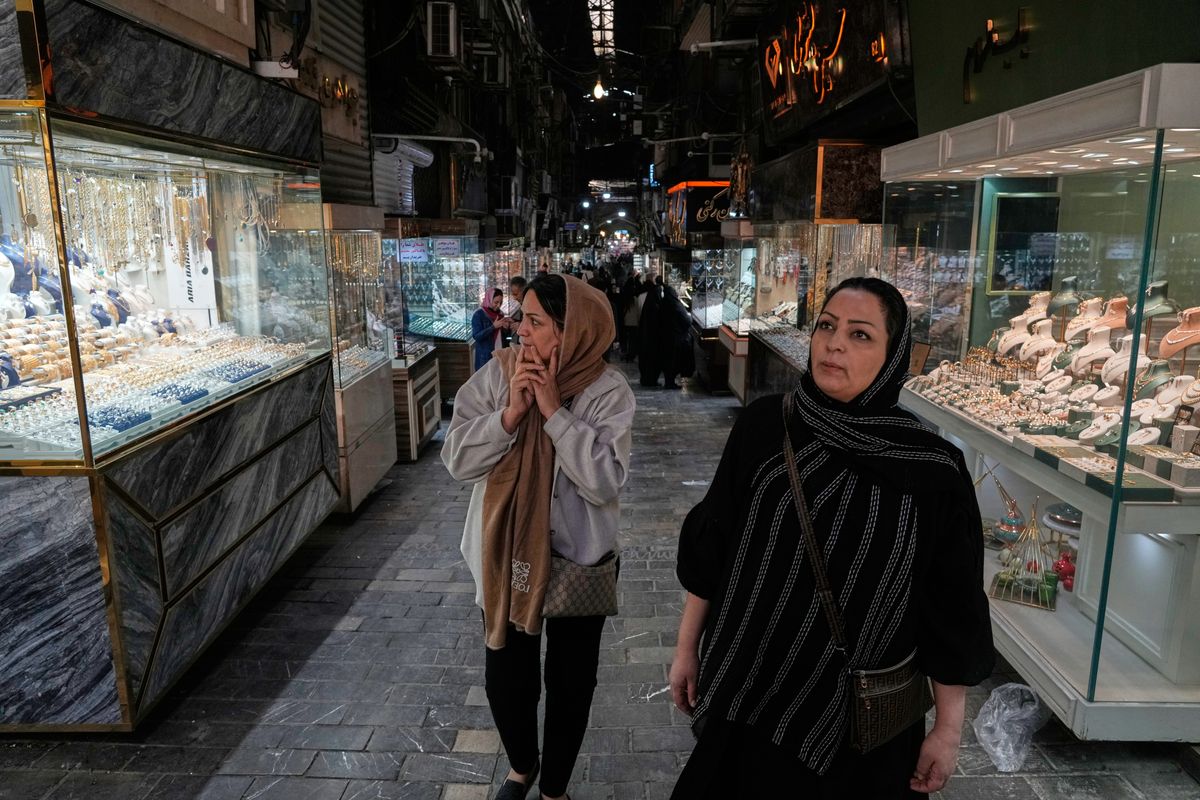
TEHRAN, Iran (AP) — When it comes to financial security for Iran’s jittery public after the 12-day war with Israel, all that glitters is gold — and for many, it remains the most trusted hedge against inflation, sanctions and a weakening rial currency.
Traders in Tehran’s Grand Bazaar say every new headline about United Nations “snapback” sanctions, the rial’s fall or renewed regional tensions have sent waves of people into buying so-called “value-preserving assets.” Those include dollars, gold, silver, diamonds, cryptocurrencies and, to a lesser extent, equities.
Such portable wealth can hold value when local assets depreciate — and be easily carried in case of a crisis, something on Iranians’ minds for months as many fear another war with Israel breaking out.
Mansour, a 28-year-old gold and jewelry merchant in the bazaar, said he had never seen such demand.
“In the past two weeks I’ve sold 6 kilos (13.2 pounds) of gold to ordinary people — a new experience for me,” said Mansour, who spoke on condition only his first name be used for fear of reprisals.
“People are rushing to buy because they fear their savings will lose value,” he added.
Behzad Rashvand, a 57-year-old grandfather, said he viewed gold as the only protection against rampant inflation in Iran.
“Right now, I see gold as the best way to preserve value,” he said. “Whenever I make money, I turn it into gold.”
Gold sales spike in Iran’s capital
Over the summer, 1-gram, 18-karat gold bars traded at around 115 million rials — about $100 as the rial now trades at over 1 million to $1. Gold coins were over $1,000 and 1-kilogram silver ingots were nearly $2,000. On Saturday, the price of a gold coin in Iran exceeded 1.2 billion rials for the first time in the country’s history. Small silver bars from 100 grams have become a new, entry-level investment for middle-class families, Iranian media reports suggest.
Fatemeh Parsa, a 47-year-old mother of two, now regrets using an inheritance to buy an apartment in Tehran. While real estate remains valuable in some Tehran neighborhoods, bank loans and people’s savings have not kept pace with sky-high prices.
“With global gold prices rising, I sometimes wish I had bought gold instead — my assets would have grown much more than real estate,” she said. “Now, it seems that investing in silver could be valuable, especially for my children’s future.”
Reports of mass layoffs in Iran’s economy, stemming from problems with electricity, consumer demand and sanctions, also have circulated for months. Amir Ramezani, a top gold trader in Tehran, said that some families from more well-to-do families have begun selling parts of their assets to cope.
“Their incomes today don’t match the lives they built,” Ramezani said. “To sustain the same lifestyle, many are selling valuables — gold, jewelry — just to keep up.”
Gold and silver particularly gained prominence as the U.S. began cracking down on Iranian cryptosellers, which had been one avenue Iranians sought to secure their finances.
“Whenever I have enough money to save, I immediately convert it into gold,” said Hamid Safari, who sells audio equipment. “Throughout history, gold has not only held its value but also increased in worth. We should learn from history if we want to build a better life.”
Portability also a concern as tensions high in region
Meanwhile, wealthier investors are turning to diamonds and other gemstones as discreet, portable stores of value. Jewelers in Tehran and Mashhad report rising demand for small-carat investment-grade stones — a niche traditionally favored by traders but now expanding to upper-middle-class buyers.
Iran’s broader economy remains under severe pressure from international sanctions that have cut off investment and limited access to global finance. Years of restrictions have weakened domestic industries and left key sectors struggling to modernize. And for those wanting to get money out abroad, hard currency and jewelry remains some of the only ways to do so.
There’s also another reason that Iranians remain reluctant to discuss — being able to have the money portable in case of another war. Tens of thousands of Iranians living in Tehran are believed to have fled the capital during the 12-day war, heading out into the countryside of Iran or north to the coast of the Caspian Sea.
When they did, they found some areas overwhelmed by newcomers and ATMs either out of cash or nonfunctional. Many brought whatever savings they could immediately put their hands on with them.
There’s precedent for this in Iranian history as well. Many who fled the cities during the 1980s Iran-Iraq war took whatever they could with them. And in the 1979 Islamic Revolution, those allied with the shah and his government fled Iran with whatever they could carry. Back then, the rial hit an all-time high of 120 to $1, which saw money-changing shops inundated and people buying gold, jewelry, rugs and other assets to spirit abroad.
Ahmad, a 49-year-old a fabric importer, said he plans to sell off his remaining stock and covert all of his assets into hard currency because of the situation in Iran.
“I can’t convert my home or my car, but for the past two months I’ve been turning all my liquid assets into foreign currency and gold,” he said. “In an emergency, I need to be able to carry my assets with me if I have to leave.”
___
Gambrell reported from Dubai, United Arab Emirates.
By AMIR VAHDAT and JON GAMBRELL
Associated Press