




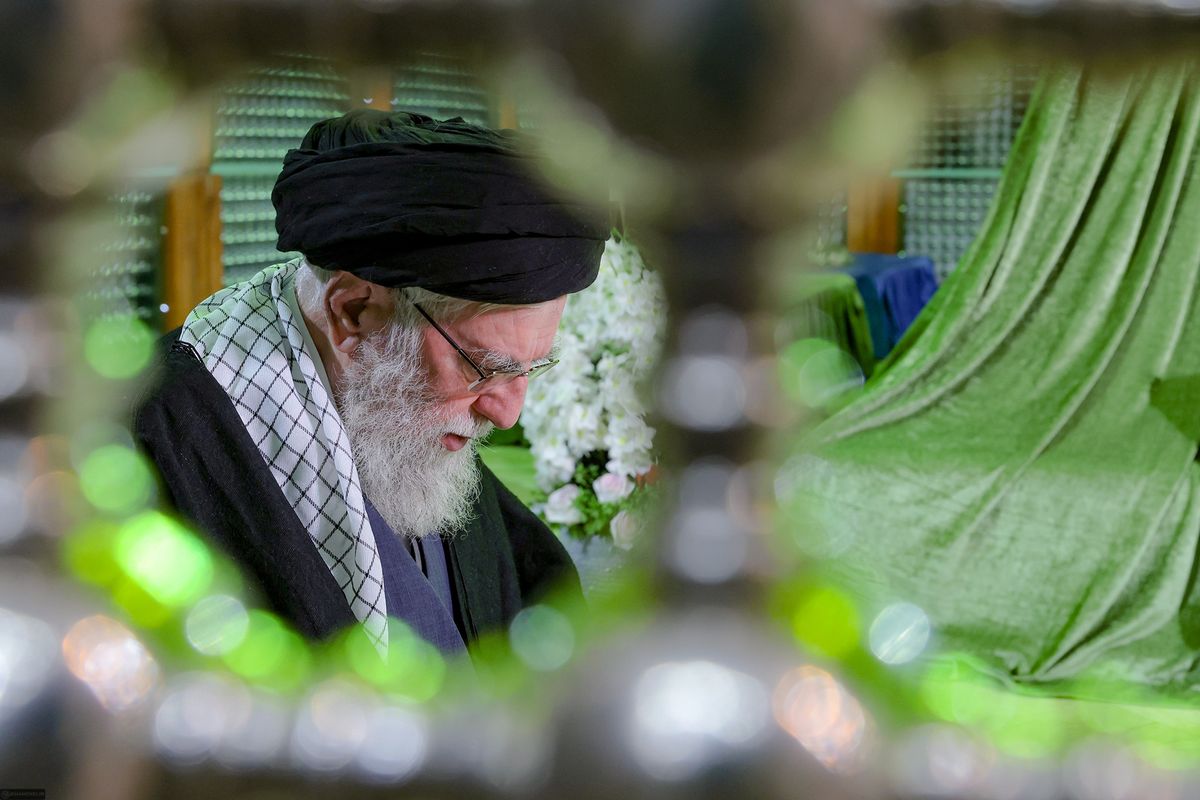
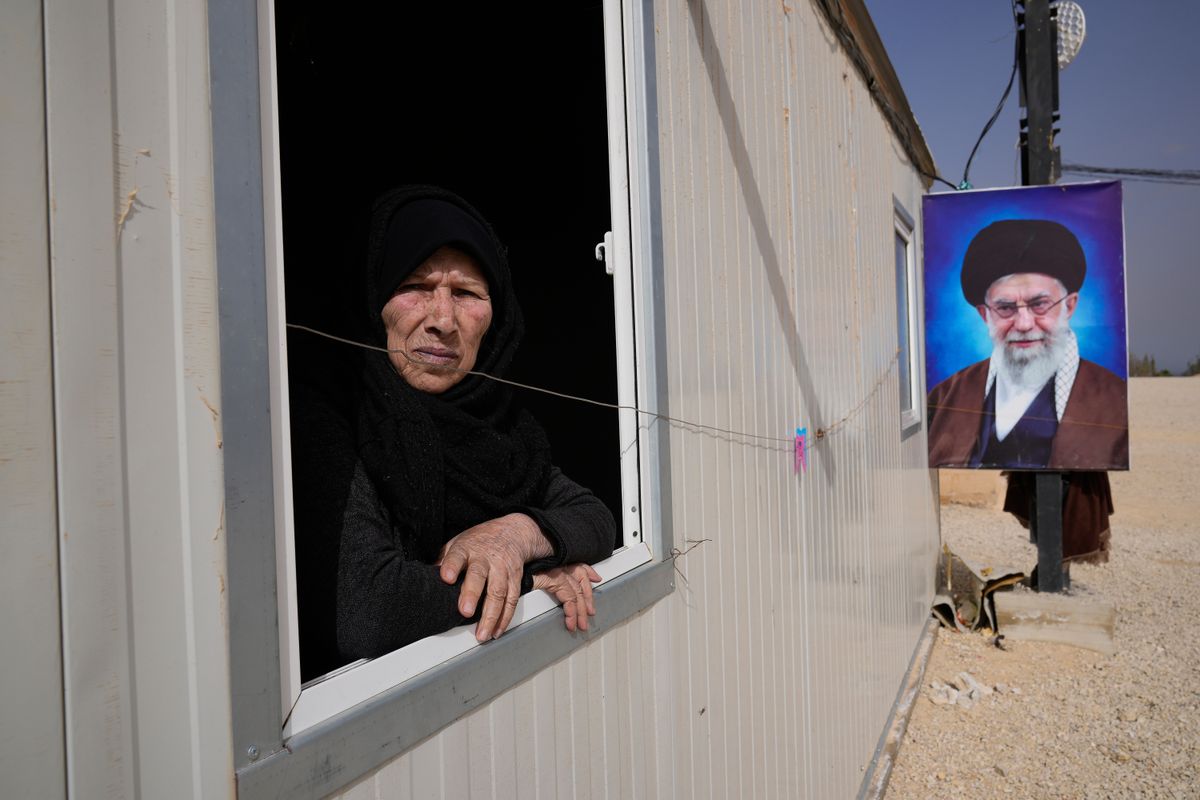
CAIRO (AP) — Iran’s Supreme Leader Ayatollah Ali Khamenei crushed the protests that swept across the country last month, but only by unleashing the bloodiest crackdown of his nearly four decades in power.
Now, with an American flotilla nearby, the 86-year-old Khamenei is trying to avert a potential U.S. attack. He has warned that if U.S. President Donald Trump strikes, a regional war will ensue. At the same time, he is allowing Iran to enter negotiations with the U.S. over its nuclear program, reversing his previous rejection of talks.
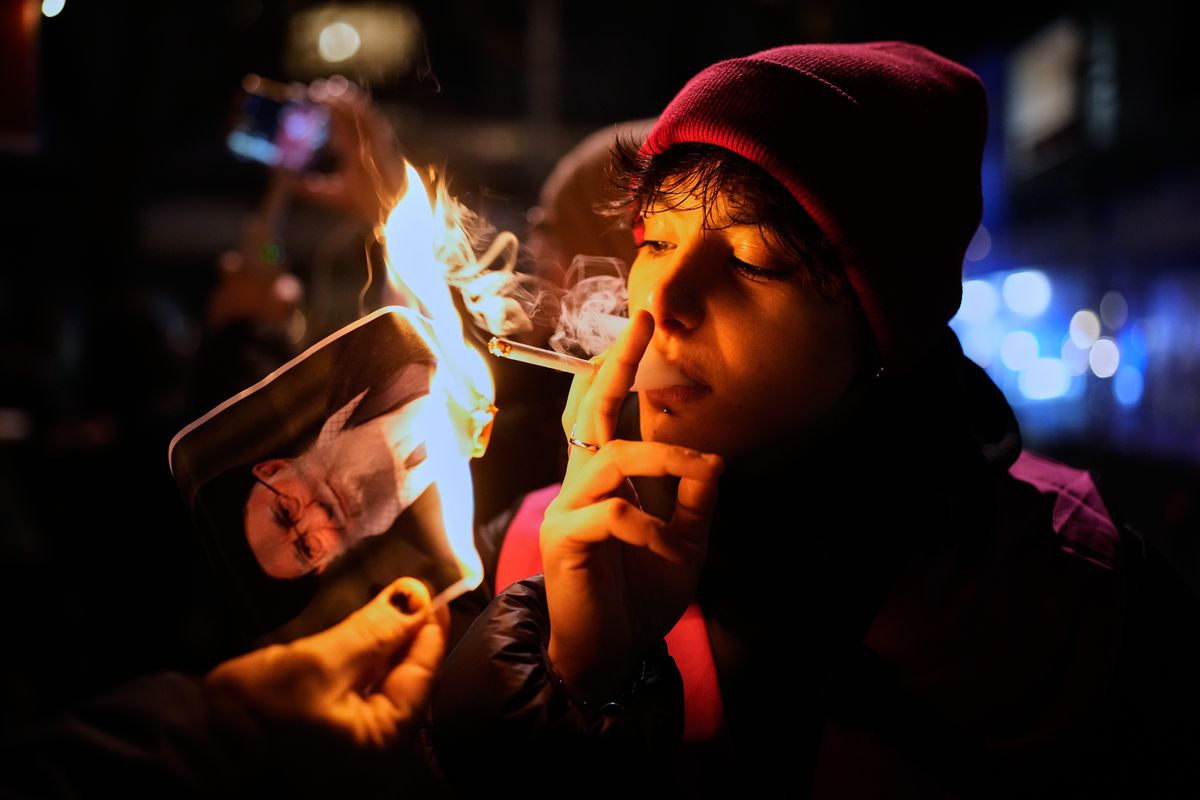
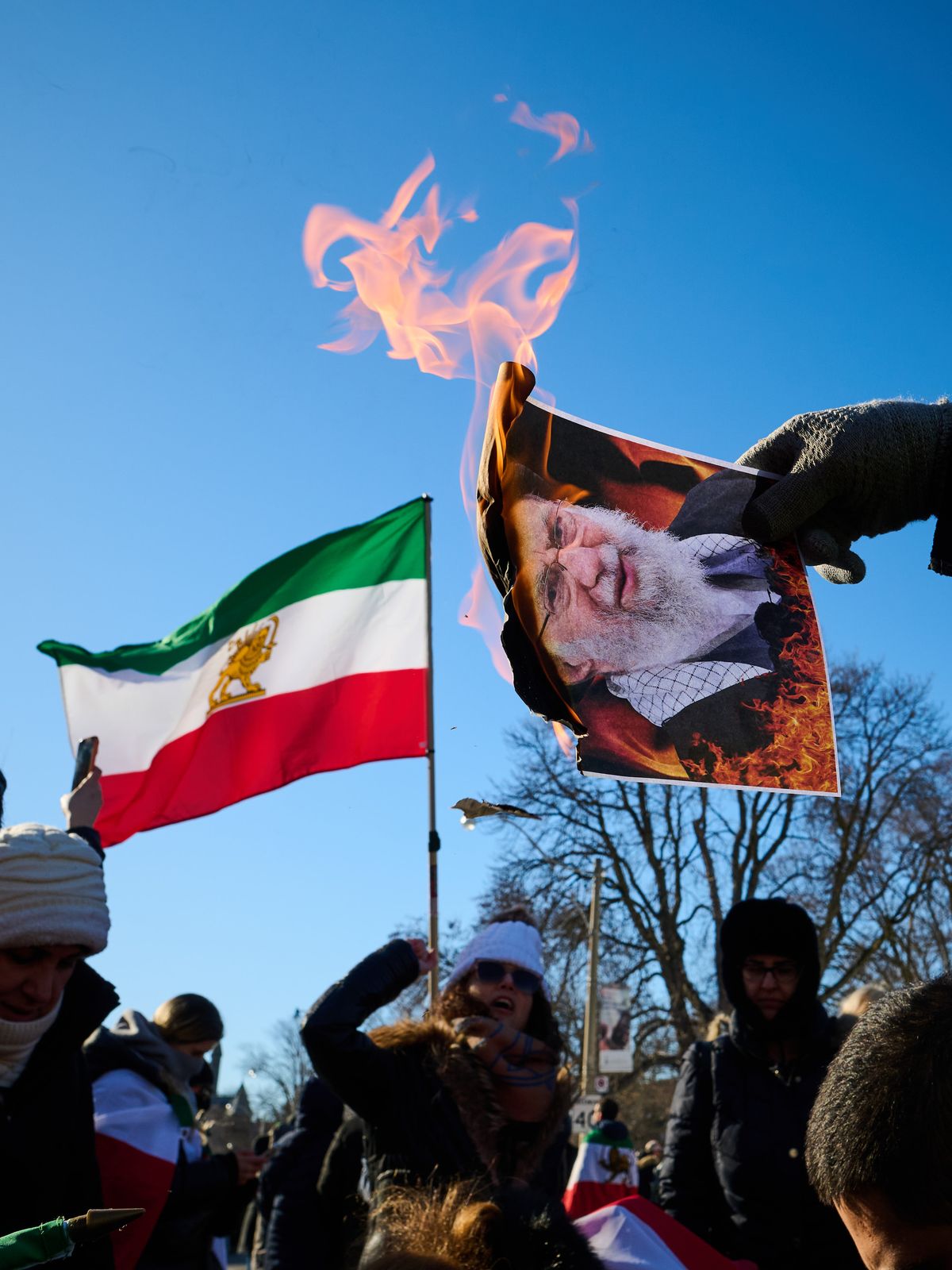
The ferocious suppression of the protests is a sign of how deep a threat Khamenei and Iran’s leadership see in the widespread popular anger. Years of sanctions, economic mismanagement and corruption have gutted Iran’s economy, hitting its once-large middle class hard. Chants of “Death to Khamenei!” during January’s protests underscored how economic woes have turned to resentment of clerical rule.
Popular discontent is not the only strain on the theocratic system that Khamenei heads. Israeli and U.S. bombardment during last summer’s 12-day war heavily damaged Iran’s nuclear program, missile systems and military capabilities. And Iran’s network of regional proxies that includes Hamas in Gaza and Hezbollah in Lebanon — dubbed the “Axis of Resistance” — has crumbled in recent years, setting back its ability to wield influence across the Middle East.
Still, Iran’s domestic crackdown displayed the iron grip that Khamenei and his Revolutionary Guard are capable of imposing. Thousands were killed, tens of thousands were arrested and the internet was shut down, largely cutting off Iranians from communicating with the outside world for weeks.
Here’s what to know about Khamenei:
He transformed the Islamic Republic
When he rose to power in 1989, Khamenei had to overcome deep doubts about his authority. A low-level cleric at the time, Khamenei didn’t have the religious credentials of his predecessor, Ayatollah Ruhollah Khomeini, the leader of the Islamic Revolution. With thick glasses and a plodding style, Khamenei also lacked Khomeini’s fiery charisma.
But Khamenei has ruled three times longer than the late Khomeini and has shaped Iran’s Islamic Republic perhaps even more dramatically.
He entrenched the system of rule by the “mullahs,” or Shiite Muslim clerics. Under the Islamic Republic, clerics stand at the top of the hierarchy, drawing the lines to which the civilian government, the military, and intelligence and security establishment must submit. In the eyes of hard-liners, Khamenei stands as the unquestionable authority — below only that of God.
At the same time, Khamenei built the paramilitary Revolutionary Guard into the dominant player in Iran’s military and internal politics.
The Guard boasts Iran’s most elite military and oversees its ballistic missile program. Khamenei also gave the Guard a free hand to build a network of businesses, allowing it to dominate Iran’s economy. In return, the Guard became his loyal shock force.
He fended off domestic challenges
The first major threat to Khamenei’s grip was the reform movement that swept into a parliamentary majority and the presidency soon after he became supreme leader. The movement advocated for giving greater power to elected officials – something Khamenei’s hard-line supporters feared would lead to dismantling the Islamic Republic system.
Khamenei stymied the reformists by rallying the clerical establishment. Unelected bodies run by the mullahs succeeded in shutting down major reforms and barring reform candidates from running in elections.
With the failure of the reform movement, waves of popular protests have followed, each crushed by the Revolutionary Guard and Iran’s other security agencies.
Huge nationwide protests erupted in 2009 over allegations of vote-rigging. Under the weight of sanctions, economic protests broke out in 2017 and 2019. More demonstrations broke out in 2022 over the death of Mahsa Amini after police detained her for not wearing her mandatory headscarf properly.
The successive crackdowns killed hundreds, and hundreds more were arrested amid reports of detainees tortured to death or raped in prison.
Deadliest crackdown yet
The latest bloodshed has eclipsed that past unrest. The demonstrations began in late December in Tehran’s traditional bazaar after the rial currency plunged to a record low of 1.42 million to the U.S. dollar. They quickly spread to cities across Iran.
Khamenei declared that “rioters must be put in their place,” giving a green light for a crackdown. When hundreds of thousands took the streets on Jan. 8 and 9, protesters who are veterans of past demonstrations said they were stunned by the firepower unleashed, with security forces firing on crowds.
Activists say they have so far documented more than 6,700 killed and are working to verify potentially thousands more. The government has put the toll far lower at 3,117, still higher than past crackdowns.
In the past, authorities have sought to defuse public anger by easing enforcements of some of the Islamic Republic’s social restrictions or acknowledging economic woes.
But so far, Khamenei has only toughened his rhetoric, referring to the protests as “a coup.” Activists say tens of thousands have been detained in past weeks.
Nuclear negotiations
By agreeing to nuclear negotiations with the U.S., Khamenei may be seeking to buy time to avert U.S. strikes – or counting on Trump’s threats being a bluff. Turkey, Egypt, Oman, Pakistan, Qatar, Saudi Arabia and the United Arab Emirates have all been working to try to arrange talks, which could take place in the coming days.
But the two sides are far apart. Iran has staunchly opposed the main American demands, that it halt all nuclear enrichment and that it surrender its uranium stocks.
Trump has been vague about what the goal of airstrikes would be. He had initially threatened strikes to stop Iran’s leaders from killing peaceful protesters or prevent mass executions. He has shifted to wielding the threat to push Iran to engage seriously in nuclear negotiations.
Some in Iran and among the large Iranian diaspora have expressed hopes that the U.S. will use military force to bring down Khamenei. But that could require potentially an enormous military operation, likely far beyond just airstrikes. There are also strong voices even among Khamenei opponents against foreign intervention toppling the theocracy.
And the scenario of eliminating Khamenei only brings to the fore the question that has hung over his rule as he grows older: Who or what would come after him?
Officially, a panel of Shiite clerics is tasked with choosing one of their own as his successor, and multiple names touted among leading Shiite clerics, including Khamenei’s son. But under Khamenei, the Revolutionary Guard has grown to become the most powerful body behind the ruling clerics’ robes.
Violently removing the supreme leader could prompt Guard commanders or its regular military to more overtly seize power. That could set off a bloody conflict over control of the oil-rich country of 85 million people.
By LEE KEATH
Associated Press