




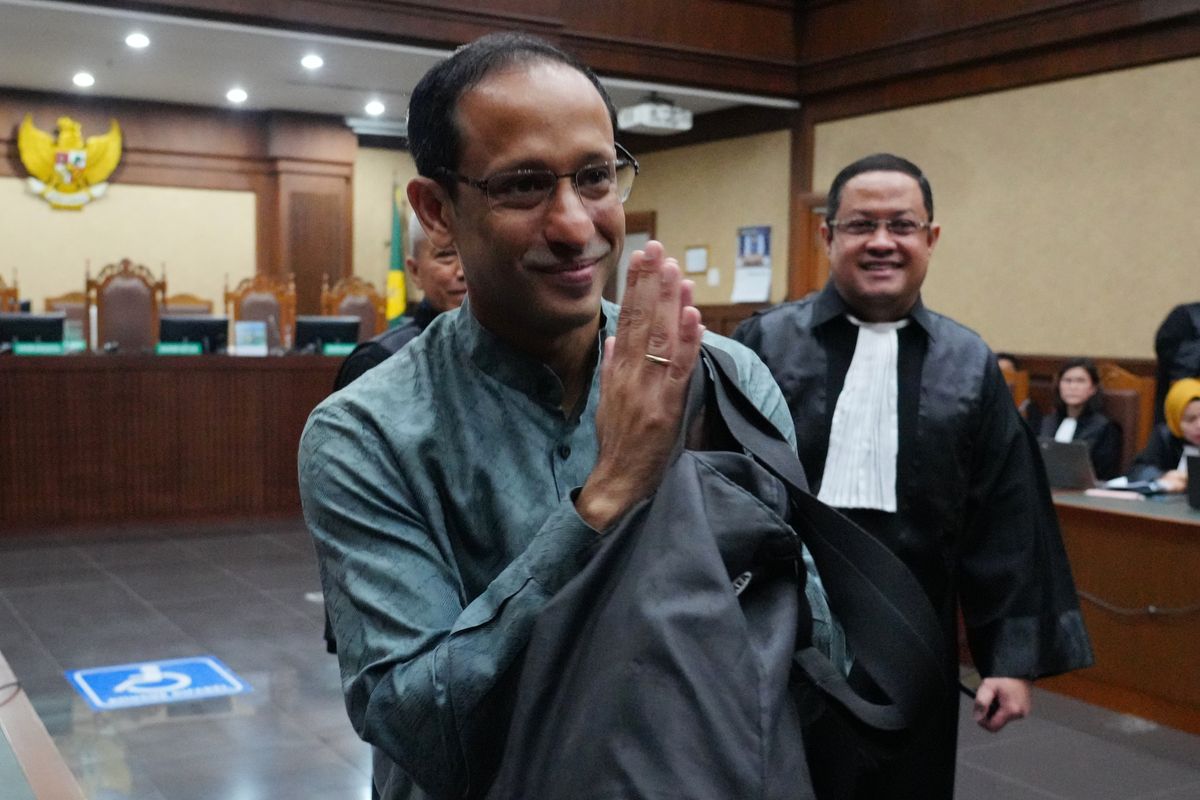
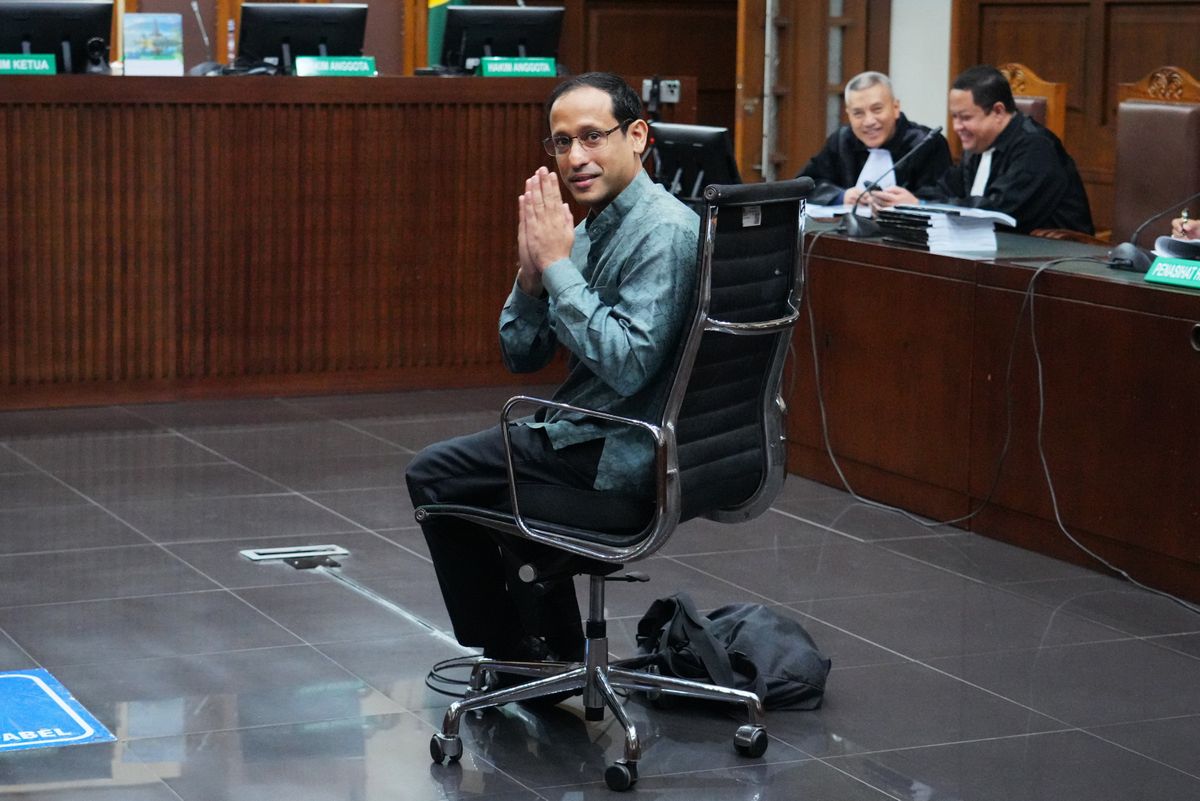
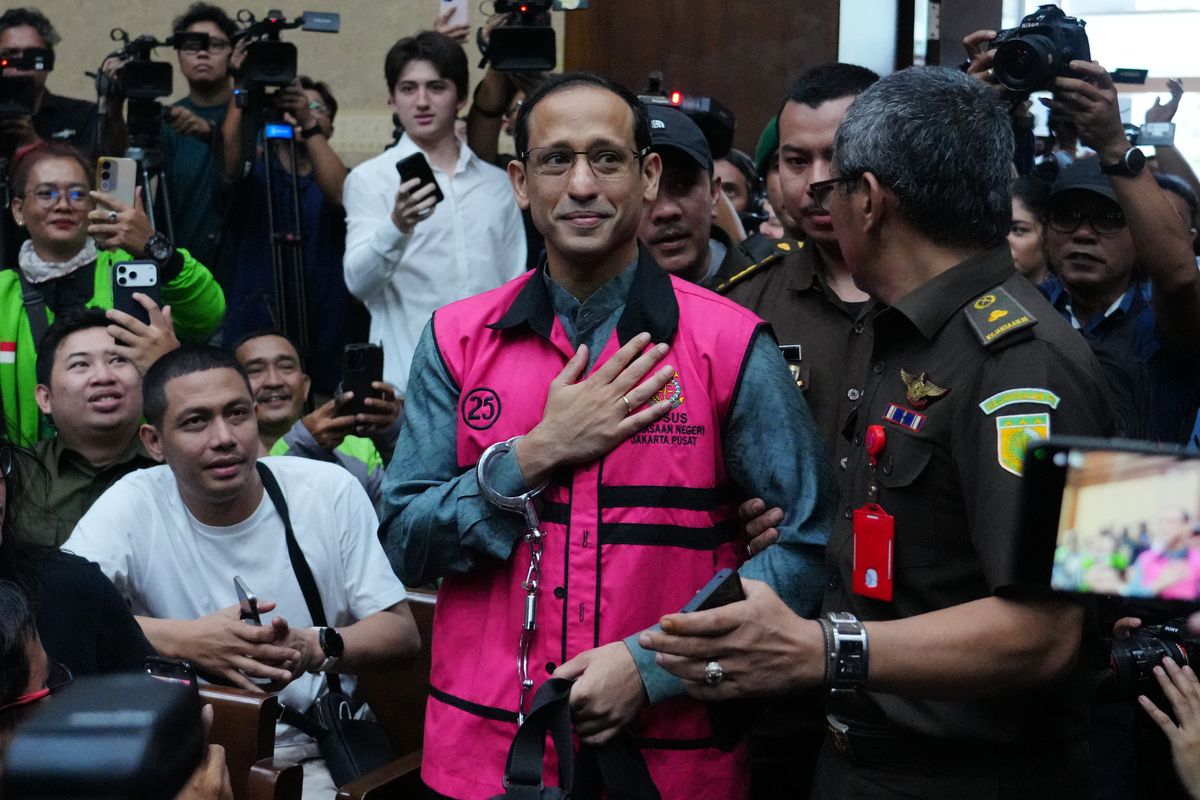
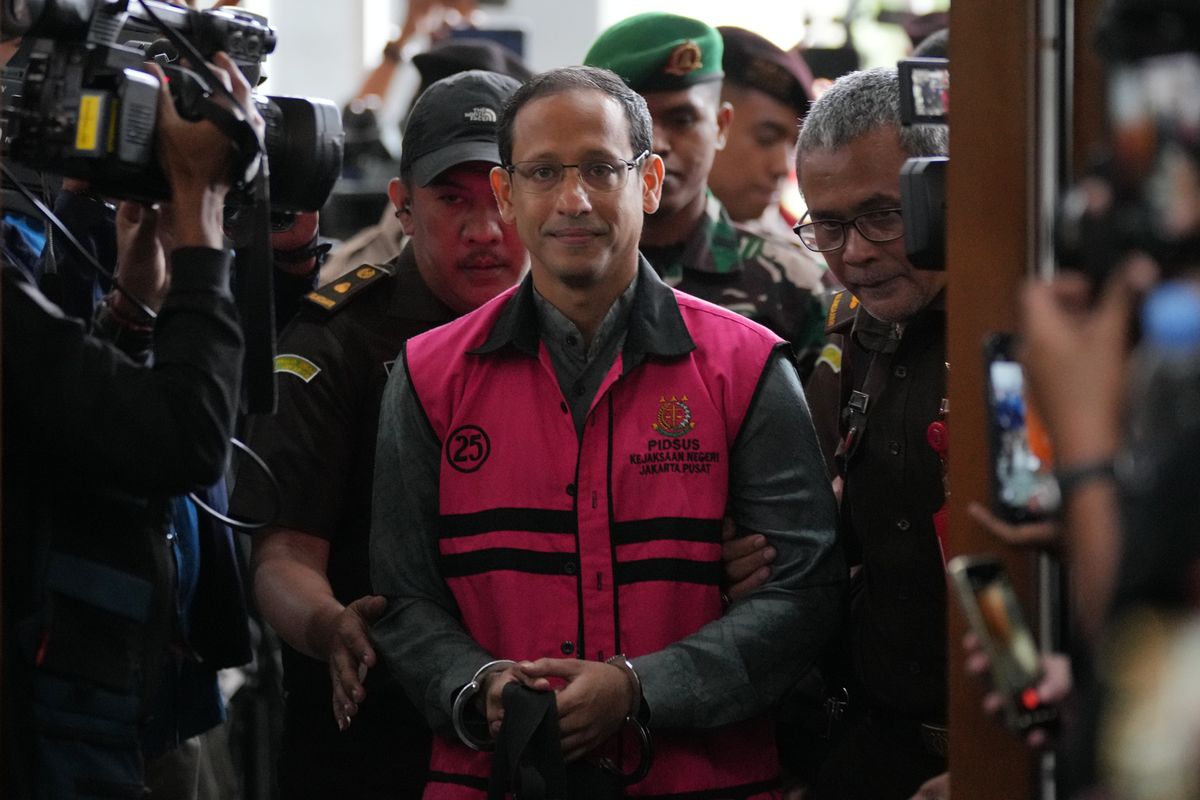
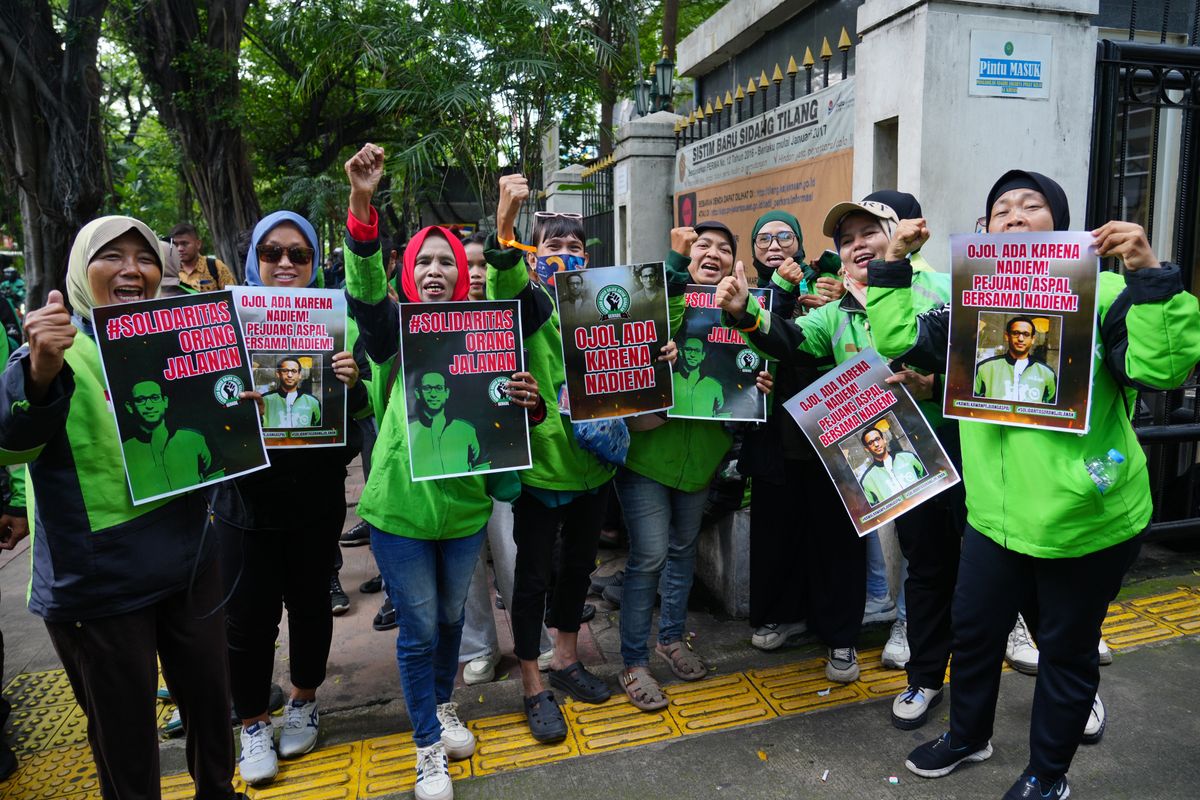
JAKARTA, Indonesia (AP) — An Indonesian court on Monday opened the trial of a co-founder of the country’s ride-hailing and payments company Gojek, who is accused of corruption in a government project to procure Google Chromebook laptops for schools.
Nadiem Anwar Makarim, 41, was a former education, culture, research and technology minister when he was arrested Sept. 7. His arrest came during an investigation by the attorney general’s office in Jakarta into an alleged $125 billion corruption scandal linked to the project.
The laptop procurement initiated under the government’s “digitalization of schools” policy aimed to equip schools in remote areas with digital devices and infrastructure.
Makarim, who was education minister between 2019 and 2024, allegedly favored Google’s Chromebook despite a ministry research team refusing to recommend the laptop model due to ineffectiveness in regions lacking internet access.
The indictment claims Makarim steered the nationwide procurement in 2020–2021 “entirely for personal business interests.” Prosecutors said he pressed Google to invest in PT Aplikasi Karya Anak Bangsa, known as PT AKAB. The company is the parent of Gojek.
Makarim received about 809 billion rupiah ($48.2 million) in connection with the program, prosecutors claimed.
He faces a possible sentence of life imprisonment for causing state losses and misusing public funds under Indonesia’s 2001 Corruption Law.
“The procurement ignored proper pricing benchmarks and technical needs, especially for remote or under-resourced regions,” lead prosecutor Muhammad Fadli Paramajeng told a panel of three judges at Jakarta’s Corruption Court on Monday.
The purchase of more than 1.2 million Chromebooks was designed to strengthen Google’s dominance in Indonesia’s education tech ecosystem and linked to subsequent Google investments of about $787 million in PT AKAB through Google Asia Pacific, he said.
Makarim, a Harvard University graduate, was a tech CEO who co-founded Gojek in 2009 and remained until 2019, when the company was valued at over $10 billion. He stepped down to join the cabinet of former Indonesia President Joko Widodo.
Prosecutors allege his resignation from PT AKAB and Gojek was a “strategic concealment” to mask conflicts of interest while Makarim appointed close associates as directors and “beneficial owners,” allowing him to maintain indirect control over company decisions.
Makarim has denied the allegations, saying he did not personally receive funds from the Chromebook procurement or related services.
Makarim’s defense attorneys argue Google’s investment largely predated his ministerial tenure and was routine corporate activity that was not tied to the laptop deal.
Makarim divested from PT AKAB upon taking office, his wealth fell by more than 50% during his term and procurement decisions were made by technical teams and officials, not the minister, they said.
“The defendant was not involved in the procurement process, as his role was limited solely to formulating policy,” defense lawyer Ari Yusuf Amir told the court. He called the indictment “unclear, inaccurate and incomplete,” saying it conflated Makarim’s ministerial authority with the work of other government officials.
Two former education ministry officials and a former tech consultant also were charged in the case, while another staff member is wanted by authorities but remains at large.
By TATAN SYUFLANA and NINIEK KARMINI
Associated Press