






MURDOCK, Neb. (AP) — In rural eastern Nebraska, a technology revolution could rise from fields of corn and soybean in the form of new data centers to power the artificial intelligence boom.
But just like around many parts of the country, opposition has been building in ways that defy typical partisan boundaries. Conservative farmers and the state Sierra Club chapter recently found common cause against labor leaders as they filled the firehouse in Murdock — population around 275 — to share concerns about data center development moving too quickly.
The scene exemplified an unlikely coalition that worries about dwindling farmland, declining water supplies and rising electricity bills — not to mention how massive corporations could reshape small town America into nodes in a national network of computing warehouses.
The debate around data center projects is one of the rare modern issues to cut across party lines, demographics and geography — from Republican-dominated Nebraska, Texas and Wyoming to swing-state Pennsylvania to Democratic-leaning New Mexico.
Supporters of data centers, including Republican President Donald Trump and some union leaders who usually back Democrats, praise a potential jobs and economic bonanza, while helping the U.S. thwart China in the geopolitical race for technological supremacy.
But hostility toward developments coming at breakneck speed has surged ahead of November’s midterm elections, and forced national, state and local elected officials to adapt to a shifting political landscape.
Judy Stroy, a fifth-generation Nebraska farmer whose late husband grew corn and soybeans and whose son still does, worried that with “the amount of ground that’s getting gobbled up every year, our food source is in trouble.”
“That should scare everyone,” she said.
Some areas have paused data center expansion
Stroy’s fields are just outside Murdock, a village named for a railroad official at the company that first laid tracks here in the 1890s. There’s a school, a post office, a bar and a Corn Grower’s State Bank branch, plus the Midwest Farmer’s Coop where growers sell their produce and buy supplies like feed and fertilizer.
Murdock is in Cass County, where officials recently approved a 12-month moratorium on allowing data center development.
That might freeze energy company Tenaska’s plans to potentially option 1,300-plus acres of land along Highway 75, south of the nearby villages of Murray and Beaver Lake, in a project that activists fear would pave the way for a data center and its own natural gas power plant.
Tenaska spokesperson Leighton Elise Eusebio said the company has been exploring “the feasibility of developing power generation to serve large loads, whether that is a data center or other form of economic development.”
“We believe there are opportunities to work with public power, communities and other stakeholders to develop power generation that will benefit Nebraskans,” Eusebio said in a statement.
Meanwhile, data center operator CyrusOne has nearly 400 acres under its control outside another Cass County community, Plattsmouth, also along Highway 75, but no development has occurred nor has a project been announced, according to a CyrusOne spokesperson.
The area may be seen as particularly favorable because the highway has been widened, offering easy access to Omaha to the northeast, and to the college town of Lincoln to the southwest. The Missouri River provides a reasonably close, major water source.
Some landowners accepted large checks to sell. Local land typically can go for $10,000 an acre, residents say, and developers sometimes offer four times that, or even more.
Such paydays can be extra enticing as farming has gotten more expensive amid rising diesel prices and soybean exports that have declined in the midst of Trump’s tariff fight with a major market for the crop, China.
“What if somebody offered me $40,000 an acre for my ground? It would be hard to turn down,” Stroy conceded.
Nebraska Sierra Club attorney Ken Winston noted that tech giants have made donations to municipal programs in Lincoln to help mitigate the impact of data centers.
“We need to be aware of the fact that they’re going to happen somewhere,” Winston said. “But communities need to be able to protect themselves and if they don’t want them, they should be able to say no.”
Major project sparks New Mexico divisions
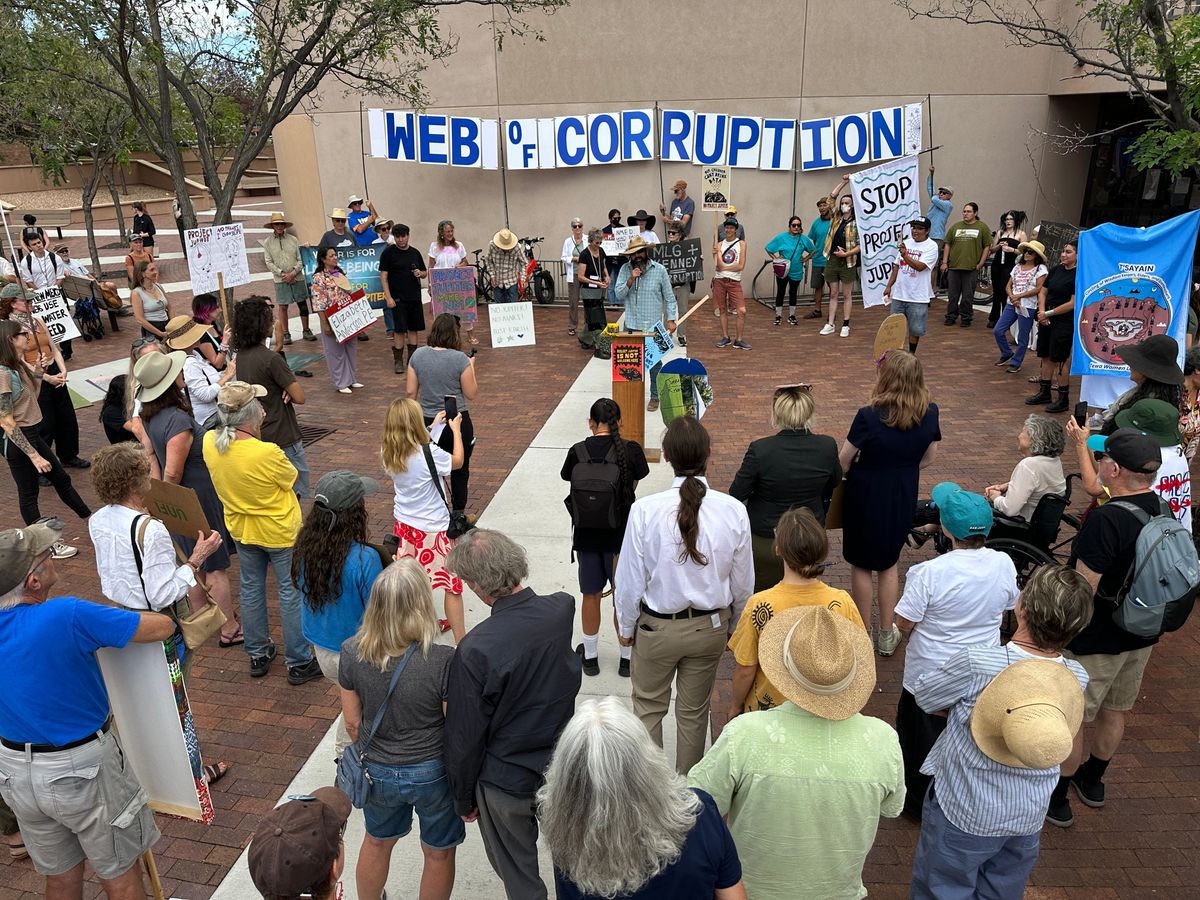
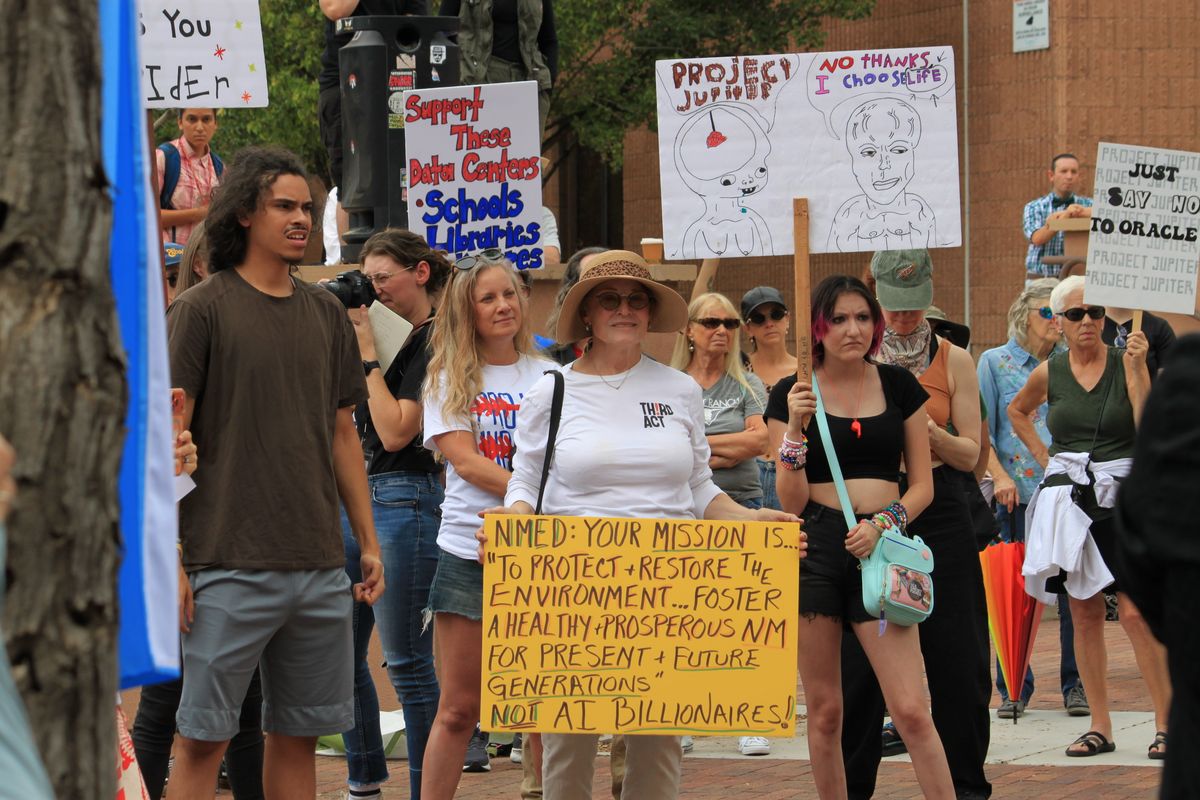
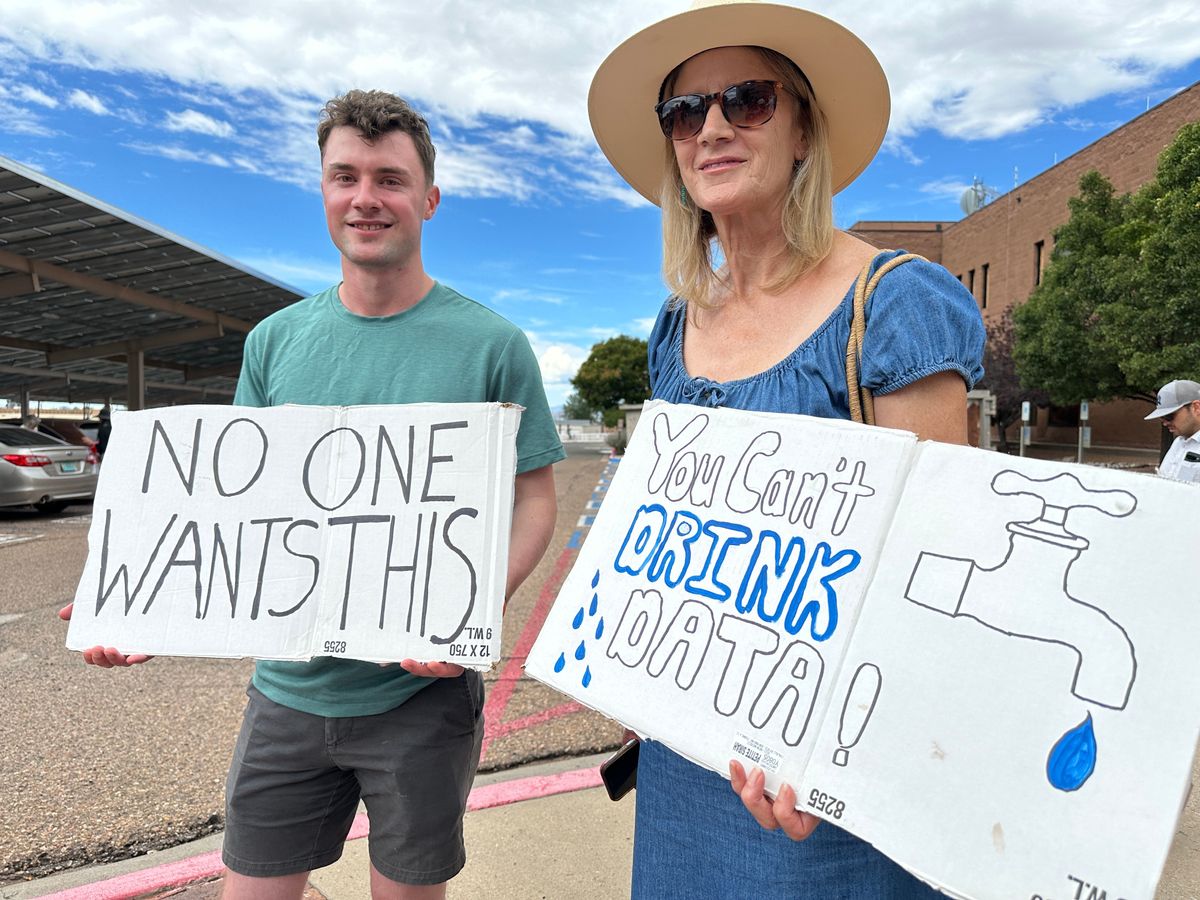
There is no development moratorium in New Mexico that could stop Project Jupiter, a $165 billion data center complex planned near the Mexican border, but concerns over dwindling water supplies are mounting.
“It is not about blue vs. red, or whether we’re a purple state or county,” said Samantha Barncastle Salopek, a longtime water attorney, who is running as a Republican for a seat on the Doña Ana County Commission partly because of the project.
“This is about the local community coming together and saying, ‘Hold on, hold on.’ We didn’t get enough information, and now we’re very concerned because also we have to cut back our water use anyway,” she said.
Barncastle Salopek, whose family grows pecans, said she frequently fields worried calls from farmers, ranchers and local business owners across the political spectrum and in other states.
“When we have to fight over the last piece of the pie, those big companies are going to win,” she said of pressure on remaining water supplies. That’s because New Mexico has been hammered by persistent drought, and large swaths of the Rio Grande have dried up in the central part of the state.
The largest reservoir stands at 1.3% capacity, lows unseen since the early 1970s, even though New Mexico is on the hook to deliver more water to Texas under a recent settlement approved by the U.S. Supreme Court. Activists worry that New Mexico’s pecan, chile and other farms could disappear, taking schools, hospitals and supporting businesses and incomes with them.
Oracle, which announced Project Jupiter, has offered funding for youth programs and pledged to invest $50 million in water and wastewater systems in Doña Ana County.
It also plans to partner with an agriculture technology company to install sensors providing real-time data to farmers to help them use water more efficiently — estimating an eventual savings of 21 million gallons annually.
An Oracle spokesperson called the project a generational New Mexico investment, saying it would generate $4.7 billion in taxes and create more than 7,000 construction jobs and 1,500 long-term jobs while being designed to use little water over 15 years, given its closed-loop cooling and fuel-cell systems.
Still, the Center for Biological Diversity last week filed an emergency petition with the New Mexico Supreme Court, challenging the state’s approval of well drilling to supply millions of gallons of water for Project Jupiter’s construction.
The court on Sunday granted that request, halting authorization to use water from a new well until the legal fight is concluded.
During a recent protest in the state capital of Santa Fe, the demonstrators included Jesus Rodriguez, who traveled four-plus hours from his micro-farm in southern New Mexico.
“The fact is that now the money has taken over,” said Rodriguez, who described himself as disillusioned with American politics. “Now it shows that the Democrats, Republicans, or whatever other party is involved, they don’t care about the land. They care about money. And that’s because they want power.”
Some labor leaders see new job opportunities
Data centers have found an ally in organized labor, including Mike Gage, president and secretary-treasurer of the Nebraska State AFL-CIO. Gage said he personally was worried that some workers are seeing their jobs replaced by AI, but that the centers can also create construction jobs and longer-term positions for people running the finished product.
“This problem is also a very big opportunity for some small communities,” Gage said. He noted that a data center built decades ago in Council Bluffs, Iowa, near Omaha, still employs about 60 people today.
Heather McKenzie, who works in labor relations in Lincoln, said putting more data centers in Nebraska can slow an exodus of skilled young people leaving the state.
“I don’t think that enough people understand that this is going to create really good jobs,” she said. “I think a lot of people view it in a negative sense because it’s being sprung on them.”
Chris Backemeyer, a Democratic congressional candidate in the district that includes Murdock, is a former State Department employee. He said he heard about Saudi Arabia and the United Arab Emirates offering to host data centers for the U.S., which might concentrate technology outside the country.
“That scares the bejesus out of me,” Backemeyer said.
Trump champions data centers, but some Republicans are wary
The president has warned about China’s technology gains and Republican House Speaker Mike Johnson said that a federal pause on data center construction might be a “dangerous prospect.”
Still, most registered voters oppose building a data center in their area, according to a July Fox News poll, including 60% of Republicans and 53% of MAGA voters.
Democratic New York Gov. Kathy Hochul ordered a one-year ban on large data centers. Pennsylvania Gov. Josh Shapiro, a fellow Democrat, said his administration would no longer prioritize data center projects when it comes to issuing construction permits or granting developers lucrative tax exemptions if they don’t meet certain standards.
Republican Texas Gov. Greg Abbott announced a halt on approval of new data centers until audits determine their impact on the state’s electrical grid.
Abbott told ABC News that data centers hadn’t been working in collaboration with state or local officials and “basically dug their own grave for the problem that’s been caused for them, and that’s why they got the backlash they deserve.”
The Republican Party’s Senate campaign arm is worried enough about the issue potentially deciding races in Ohio, that it drafted a memo outlining how to respond. But politicians on both sides of the aisle have turned data centers into a punching bag.
Wyoming Secretary of State Chuck Gray, a Republican running for an open House seat, has pledged to halt their construction.
“If Silicon Valley wants to build their liberal empire, they can do it somewhere else,” he said in an ad.
That overlaps with an ad for the mayor of Scranton, Pennsylvania, Democrat Paige Cognetti, who said “we are not for sale” when it comes to data centers. Cognetti is trying to unseat first-term Republican Rep. Rob Bresnahan in a battleground district.
Trump is undeterred, saying that what data centers mean “for a community is jobs and lots of money and lower taxes.” The president has also conceded, however, that tech companies and developers maybe “can use a little public relations help.”
Seeking to soften fears about rising utility prices, Trump says his administration has urged data centers to build their own power plants.
Yet, during a recent meeting in the conservative East Texas town of Tyler, residents complained of being forced to live in a “gas cloud” so data centers can get enough electricity.
The complaint echoed a similar objection from Kardal Coleman, who leads the Democratic Party in big-city Dallas County. He wrote a recent email decrying data centers for “replacing our jobs, polluting our air, and exacerbating the climate crisis, not to mention the noise disturbing our neighborhoods.”
___
Montoya Bryan reported from Santa Fe, New Mexico.
By WILL WEISSERT and SUSAN MONTOYA BRYAN
Associated Press