




DEIR AL-BALAH, Gaza Strip (AP) — Israeli strikes pounded Gaza on Wednesday, killing at least 21 Palestinians, including two infants, and further rocking a fragile ceasefire deal, hospital officials said. Israel said it was responding to a militant attack on Israeli soldiers that seriously wounded one.
Deadly Israeli strikes have repeatedly punctuated the truce since it came into effect on Oct. 10, and the escalating Palestinian toll has made many in Gaza say it feels like the war is continuing unabated. Among the Palestinians killed Wednesday were five children, seven women and an on-duty paramedic, according to hospital officials.
“The genocidal war against our people in the Gaza Strip continues,” said Dr. Mohamed Abu Selmiya, director of Gaza City’s Shifa Hospital, in a Facebook post. “Where is the ceasefire? Where are the mediators?”
Israel strongly denies accusations that it is committing genocide in Gaza. The war began on Oct. 7, 2023, when thousands of Hamas-led militants poured into southern Israel after a surprise barrage of rockets, killing 1,200 people, most of them civilians, and abducting 251.
Deadly strikes have continued despite ceasefire deal
The deal attempted to halt the more than 2-year-old war between Israel and Hamas. While the heaviest fighting has subsided, it has been marred by repeated flareups of violence.
A total of 556 Palestinians have been killed by Israel and 1,500 wounded since the ceasefire went into effect, according to Gaza health officials, while Israel’s military says four Israeli soldiers have been killed.
Israel’s military has said its continuing strikes are responses to Hamas violations or militant attacks on its soldiers, but dozens of civilians have died. Eight Arab and Muslim countries, including mediators Egypt and Qatar, recently condemned what they called Israel’s “repeated violations” of the deal.
An Israeli military official, speaking on the condition of anonymity in line with military policy, told The Associated Press that Israel’s latest attacks were in response to militant gunfire that badly wounded a reservist soldier Wednesday morning.
Early morning strike kills 11, including two children
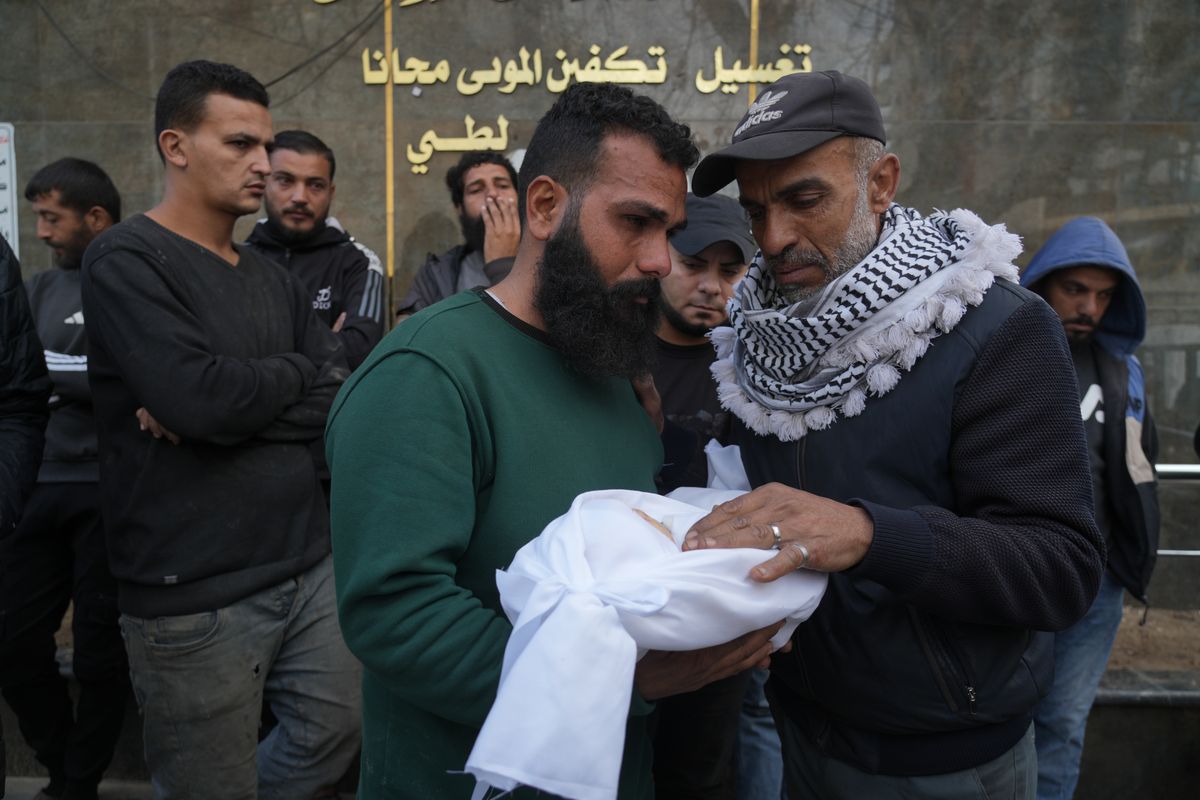
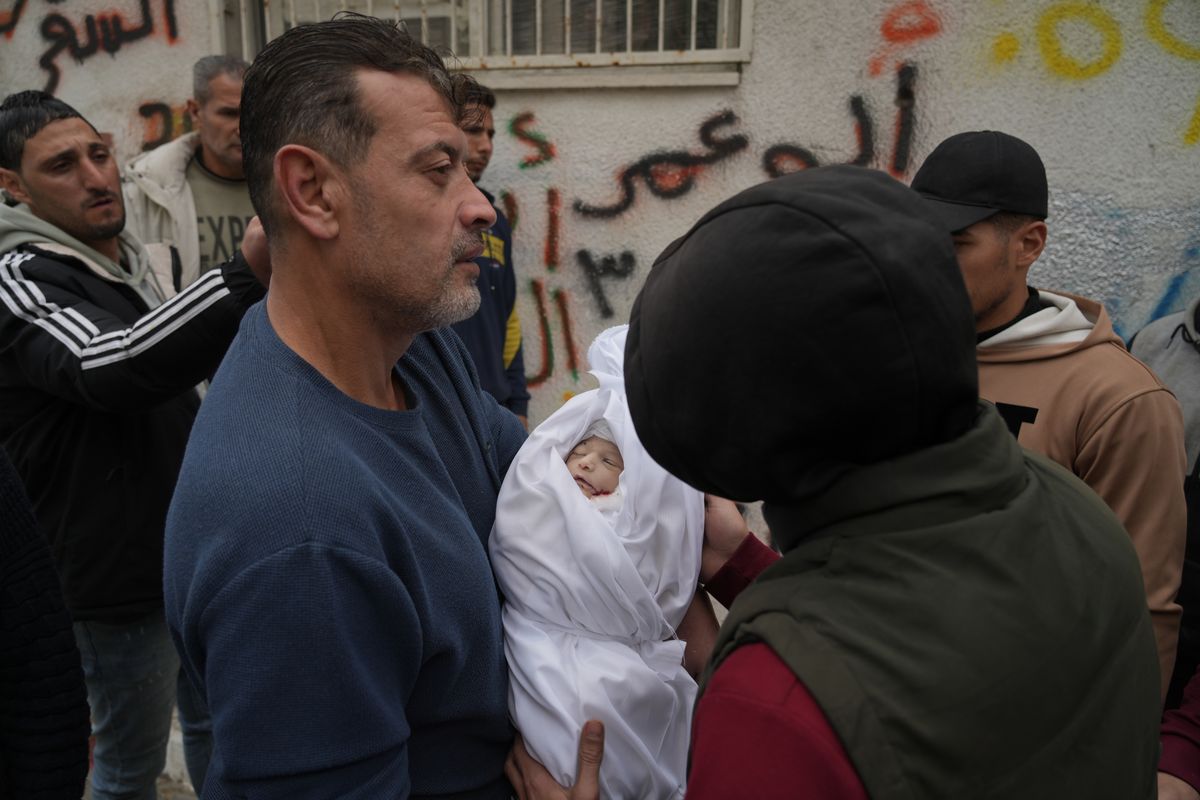
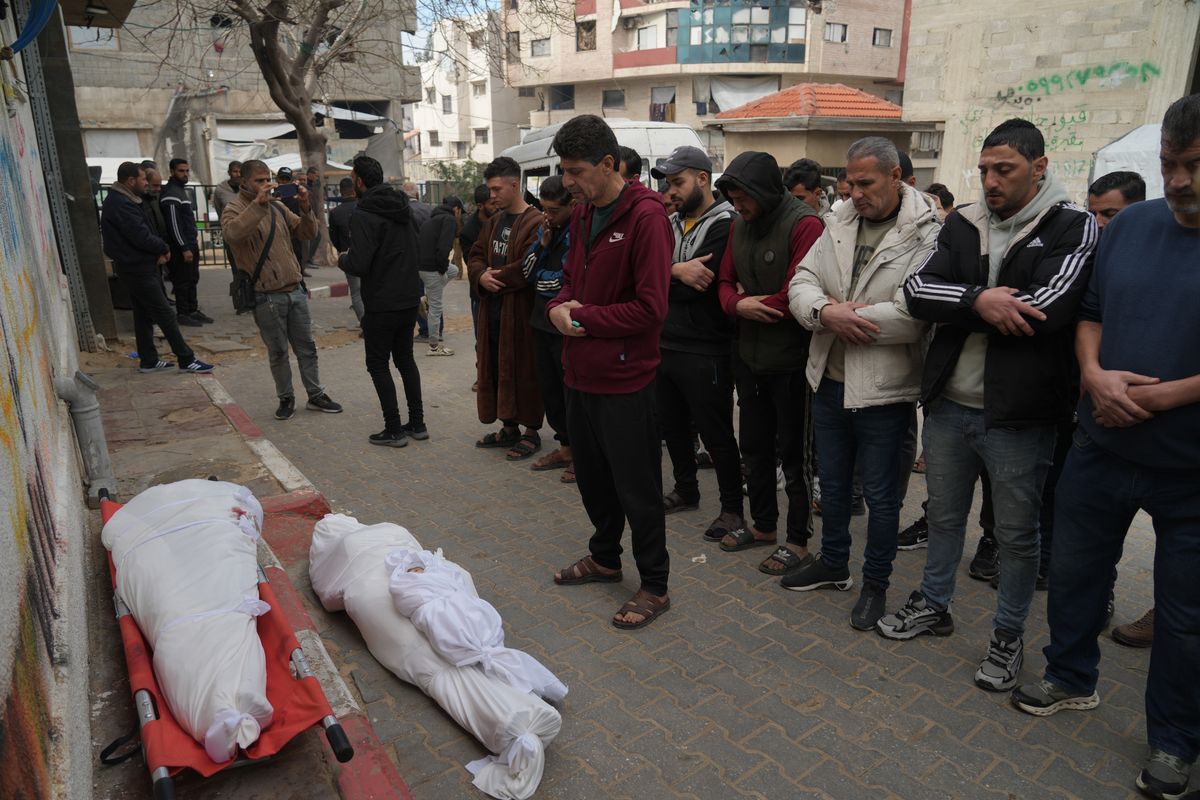
Israeli troops fired on a building in the Tuffah neighborhood in north Gaza, killing at least 11 people, most from the same family, said Shifa Hospital, which received the bodies. The dead included two parents, their 10-day-old girl Wateen Khabbaz, her 5-month-old cousin, Mira Khabbaz, and the children’s grandmother.
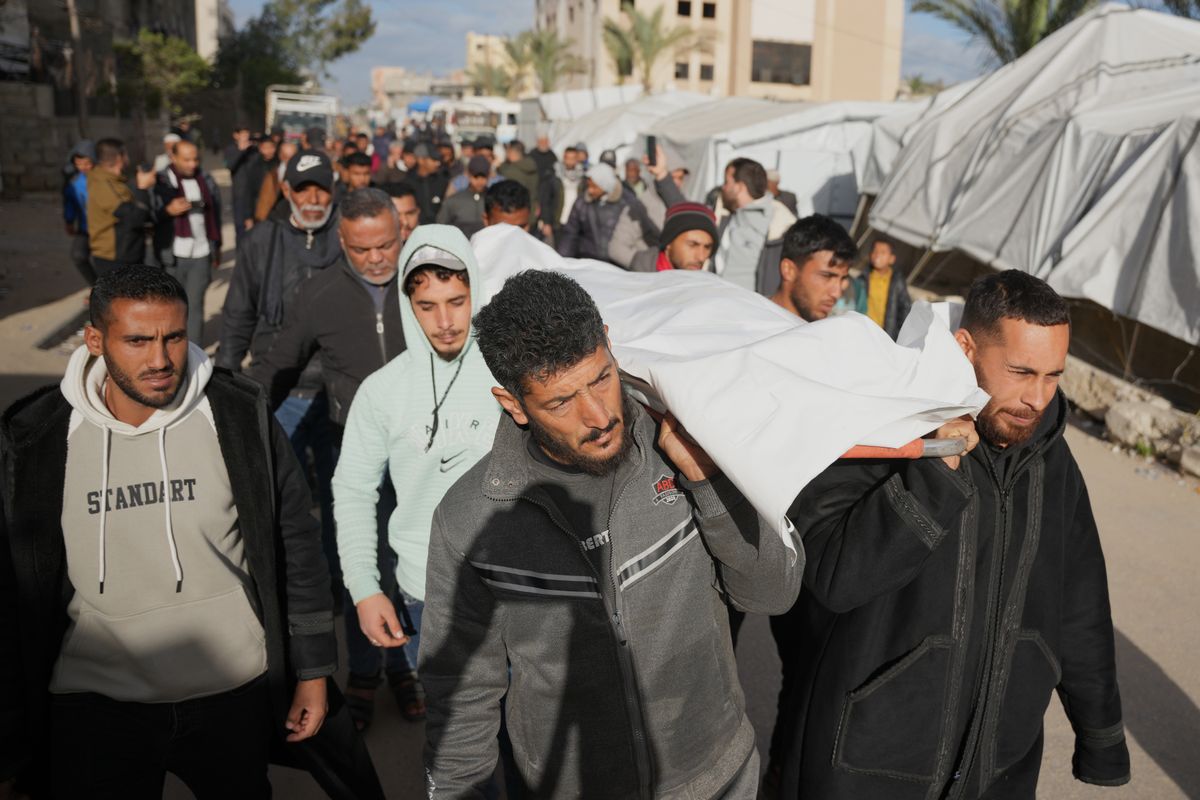
Mourners gathered in the courtyard of Shifa hospital Wednesday morning for funeral prayers.
“What did this child do? …. Why are they killing the children?” asked a relative of the family, Mohammad Jaser.
“We don’t understand why this is happening to us. What do we do? Where do we go? This isn’t life,” he said.
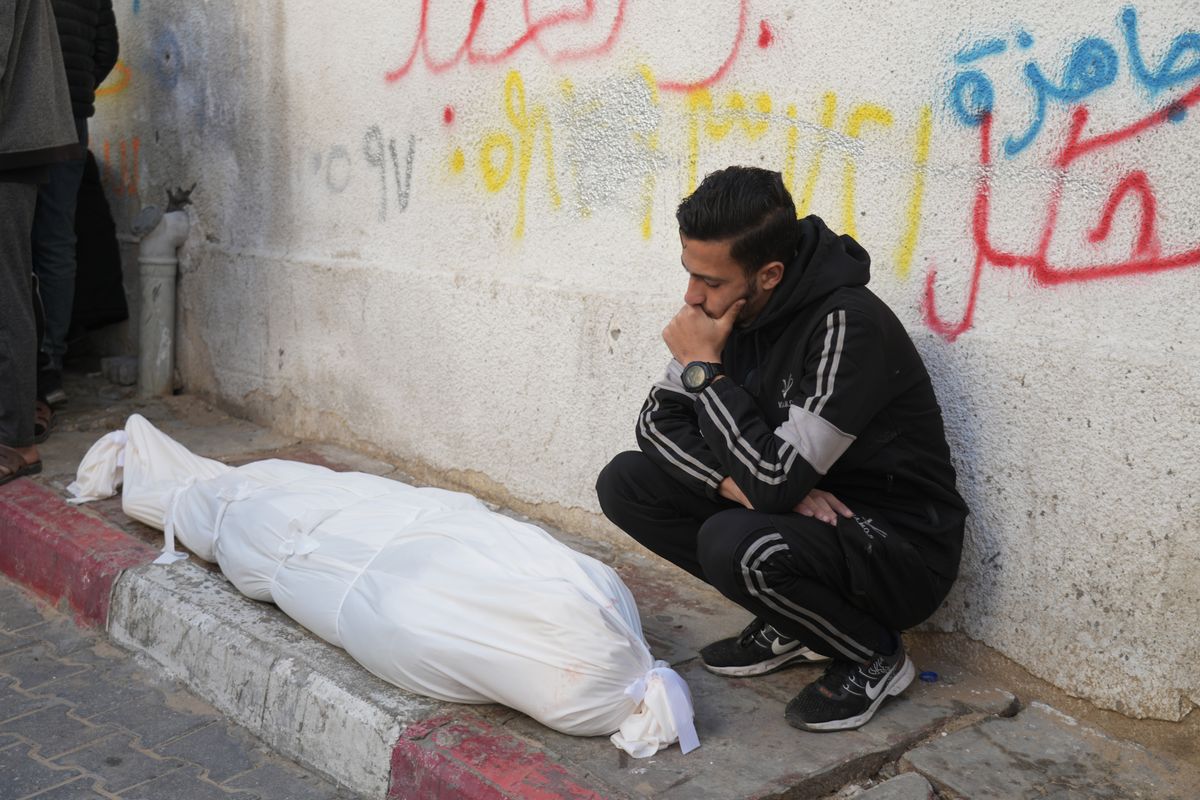
Two young children were seen kneeling at the body of their father as a woman told them to bid him farewell. A young girl kissed her father’s cheeks.
Strikes on Gaza continue into Wednesday afternoon
Later, an Israeli strike on a family’s tent in the southern city of Khan Younis killed three people including a 12-year-old boy, said Nasser Hospital, which received the bodies.
A strike on a tent in the Muwasi area of Khan Younis killed at least two people and wounded five others, according to a field hospital run by the Palestinian Red Crescent in the area. The dead included Hussein Hassan Hussein al-Semieri, a paramedic who was on duty at the time, said the hospital.
Thirty-eight Palestinians were wounded in total by the strikes Wednesday, the Gaza health ministry said.
Passage through Rafah border is minimal
The Rafah border crossing’s opening Monday was hailed as a step forward for the fragile ceasefire. But since then, Palestinian passage through the crossing has been marred by delays, interrogations and uncertainty over who would be allowed to cross.
It took the entire day Tuesday for 40 Palestinians to enter Gaza. Around 1 a.m. Wednesday, they finally arrived at Nasser Hospital in Khan Younis, where their families welcomed them. By midday Wednesday, no one else had passed through the crossing.
Despite no traffic, a European Union official said the Rafah border crossing was open. An EU mission and Palestinian workers were present at the crossing. The official, tasked with communicating for the EU, spoke on condition of anonymity because they were not authorized to be named.
Three women who crossed into Gaza on Monday told The Associated Press a day later that Israeli troops blindfolded and handcuffed them, then interrogated and threatened them, holding them for several hours before they were released.
The EU official said that the border mission had no knowledge of luggage confiscation or mistreatment by Israeli soldiers or Palestinians in the border areas.
Asked about the reports, the Israeli military said that “no incidents of inappropriate conduct, mistreatment, apprehensions, or confiscation of property by the Israeli security establishment are known.”
Ceasefire deal plods forward
While all fighting has not stopped, some parts of the ceasefire deal have moved forward.
Hamas has released all of the hostages it was holding, and in return Israel has released several thousand Palestinians and is beginning to reopen Rafah. Increased amounts of humanitarian aid have flowed into Gaza and a new technocratic committee has been appointed to administer the territory’s daily affairs.
But other key elements of the ceasefire appear to have stalled, including the deployment of an international security force, the disarmament of Hamas and the reconstruction of Gaza. The U.S. has given no timeline on when these parts of the deal will wrap up.
Over 71,800 Palestinians have been killed since the start of the war, according to the Gaza health ministry, which does not distinguish between fighters and civilians. The ministry, which is part of the Hamas-led government, maintains detailed casualty records that are seen as generally reliable by U.N. agencies and independent experts.
___
Magdy reported from Cairo and Frankel from Jerusalem. AP writer Sam McNeil contributed from Brussels.
By WAFAA SHURAFA, SAMY MAGDY and JULIA FRANKEL
Associated Press