




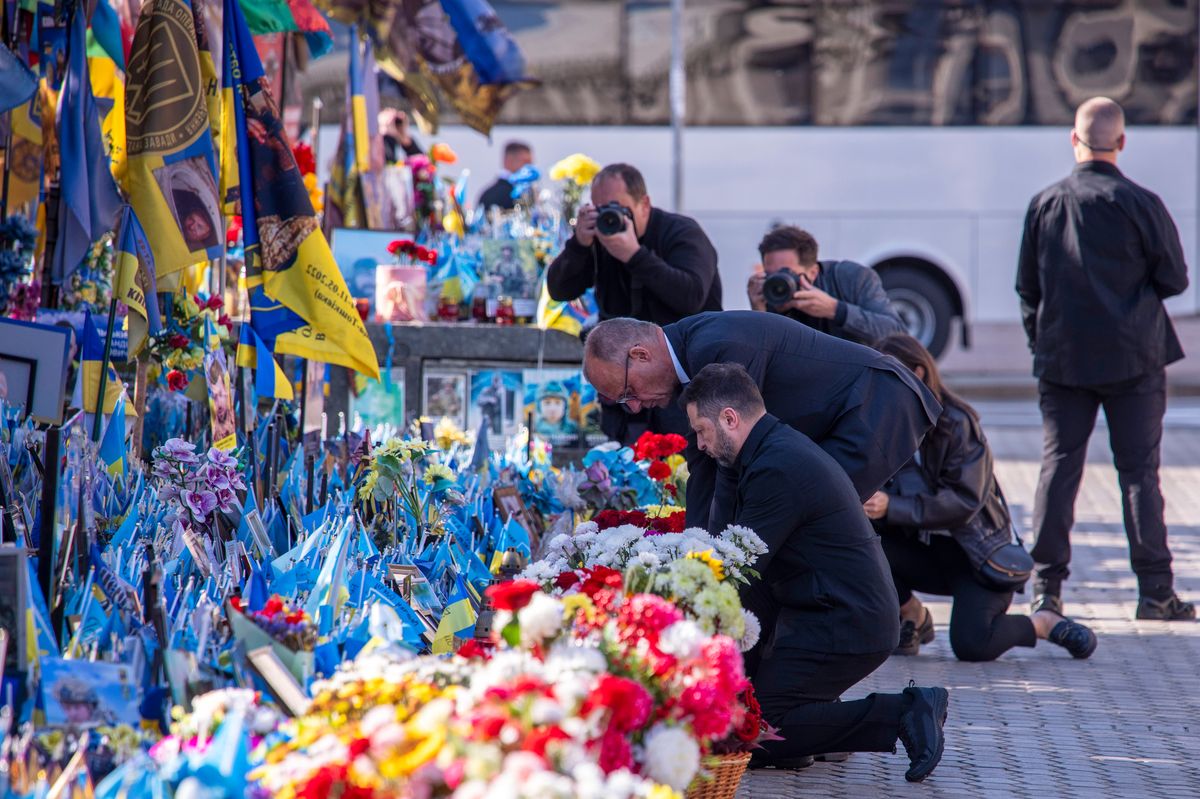
KYIV, Ukraine (AP) — German Chancellor Friedrich Merz announced a new aid package for Ukraine worth more than 1.3 billion euros ($1.5 billion) during a visit to Kyiv on Sunday, as Russia escalated its attacks on Ukrainian cities.
The aerial war has intensified, with Moscow menacing cities across Ukraine with hard-to-intercept ballistic missiles and jet-powered drones, while Kyiv has been striking Russia’s oil industry and businesses.
About 1 billion euros ($1.1 billion) of the package is military aid, including long-range strike weapons, combat drones and satellite technology, “so that Ukraine can also target Russian launch pads,” Merz said at a news conference. Germany is also providing some 350 million euros ($395 million) in energy aid ahead of winter for generators, substations and repair work, he said.
Ukrainian President Volodymyr Zelenskyy said the two countries also signed 15 agreements worth more than 8.5 billion euros ($9.6 billion), mostly covering security cooperation, weapons production and procurement, as well as a deal to expand their joint counter-drone efforts.
“This is weaponry that will help right now,” Zelenskyy wrote on X, adding they also discussed the need for air defense, which he called “key” at this time.
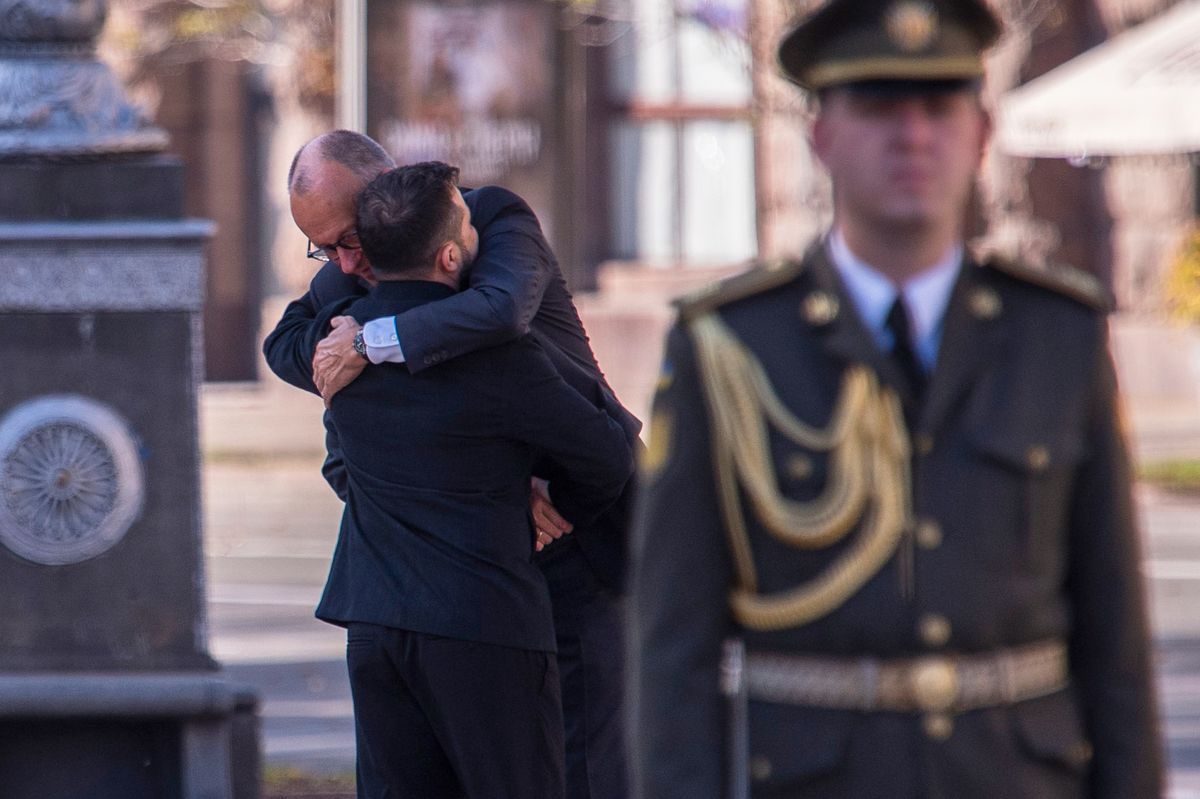
At the news conference, Zelenskyy said Merz’s visit amid Russian attacks was “an important signal of support for Ukraine and of the courage of Germany and all of Europe.”
Germany will fund the joint production of drones designed to intercept Russia’s jet-powered drones, Merz said, adding that “significant technical breakthroughs” in recent weeks were speeding up production. “This will quickly and tangibly strengthen Ukraine’s air defense,” he said. “And this strengthening is urgently needed.”
Zelenskyy called jet-powered drones a growing challenge, saying Russia had launched 900 of them this week alone and Ukraine was able to intercept only around half. He highlighted the role of F-16 fighter jets in countering the threat and said he would speak with U.S. President Donald Trump about securing more ammunition.
Germany is Ukraine’s largest donor, sending Kyiv more than 43.3 billion euros ($48.8 billion) since the war began, along with equipment and weapons.
Merz was accompanied by Economy and Energy Minister Katherina Reiche and a business delegation.
US proposes talks by end of October
Zelenskyy said the U.S. was in contact with both Kyiv and Moscow and had proposed holding a trilateral meeting at the technical level by the end of October, possibly in the United Arab Emirates. He said he had told U.S. negotiators on Saturday that Ukraine was ready to take part, and that Kyiv was now waiting for Russia’s response.
He also accused Moscow of avoiding meaningful peace talks, and said Ukraine and Germany were working to advance diplomatic efforts with European participation.
Leaders visit National Academy of Sciences attack site
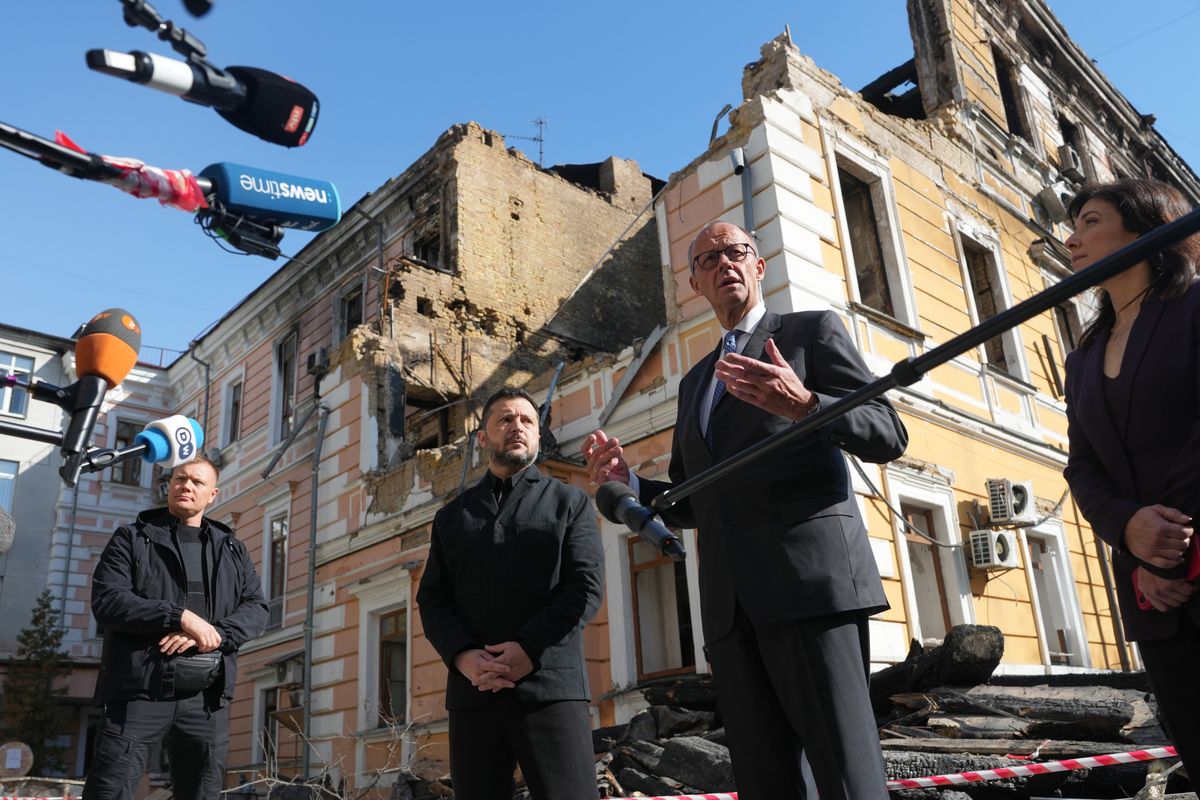
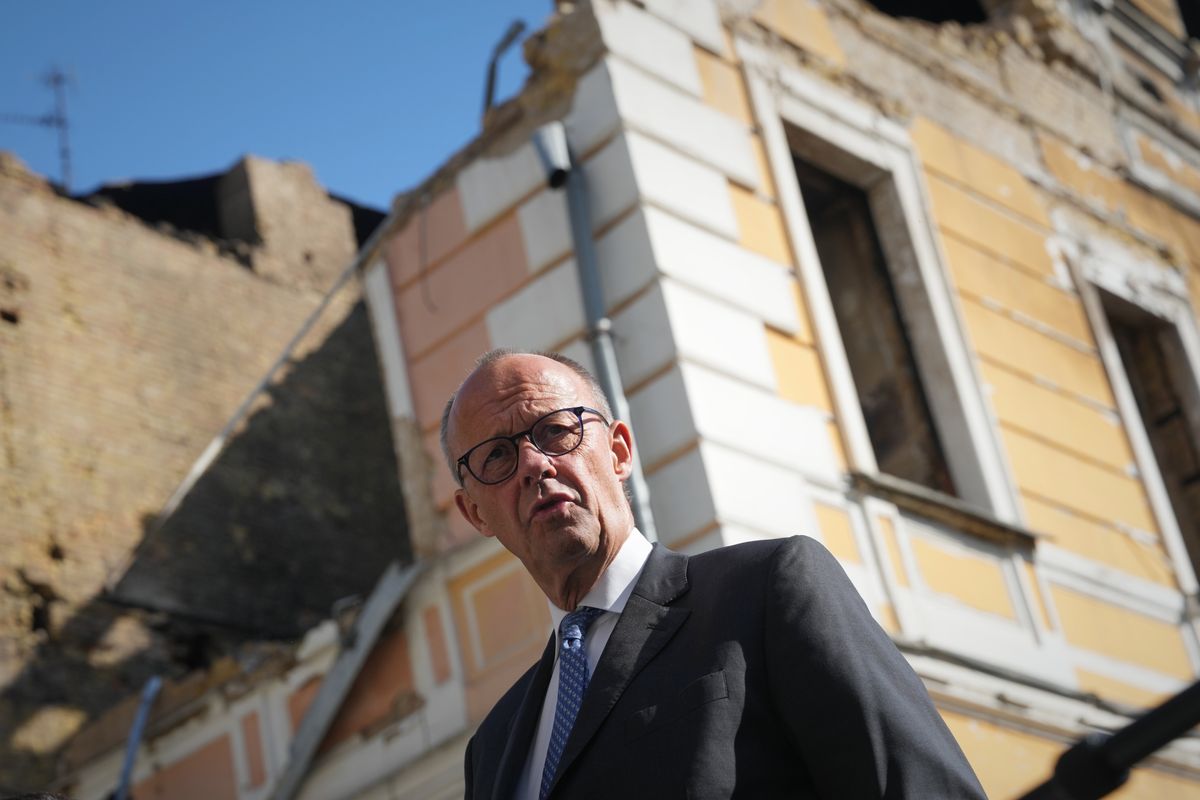
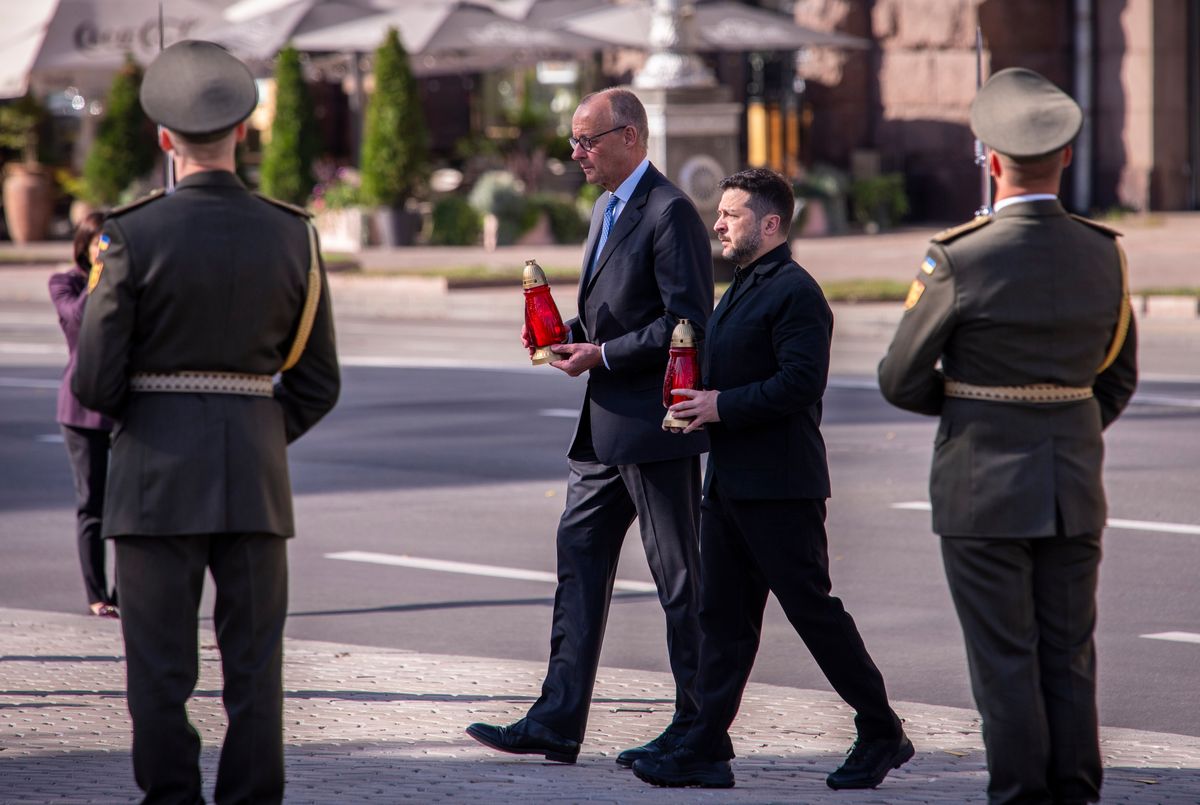
Merz and Zelenskyy visited a building of the National Academy of Sciences of Ukraine in central Kyiv that was damaged in a Russian attack that killed two people on Monday, as air raid sirens sounded across the capital.
“These barbaric attacks on the civilian population of Ukraine must stop. These are daily war crimes,” Merz said at the site, a few hundred meters (yards) from the German Embassy. Addressing Russian President Vladimir Putin, he called on him to end “this senseless war,” adding: “We’re ready to talk.”
Speaking in English, Zelenskyy called the attack on the academy “absolutely terrible” and noted that Russia was carrying out strikes even while the chancellor was in Kyiv. He thanked Merz for the visit, saying Ukraine was buoyed by its “strong partners.”
Souring German-Russian relations
Merz said Russia’s aggression toward Germany went beyond a failed drone attack at Leipzig Airport in early August, pointing to daily attacks on the country’s data centers and data networks. “None of this will stop if we stop helping Ukraine,” he said. “On the contrary, it will only get worse after that.”
Germany has blamed Russia for the incident at Leipzig and in early September announced the closure of the German Consulate in St. Petersburg, the latest in a cycle of tit-for-tat moves.
Merz said Germany would take further steps to defend itself, including against Russia’s shadow fleet of tankers in the Baltic and North seas, airspace violations and drone attacks.
He also accused Russia of waging systematic disinformation campaigns in Germany through bots and collaborators. “This is the political battle of ideas that we must wage in Germany,” he said, adding that he was “more determined than ever” to fight it because the country’s “peaceful and free future” was at stake.
The German and Russian foreign ministers met on the sidelines of the U.N. General Assembly’s annual meeting last month in what was believed to be the first such face-to-face meeting since Russia’s full-scale invasion of Ukraine in 2022. Russia’s Sergey Lavrov rejected German calls to ease off its “dangerous path of escalation” toward the country, and accused Germany of being Ukraine’s main sponsor and seeking to be a leading military power in Europe.
Strikes on Kyiv’s bridges continue
Russian attacks damaged Kyiv’s Northern Bridge over the Dnieper River again on Sunday. Video circulating on social media showed a drone striking the bridge and exploding as vehicles crossed. Kyiv Mayor Vitali Klitschko said two people were wounded.
Russian assaults since Thursday have forced the full or partial closure of three of Kyiv’s six road bridges, suspending traffic and causing tailbacks in Moscow’s latest effort to disrupt life in the Ukrainian capital.
Russia’s Ministry of Defense said Sunday it would intensify its strikes against military-industrial facilities and related infrastructure in Kyiv and other regions of Ukraine, in response to Zelenskyy’s comments in an interview with Reuters published Saturday that Ukraine would escalate its attacks on Russian oil refineries.
Zelenskyy said Sunday Russia was escalating attacks on civilian infrastructure, including bridges, data centers and mobile networks. He said Russia had previously targeted warehouses of Ukrainian delivery companies Nova Poshta and Ukrposhta, and that Ukraine had given “a fitting response” with strikes on Russian online retailer Wildberries.
“Now they are attacking bridges. Do they really think we won’t respond?” he said.
In other developments, one person was killed and 16 wounded Sunday in a Russian aerial bomb attack on the Ukrainian city of Sumy, local officials said.
Russia invaded its neighbor more than 4½ years ago, and there are no concrete signs that a peace settlement might be possible. Fighting along the roughly 1,250-kilometer (780-mile) front line snaking through northern, eastern and southern Ukraine has been virtually deadlocked in recent months.
___
Dazio reported from Berlin and Morton from London. Associated Press journalist Pietro De Cristofaro in Berlin contributed to this report.
By SUSIE BLANN, STEFANIE DAZIO and ELISE MORTON
Associated Press