




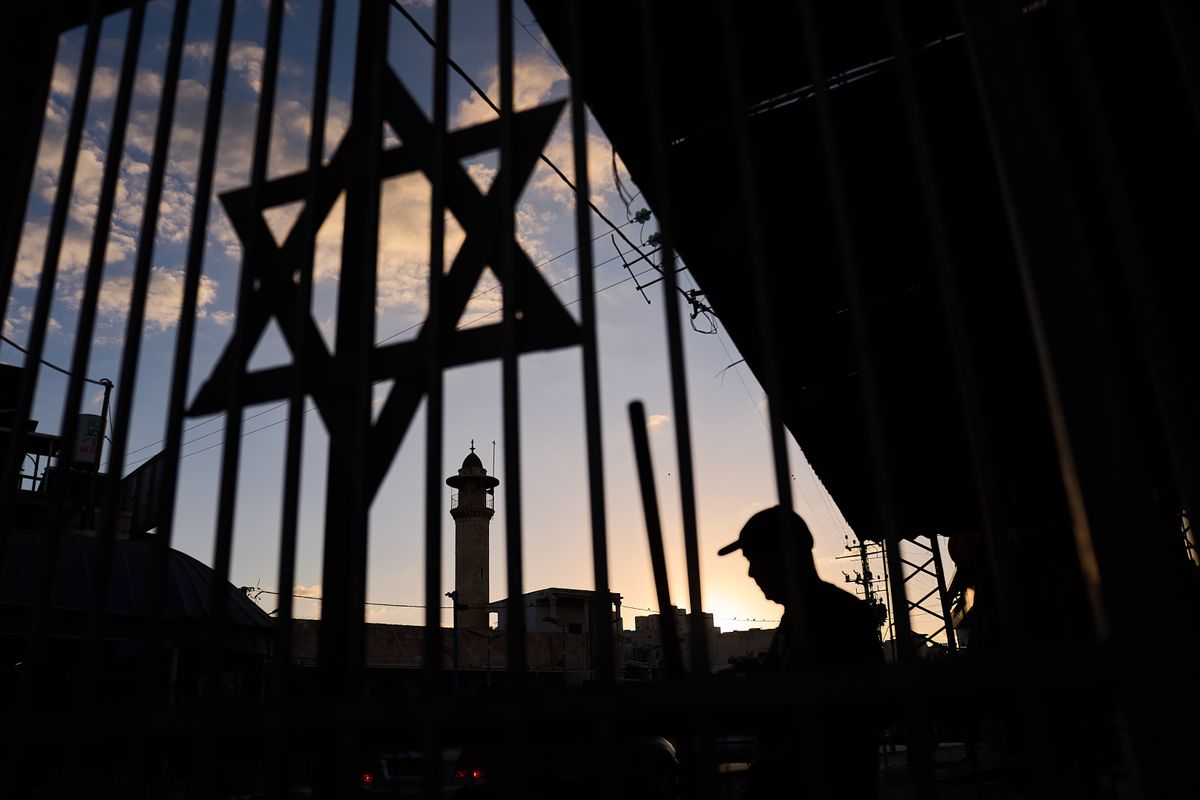

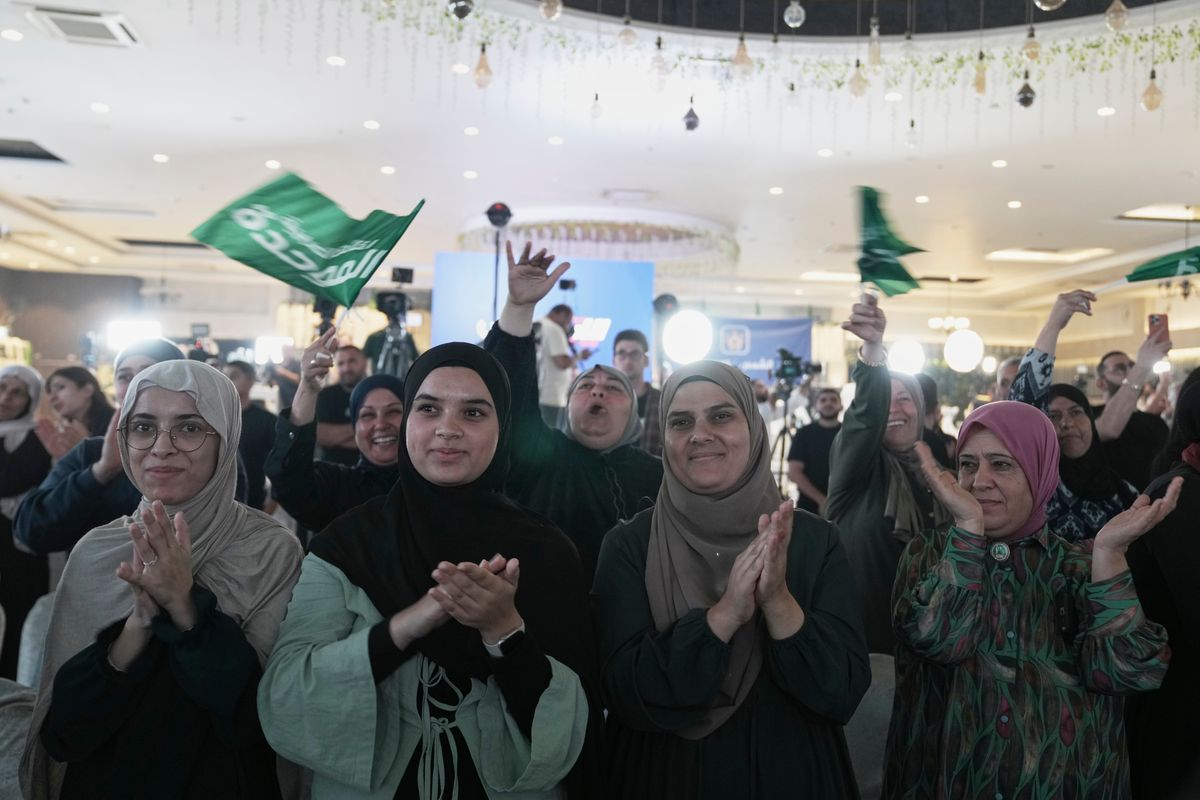
JERUSALEM (AP) — As complex negotiations take place to form a new coalition government, a major question is what role Arab-led parties will have after Israel’s Palestinian citizens turned out in high numbers to give them historic gains in national elections.
The electoral calculus is difficult enough. Benjamin Netanyahu has claimed that Arab politicians cannot be trusted and said his main rival, Gadi Eisenkot, would be committing an act of betrayal in joining forces with them. In turn Eisenkot has denounced Netanyahu’s rhetoric as “hateful,” but has also expressed reservations about partnering with Arab parties.
Beyond politics, many Israelis — Jewish and Palestinian — see the discussion as indicative of how far this growing population is included in the life of the state — and how much they feel like they belong or not.
As the country remains deeply divided and still scarred by the Oct. 7, 2023, Hamas-led attacks and the multifront wars they triggered, many Israelis see some Palestinians as a threat. And many Palestinians feel increasingly silenced, discriminated and treated as second-class citizens.
“They felt an existential threat as a result of the policies of the current government,” said Amal Jamal, Tel Aviv University’s dean of the Faculty of Social Sciences and head of the Walter Lebach Institute for the Study of Jewish-Arab Coexistence.
Here’s a closer look at the 2 million Arab Israelis, who comprise one-fifth of Israel’s citizens but share deep religious, cultural and familial ties with Palestinians in the occupied West Bank, Gaza and beyond.
Who and where are Israel’s Palestinian citizens
During the 1948 war that established the modern state of Israel, the majority of the approximately 800,000 Palestinians either fled their homes or were expelled, seeking refuge in neighboring countries and in what are now the West Bank and Gaza.
But about 170,000 remained and became Israeli citizens, although they were under military rule until the mid-1960s, said Hillel Cohen, professor of Islamic and Middle Eastern Studies at the Hebrew University of Jerusalem.
About 85% of Israel’s Palestinian citizens are Muslim, with Christian and Druze minorities each in the single digits. They mostly live in the Galilee in northern Israel, in a series of small towns along the West Bank in the central part of the country, in Bedouin communities in the southern desert, and in a few large cities like Haifa, said Arik Rudnitzky, a researcher with the Israel Democracy Institute and Tel Aviv University’s Moshe Dayan Center.
Palestinian citizens have reached the highest levels of Israeli academia, medicine, entertainment, business and the judiciary — including the Supreme Court. But many Arab communities also struggle with high rates of crime and poverty.
Unlike most of their Jewish counterparts, they are not conscripted into Israel’s military except for the Druze, a small religious sect that began as an offshoot of Islam, and very few volunteer to join, Rudnitzky said. For many Israelis, those youth years in the armed forces are a melting pot experience and rite of passage, so not joining can lay a foundation for divisions later in life.
An identity and integration dilemma shifts through decades
“The crux of the matter with regard to the Arab minority in Israel is the question of identity,” said Elie Rekhess, a visiting professor of Israel Studies at Northwestern University. “How do you identify yourself? Israeli, Palestinian, Arab, Muslim, and then you get the hyphenated versions.”
Among them, being Muslim and being Palestinian have become more important to Israel’s Arab communities in recent decades, scholars say. That often drives a wedge at the political, cultural and personal level, even as most Palestinian citizens speak Hebrew and grow increasingly integrated in Israeli society.
“Their practical culture is very Israeli,” said Jamal, the Tel Aviv University dean, who is Palestinian Israeli. “But, because (being) Israeli is identified with being Jewish worldwide, and because the Jewish community views Israel to belong to them … you won’t find them saying, ‘I’m an Israeli’ in the sentimental sense.”
For many Jewish Israelis, particularly after the Oct. 7 attacks, that ambiguity becomes a doubt about Palestinian Israelis and “whose side” they’re on — the state of Israel or Palestinian militants, Rudnitzky said.
Grievances drive Arab voter participation and parties’ success
Israel’s Arab communities are suffering from a major rise in sometimes deadly organized crime, and leaders accuse the Israeli police, led by a far-right politician, of neglecting them.
In addition, many face discrimination from the government, including in state spending on essential services like housing for the fast-growing population, Jamal said.
“They feel discriminated against on a daily basis,” he said.
These concerns drove high voter turnout in Arab-majority communities — estimated at 77%, up from 53% in the last elections, according to the Israel Democracy Institute. That in turn drove Arab-led parties to major gains in parliamentary representation in the Oct. 27 vote.
Neither Netanyahu’s bloc of supporters nor Eisenkot’s bloc secured a parliamentary majority needed to form a new government. With Arab parties controlling the remaining seats, those parties are now in position to potentially determine the next prime minister.
Eisenkot has left that possibility open if the Arab parties meet several conditions, including accepting Israel’s identity as a Jewish state and declaring Hamas a terrorist group — which is unclear they will consent to. Further, some in Eisenkot’s own coalition balk at that, and Netanyahu and his allies have called such partnering tantamount to treason.
The Joint List, a coalition of three left-wing and nationalist Arab parties, supports a Palestinian state in the West Bank, Gaza and east Jerusalem, territories occupied in the 1967 Mideast war, and rejects Israel’s identity as a Jewish state. Ra’am, the only Arab party that ever joined a governing coalition, in 2021, presents a more pragmatic position; a Jewish cop-turned-politician will be one of its representatives in the newly elected Knesset.
The party’s roots are in the Islamist movement that reshaped politics across the Arab world starting in the 1970s, edging out both communist and nationalist parties that still form part of the landscape. While Ra’am describes itself as secular today, it defends religion’s role in society, down to holding gender-segregated campaign events.
Paradoxically, experts say, that makes Arab parties aligned on social issues with several Jewish religious parties, which have also been important kingmakers in past coalitions.
___
Associated Press writer Sam Metz contributed from Jerusalem.
___
Associated Press religion coverage receives support through the AP’s collaboration with The Conversation US, with funding from Lilly Endowment Inc. The AP is solely responsible for this content.
By GIOVANNA DELL’ORTO
Associated Press