




SEOUL, South Korea (AP) — Days before South Korea comes to a standstill for its all-important college entrance exam, the nation is reeling after the top scorer on its tax accountant test was found to have cheated with a hidden camera and artificial intelligence.
The scandal has left authorities scrambling to prevent cheating on the exam, which will be taken Thursday by more than 500,000 students, as concerns grow that AI and smart devices are making fraud harder to detect.
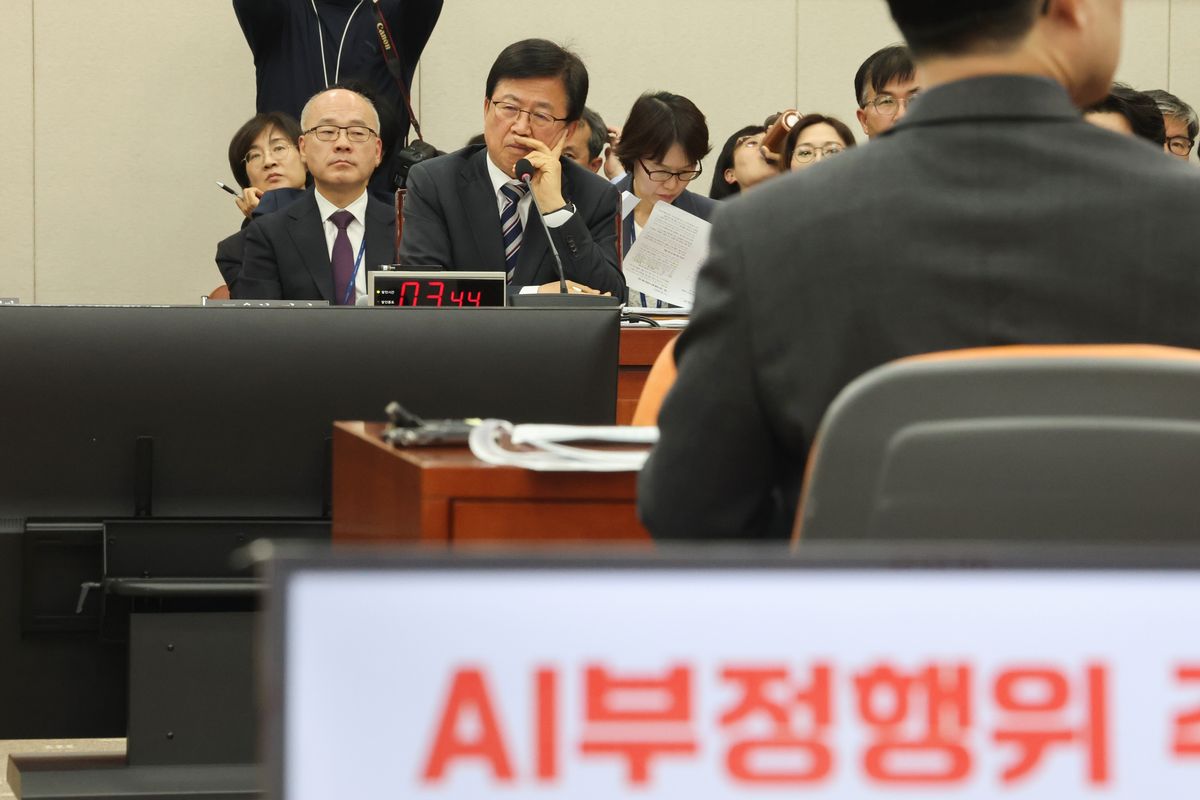
Education Minister Choi Kyo-jin on Monday rejected calls by some lawmakers to postpone the exam until stronger anti-cheating measures are in place, telling a legislative hearing that a delay would cause “even a larger disruption” to students.
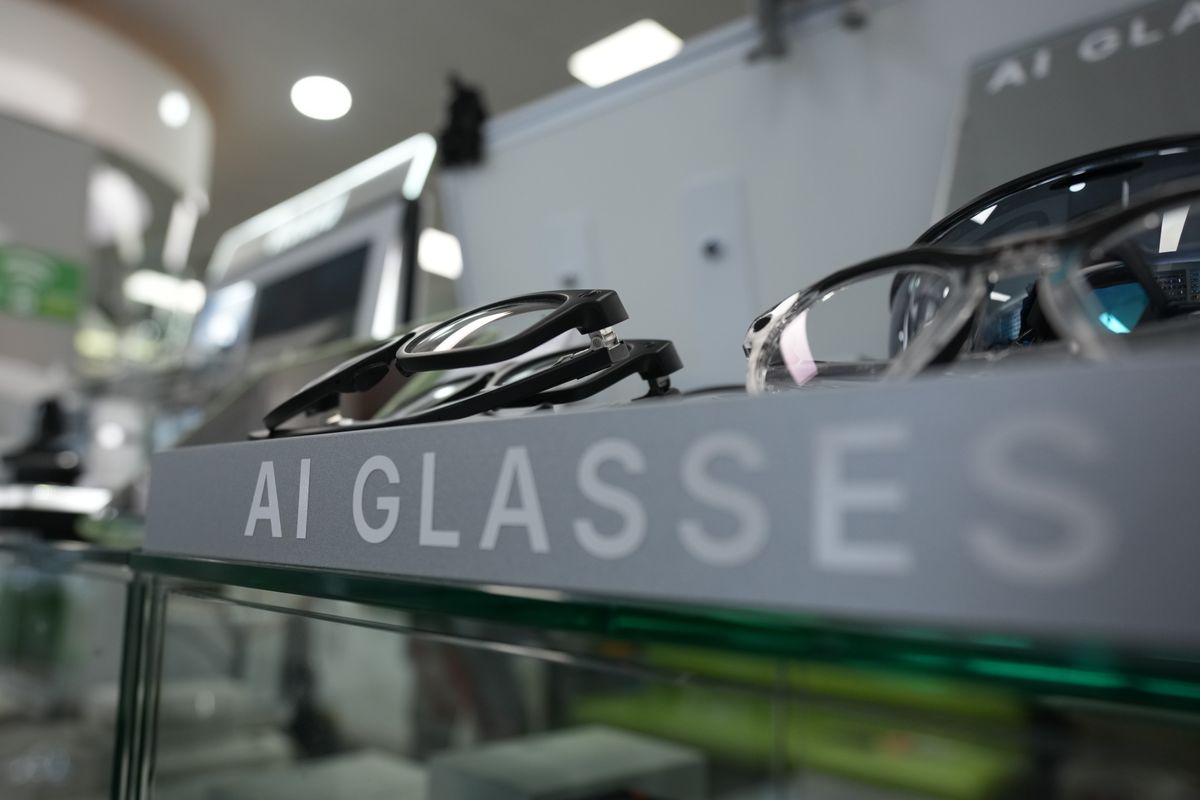
Choi said that he was confident that proctors could spot AI-powered smart glasses, which typically have thick, horn-rimmed frames. Education authorities are also offering guidance on detecting devices such as microcameras, Education Ministry officials said.
Concerns grow over AI-assisted cheating
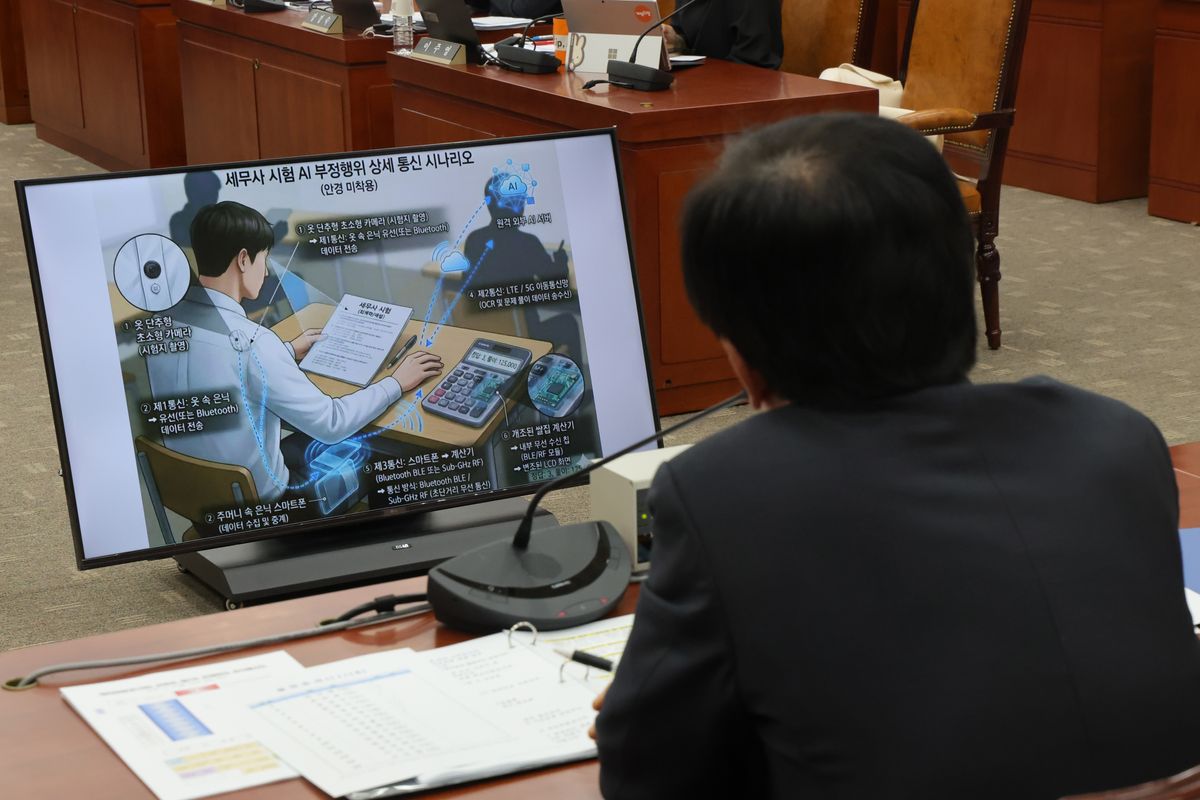
Worries about cheating deepened over the weekend after a 34-year-old man who scored the highest on a national tax accountant exam confessed to using a hidden microcamera and smartphone to get answers from AI.
Han Won-seok’s unusually high scores had drawn suspicion after he discussed them during recent media interviews. The case follows other incidents involving AI-assisted cheating in the past several months, including test-takers caught using AI-powered smart glasses on an English standardized test in June and on some university essay exams in October.
In a video posted Sunday on his lawyer’s YouTube channel, Han said that he used a concealed camera to capture the questions, fed the images to a generative AI tool and received answers on a smartphone. He said that he would cooperate with police, who are investigating the case.
Han had previously said that he scored 397.5 out of a possible 400 points on the first-stage, multiple-choice test in April, and 663 out of 800 on the second-stage essay exam in July, unusually high marks that one Korean newspaper likened to “running a 100-meter sprint in under five seconds.”
Alarm over national college entrance exam
The national college entrance exam, known as “Suneung,” or the College Scholastic Ability Test, is a high-stakes annual event in a country notorious for intense academic competition, where prospects for jobs, social standing and even marriage can depend on which university a person attends.
South Korea goes to great lengths each year to create an ideal testing environment, effectively bringing the country to a standstill by delaying the start of the workday and stock market trading to ease traffic for test-takers and pausing flights during the English listening section of the exam. Police officers often use cars and motorcycles to escort test-takers who are running late, while the military sometimes suspends training in areas near testing sites.
But it’s difficult for authorities to come up with equally sweeping measures to prevent cheating with AI devices, which the Seoul-based Hankyoreh newspaper warned in an editorial Monday could threaten “the very foundations of the examination system.”
The challenge at test sites
Education authorities had focused for months on preventing the use of AI-powered glasses, but Han’s case has raised doubts about whether they are prepared for cheating involving other, less conspicuous devices.
Education authorities will deploy at least one specially trained supervisor at each of the 1,300 test sites nationwide to identify such glasses. Officials also are considering requiring test takers to hand over their smart devices and shutting down public Wi-Fi connections at test sites, according to Prime Minister Han Seongsook’s office.
Song Geun-hyeon, another senior Education Ministry official, said that the ministry has provided proctors with new guidance on detecting test-takers using hidden cameras and other devices, including watching for suspicious movements involving “their sleeves, collars or buttons, and certain gestures.”
The ministry was working with the Ministry of Science and Information and Communication Technology on anti-cheating measures for the college entrance exam, which are due to be announced on Tuesday.
Vice Education Minister Choi Eun-ok said that the discussions with the science ministry also include temporarily restricting telecommunications at test sites. It wasn’t immediately clear whether that’s feasible, considering laws prohibiting electronic signal jamming, or concerns that it could interfere with communication in surrounding areas.
Song said that metal detectors and radio detectors would be limited, while deploying thermal cameras would be highly unlikely because of privacy concerns. Supervisors can’t search belongings without the consent of the test-takers.
“At the government-wide level, we would also need to give further consideration to measures that will make it easier to identify (AI) smart devices,” said Song, adding that officials are debating whether to require manufacturers to design the devices to emit “flashing lights or sounds” while in use.
By KIM TONG-HYUNG
Associated Press