




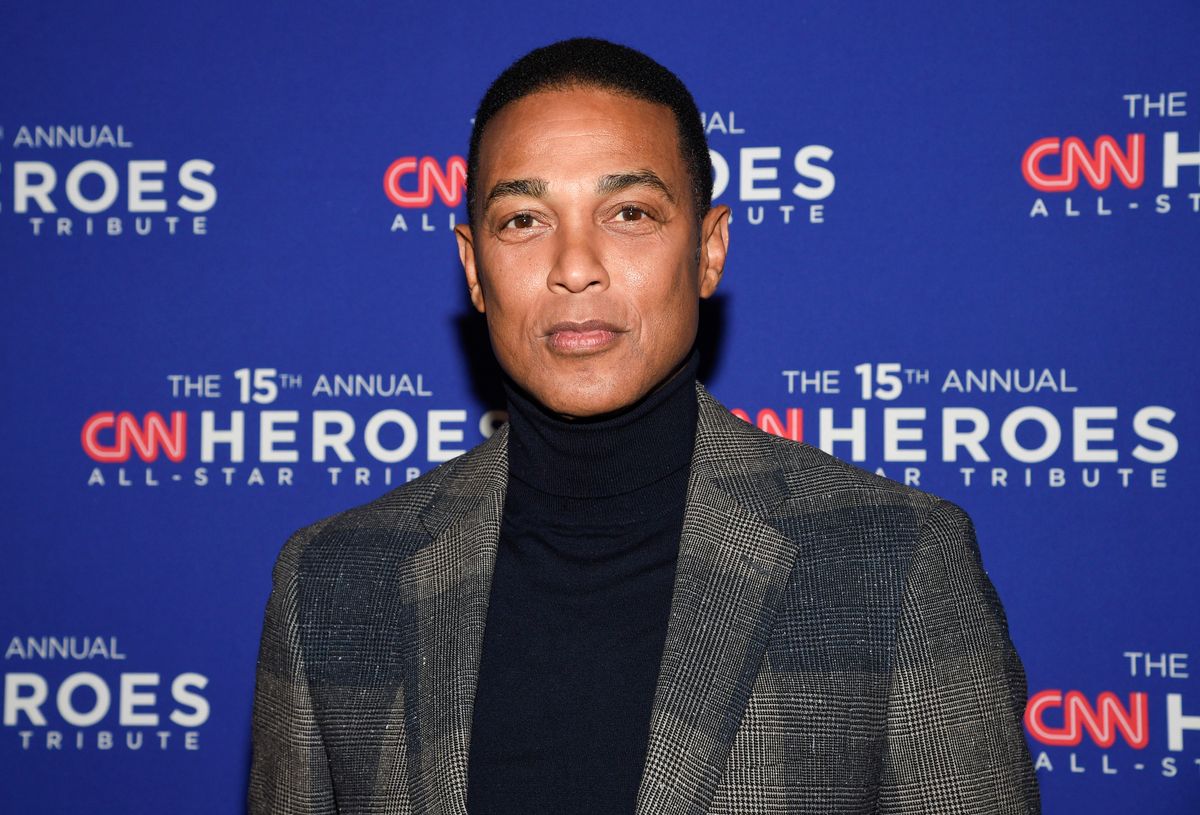
Seven people, including former CNN anchor Don Lemon and another journalist — have been charged with violating two different federal laws in connection with the protest that interrupted a worship service at a Minnesota church earlier this month.
The group that barged into a worship service that Sunday was upset that the head of a local field office for U.S. Immigration and Customs Enforcement serves as a pastor. The protest was quickly denounced by President Donald Trump, Attorney General Pam Bondi and other officials, as well as many religious leaders.
Lemon and a local reporter were covering the protest on Jan. 18 at the Cities Church in St. Paul. Those two and five people who helped organize the protest have all been charged in complaints, but the full details of the allegations against them haven’t been released yet because parts of the case files remains sealed.
The arrests of Lemon and independent journalist Georgia Fort are especially troubling for legal experts and media groups who worry about the chilling effect on coverage of the Trump administration.
David Harris, a University of Pittsburgh law professor specializing in criminal law, said the charges against the protesters are more tenable, given the federal laws against disrupting the free exercise of worship. “A court will have to sort that out,” he said.
But charges against reporters are troubling, he said.
“Charging journalists for being there covering the disruption does not mean they were part of the disruption,” Harris said. “Don Lemon and other journalists are the way that we the public are finding out what is happening in these spaces,” he said. “They are our eyes and ears. The message that is being sent is that journalists like Don Lemon and others should feel intimidated from doing this.”
The two key laws cited in the complaints against those who were arrested were passed more than a century apart — one rooted in efforts to prevent intimidation by the post-Civil War Ku Klux Klan and the other to enable access to abortion clinics, though they both have had wider applications.
Here are some details about those laws:
Law designed to protect access to abortion clinics and churches
The Freedom of Access to Clinic Entrances law, known as the FACE Act for short, was passed in 1994 to help ensure that patients seeking care at an abortion clinic — as well as the doctors and nurses who work there — could safely access the facilities that often draw protests. It followed incidents of violence targeting clinic workers.
A Republican-sponsored clause that provided for penalties for disruptions of worship services was also incorporated into the law.
Anti-abortion conservatives have denounced the law, focusing on the clinic protections. Trump last year pardoned several people convicted for blockading clinics. His Justice Department scaled back FACE Act prosecutions of those accused of blocking clinics, claiming there had been a “weaponization” of the law.
But the U.S. Supreme Court, despite having overturned the Roe v. Wade decision that had legalized abortion nationwide, last year refused to hear a challenge to the constitutionality of FACE.
In 2025, 42 House Republicans co-sponsored legislation, introduced by Rep. Chip Roy, R-Texas, to repeal the FACE Act. The conservative Heritage Foundation supported the stalled repeal effort, calling the FACE Act “an ideological weapon” designed to suppress anti-abortion activity.
They have contended the worship-protection aspect of the law hasn’t been invoked in the past. In 2025, the Justice Department did invoke the act in a lawsuit against demonstrators who protested outside of a synagogue.
Someone charged with their first violation of the FACE Act could be fined or sentenced up to one year in jail. Subsequent offenses, or charges that involve injuries, deaths or damage, could face tougher penalties.
The Conspiracy Against Rights law dates back to the post Civil War era
The other charges against Lemon and Fort are based on a law commonly known as the Conspiracy Against Rights law, which was enacted shortly after the Civil War. It was originally designed to target vigilante groups such as the Ku Klux Klan. The law prohibits intimidating or otherwise preventing someone from exercising constitutional rights.
The Klan had been targeting those newly freed from slavery, but over the years the law has been revised to apply to a wide range of violations of constitutional rights. It was used to charge suspects in the “Mississippi Burning” killings of three civil rights workers in 1964. It has been used in cases ranging from church arsons and antisemitic intimidation to political conspiracy and witness tampering.
The law carries a penalty of up to 10 years in prison –- or more if it involves injury, death or destruction of property.
Harris said it’s important for Americans to be able to see what’s happening so they can make up their own minds, instead of only hearing officials describe what happened.
“We all have had the experience of them telling us things that simply do not square with what we see with our own eyes,” he said. “Journalists being present to witness these things and report them are crucial to our being able to make our minds about what our government is doing.”
___
AP reporter Tiffany Stanley contributed.
___
Associated Press religion coverage receives support through the AP’s collaboration with The Conversation US, with funding from Lilly Endowment Inc. The AP is solely responsible for this content.
By JOSH FUNK and PETER SMITH
Associated Press