




A major investigative collaboration among five newsrooms shows how chemicals used to make carpets stain-resistant have contaminated swaths of the South.
In the mills of northwest Georgia, workers treated carpets with these chemicals starting in the 1970s. Carried in manufacturing wastewater, the chemicals spread into rivers and, ultimately, drinking water.
The odorless and colorless compounds — called PFAS by scientists and known colloquially as forever chemicals because they take decades or more to break down — are now everywhere in the region. That includes in people, where PFAS circulate in blood and lodge in some organs.
As the carpet industry grappled with the risks to human health and the environment, its executives coordinated privately with the local public water utility in ways that would effectively shield their companies from oversight. And carpet makers kept using PFAS for years — even as scientific evidence solidified concerns in the 2000s and 2010s about the threats they can pose, including certain cancers and a compromised immune system.
Major carpet companies say they have complied with all regulations and have stopped using PFAS. They point out that their suppliers falsely assured them older formulations of the chemicals were safe.
The full story of Georgia’s power structures prioritizing a prized industry over public health is emerging through interviews and court records from lawsuits against the industry and its chemical suppliers. The reporting shows how the economic engine that sustained northwest Georgia polluted parts of Alabama and South Carolina, too.
Here are takeaways from the investigation’s reporting on the toxic legacy of the South’s carpet empire. Some linked articles may have restrictions.
‘Carpet Capital of the World’
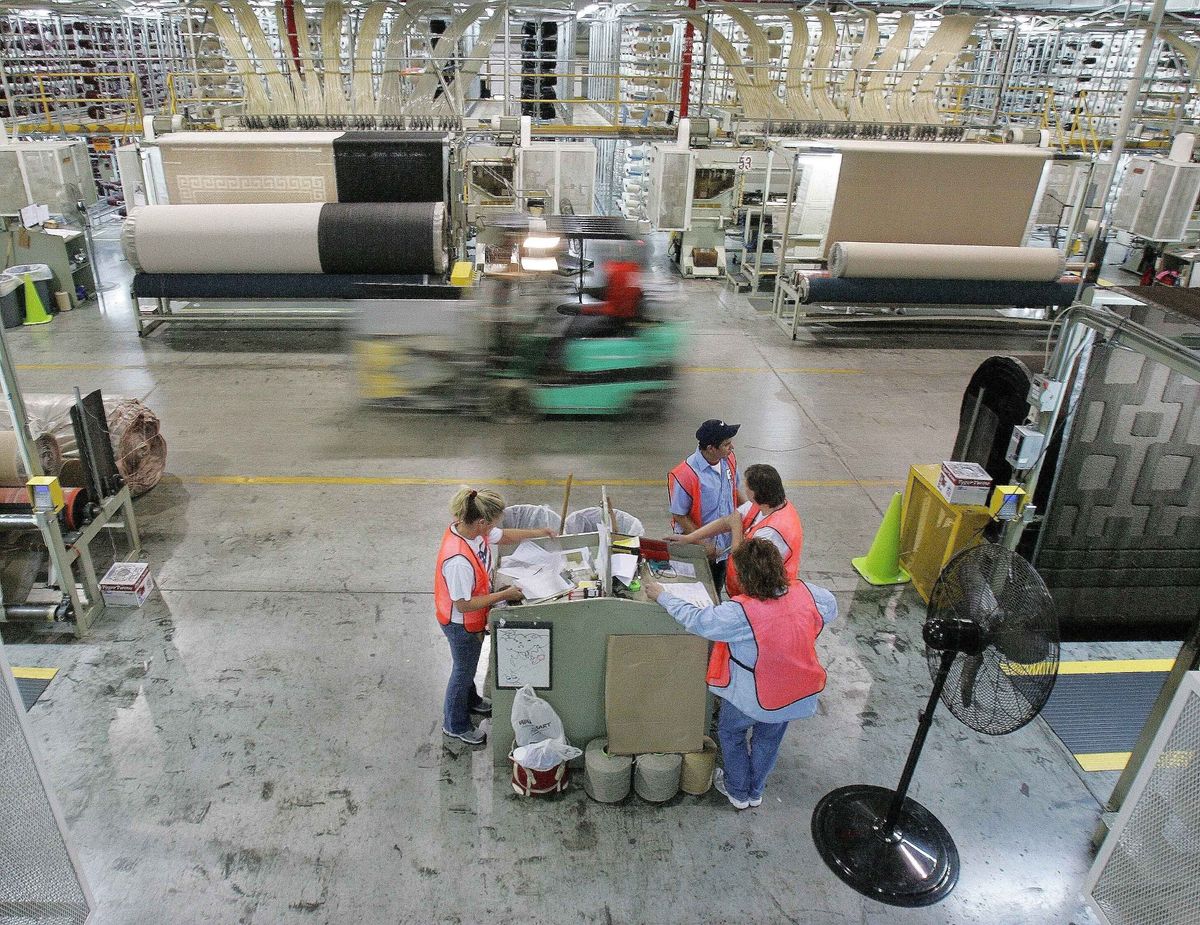
Carpet making in the U.S. has been centered in northwest Georgia for decades. Fleets of semi-trucks stamped with logos of the world’s largest carpet companies rumble around a region where textiles have employed families for generations.
Some of those local residents have health conditions linked to forever chemical exposure.
“Around here, you have to understand the people. That’s all we know, right?” said Marie Jackson, a former carpet worker who has PFAS in her blood and nodules growing on her thyroid gland. “You go in, you know your job, you do your job, you go home.”
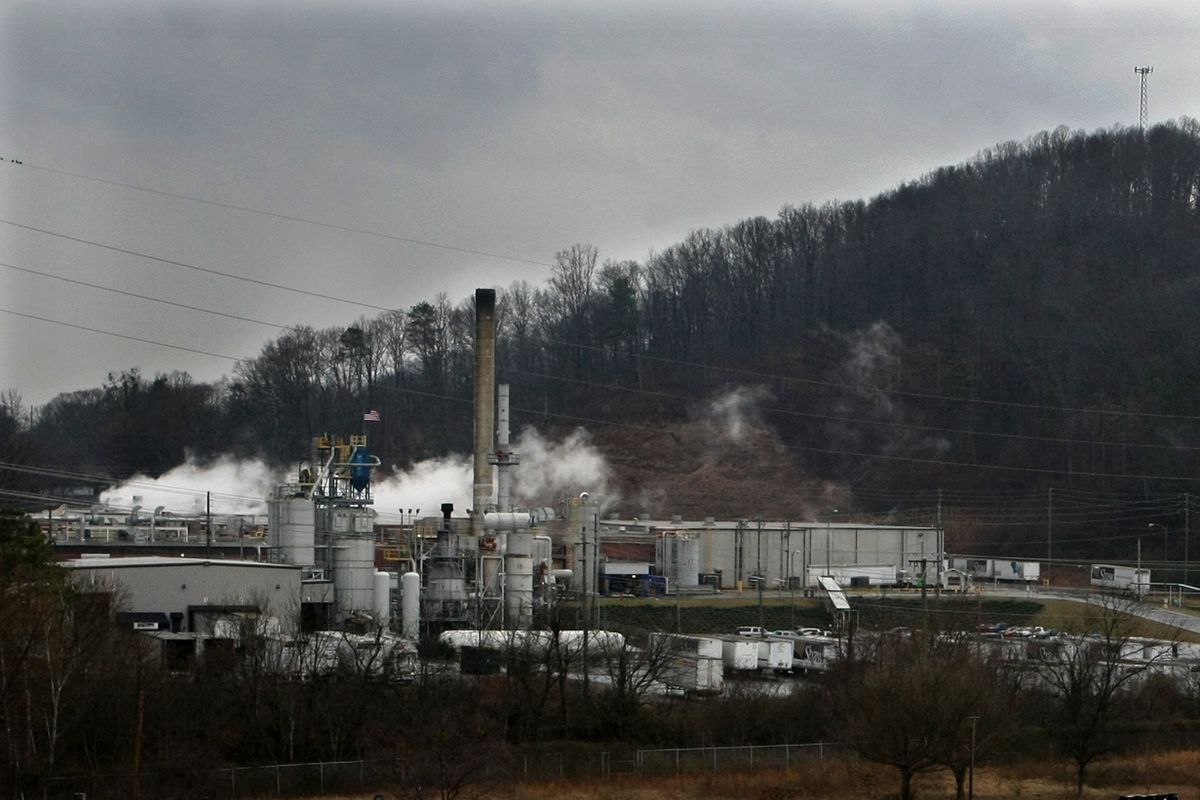
Reporting by The Atlanta Journal-Constitution, The Associated Press and FRONTLINE (PBS) showed how a lack of state and federal regulations let carpet companies and their chemical suppliers legally switch among different versions of PFAS. For decades, mills of the two largest carpet companies — Shaw Industries and Mohawk Industries Inc. — sent PFAS-polluted wastewater through sewer pipes for treatment that did not remove the chemicals. Much of the tainted water ended up in the Conasauga River.
Both Shaw and Mohawk said that they stopped using PFAS in 2019 and that they have operated in accordance with permits issued by Dalton Utilities, the local water provider. The utility said it takes direction from federal and state regulators, who have not prohibited PFAS in industrial wastewater.
Problem found, solution proposed
In South Carolina, detective work identified PFAS contamination — a discovery that led to a lawsuit and then a possible path for companies to reduce future pollution.
The Post and Courier traced a local river watchdog’s discovery of forever chemicals to a river by a Shaw Industries factory. Instead of fighting in court, Shaw proposed a solution: Install a special filtration system called granular activated carbon to capture PFAS before it leaves the factory. The watchdog group agreed and withdrew the lawsuit.
It’s a story about how state and federal regulators were slow to protect the public. And yet, it’s also about how Shaw discovered clues that may help other companies deal with their own PFAS problems.
Drinking water wells at particular risk
The roughly 40 million Americans who get drinking water from private wells are at particular risk when forever chemicals contaminate the supply.
Reporting by the AP drilled into how water from public utilities will be forced to meet federal PFAS limits, but those limits won’t apply to private wells.
And well owners are often the last to learn about contamination. At least 20 states don’t test private wells beyond areas where PFAS problems are suspected. When a well is tainted, it can take homeowners years to secure a new source of clean water.
Alabama drinking water woes
About 100 miles (160 kilometers) from northwest Georgia’s carpet mills, AL.com found cities in Alabama are struggling to manage PFAS in their drinking water with little help from the state.
As residents fight for clean tap water, several small cities sued carpet companies upriver and chemical giants, looking for settlement funds to build new, expensive water treatment systems. In Gadsden, home to 33,000 Alabamians in the foothills of the Appalachians, a new reverse osmosis treatment plant has been under construction thanks to one settlement.
The facility is scheduled to open in 2027. In the meantime, residents worry about the consequences of tainted water on their health.
Frequently asked questions
While PFAS have been in a wide range of consumer products, few industries used them as much as carpet. Huge amounts were needed for stain resistance on an industrial scale, but minuscule amounts — the equivalent of less than a drop in an Olympic-size swimming pool — can make drinking water a health risk.
The carpet industry isn’t the only one that used PFAS. The chemicals are in nonstick cooking pans, raincoats, firefighting foam and more.
FRONTLINE explored what to know about how forever chemicals get into our bodies, what risks they pose and how they can be avoided.
___
This story is part of an investigative collaboration with The Atlanta Journal-Constitution, AL.com, FRONTLINE (PBS) and The Post and Courier that includes the FRONTLINE documentary “Contaminated: The Carpet Industry’s Toxic Legacy.” It is supported through AP’s Local Investigative Reporting Program and FRONTLINE’s Local Journalism Initiative, which is funded by the John S. and James L. Knight Foundation.
___
Watch the documentary “Contaminated: The Carpet Industry’s Toxic Legacy” at pbs.org/frontline and in the PBS App starting Tuesday at 7 p.m. EST or on PBS stations ( check local listings ) and on FRONTLINE’s YouTube channel at 10 p.m. EST. It will also be available on the PBS Documentaries Prime Video Channel.
By The Associated Press