




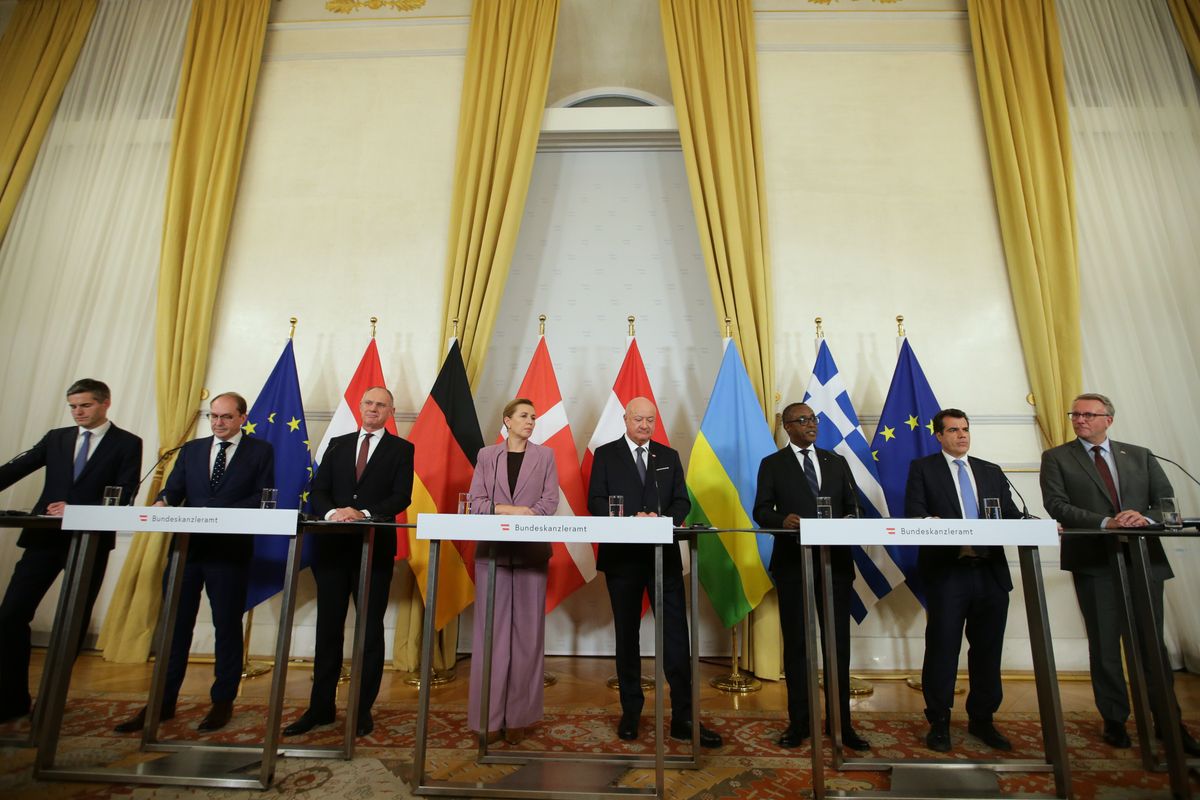
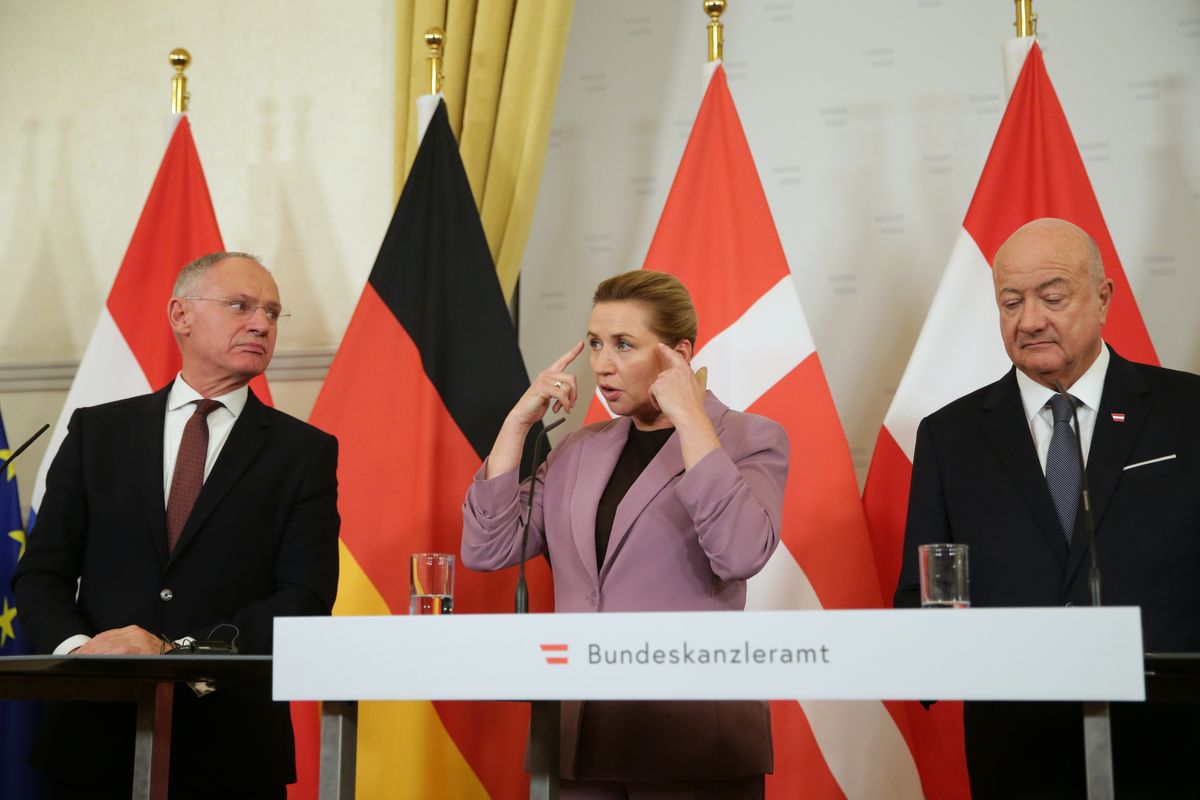
BRUSSELS (AP) — A group of European countries announced on Monday that they aim to set up a “migrant hub” in Rwanda where rejected asylum-seekers could be sent from next year.
The European Union has worked for years to tighten migration rules, push down the number of asylum-seekers coming to the 27-nation bloc and increase deportations of migrants who aren’t entitled to stay. Sending people to centers outside Europe has emerged as a central element.
Here’s a timeline of events that led to this agreement:
2015: Over 1 million people — the majority from war-stricken Syria — arrive in Europe seeking asylum, in what was at the time the largest migration crisis impacting the continent since World War II.
June 2016: The U.K. votes to leave the European Union in a referendum following a campaign during which those favoring Brexit use images of lines of migrants as a warning of what staying in the EU would entail.
September 2018: Sweden joins Europe’s move to the right as voters boost a party that campaigned on anti-migrant sentiment and policies. It follows similar shifts in Germany, Austria and Italy as part of a backlash to the 2015 migration crisis. Denmark floats an idea it later scraps to deport migrants to a remote island once used as a research laboratory for contagious animal diseases.
September 2020: Denmark appoints a special envoy to toughen EU migration policies including setting up migrant reception centers in one or more countries outside the EU to diminish the incentive for migrants to seek asylum in Denmark and improving the deportation of rejected asylum-seekers.
April 2021: After Danish Prime Minister Mette Frederiksen, leading a center-left Social Democratic-led government, rolls out a vision of having “zero asylum-seekers,” Denmark begins revoking the residency permits of some Syrian refugees.
April 2022: Britain announces a deal with Rwanda to send some asylum-seekers thousands of miles to the East African country — a plan it says will stop people-smugglers sending desperate migrants on treacherous journeys across the English Channel.
November 2023: The U.K. Supreme Court rules that the deal with Rwanda to return asylum-seekers there is unlawful because they would not be safe there. The Conservative government says it will send migrants to the African country regardless. Italian Premier Giorgia Meloni and her Albanian counterpart, Edi Rama, strike a five-year deal for Albania to shelter up to 3,000 migrants picked up by the Italian coast guard in international waters each month.
June 2024: Far-right parties make major gains in elections to the Parliament of the European Union, rattling traditional political powers. In France, President Emmanuel Macron calls a snap election that results in a boost for the anti-migration far right, weakening his own government.
July 2024: The U.K. scraps the Rwanda migration deal shortly after the Conservatives are defeated in an election, ceding power to the Labour Party under Prime Minister Sir Keir Starmer.
October 2024: Italy’s government formally opens two centers in Albania where it plans to process male migrants who are intercepted in international waters. Less than a month later, a court in Italy rules against the right-wing government’s move to detain 12 migrants at the new centers.
January 2025: An Italian appeals court refuses to approve the speedy expulsion of 43 asylum seekers detained in Albania. The migrants were among 49 people who were transferred to Albania on an Italian naval ship under the five-year agreement with Albania.
March 2025: The Meloni government approves a decree expanding the use of the Albanian fast-track processing centers to include the detention of rejected asylum-seekers with deportation orders. The Albanian centers have remained substantially inactive since their opening in October, due to legal hurdles and amid wide opposition from human rights groups.
April 2025: Italian authorities transfer 40 migrants with no permission to remain in the country to the Albanian centers.
March 2026: Rwanda tells an international arbitration panel that Britain still owes it 100 million pounds ($134 million) under the refugee resettlement deal scrapped in 2024. The court dismisses Rwanda’s claim.
March 2026: European lawmakers vote to ease the setting up of new migrant detention centers outside the European Union, known as “return hubs.” Any EU nation can start negotiating on its own or in small coalitions to deport migrants not to their home countries but to facilities yet to be built outside the 27-nation bloc.
June 2026: The three main bodies of the EU, the European Parliament, the European Commission and the European Council, reach agreement over migration policy to increase deportations and to allow member nations to make deals for so-called return hubs.
August 2026: A spokesperson for the Rwandan government defends the practice of establishing return hubs, saying it is “natural” for her government to negotiate with European countries and others to potentially host asylum seekers who are not allowed to live elsewhere.
Sept. 2026: Denmark and four other European Union countries agree on a model for “return hubs” in non-EU nations and say they hope to begin sending migrants to the facilities as early as 2027.
———
Ciobanu reported from Warsaw, Poland.
By SAM McNEIL AND CLAUDIA CIOBANU
Associated Press