




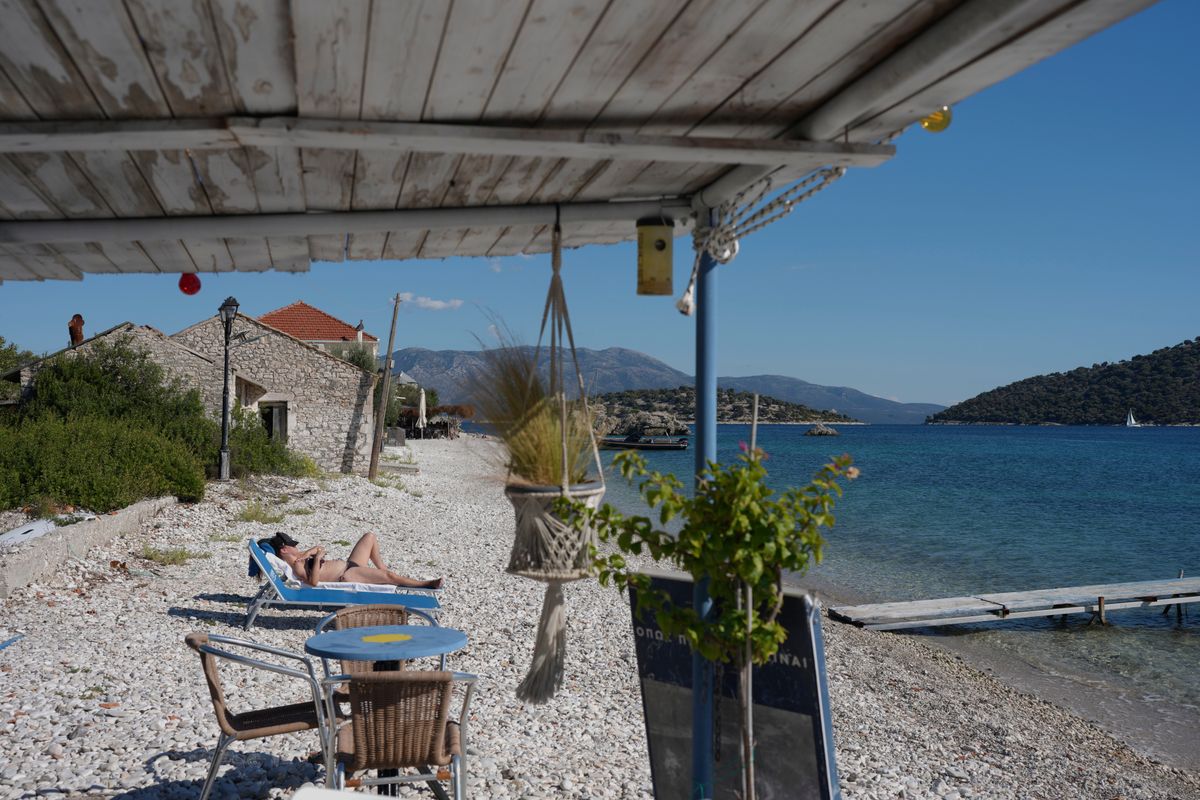
KALAMOS, Greece (AP) — Chryssa Ntalaka’s classroom has become an object lesson in subtraction.
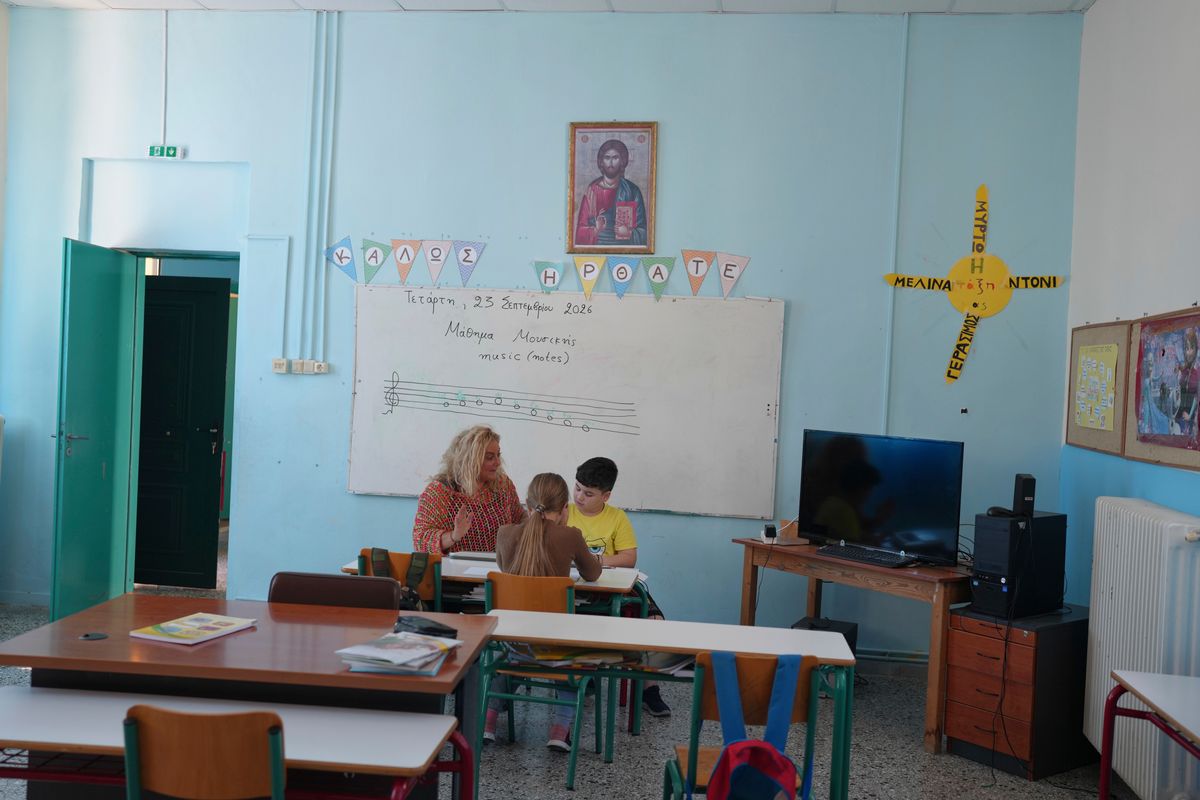
The sole teacher in the last school on the idyllic Greek island of Kalamos has a shorter list of students every fall. This year, just two. On Sept. 23, the sixth graders sat at Ntalaka’s table beneath the whiteboard, in front of rows of unused desks and benches.
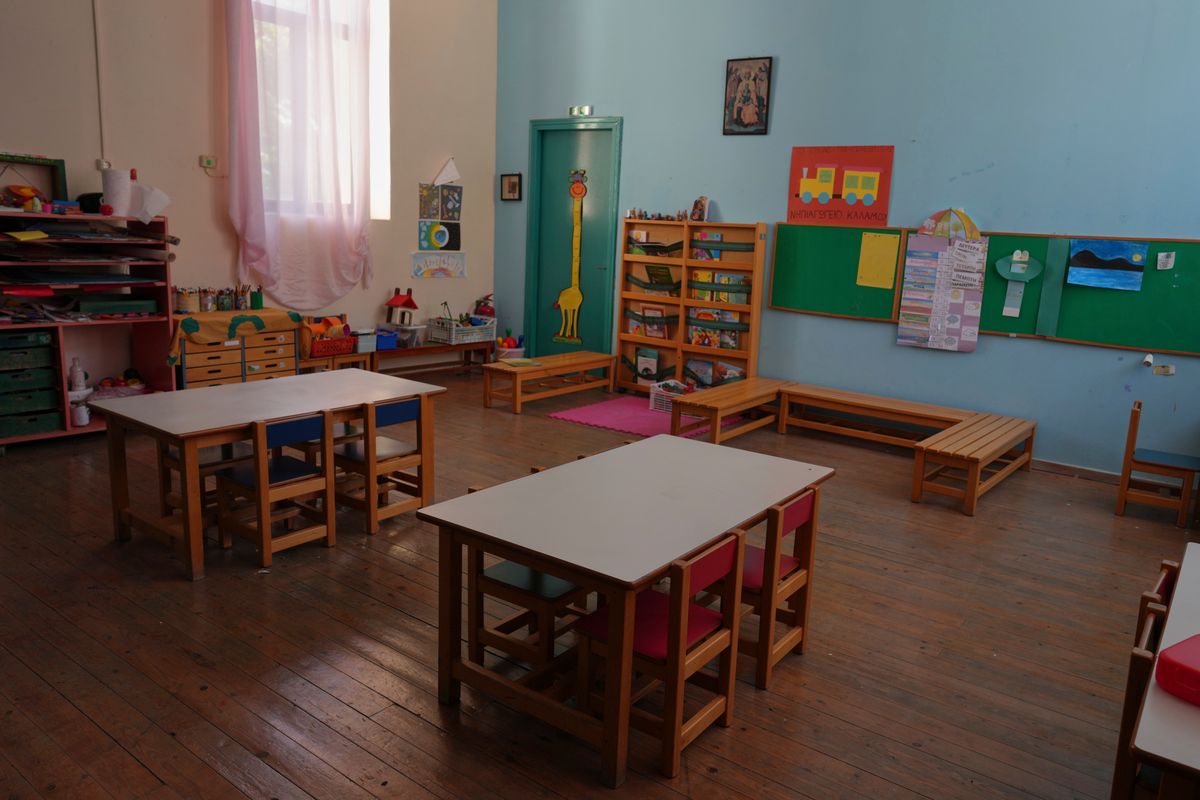
When they head to middle school on Greece’s mainland next year, her school will be mothballed. Toys and picture books still sit on shelves in the nearby kindergarten since it was shuttered three years ago.
“Usually, teachers are placed on these islands against their wishes,” Ntalaka told The Associated Press. “Whereas for Kalamos there are teachers and kindergarten teachers, as far as I know, who want to come — but there are no children.”
Falling enrollment across Greece this year prompted authorities to close 75 schools and suspend or extend suspension of classes at more than 400 others.
It’s a situation playing out across Europe and beyond. The region has 16 of the world’s top 20 oldest nations, particularly in Southern Europe, according to the independent World Population Review.
And its remote communities act as an early warning system: Mountain villages and small islands are among the first places where schools and services disappear in a deepening cycle of population decline. Some 17 million people live on more than 4,000 islands across the European Union; Greece has about 200 of them.
“Closing schools leads to young people not staying and to them leaving,” said Byron Kotzamanis, co-founder of the Institute of Demographic Research in Athens. “Leaving means fewer and fewer people — fewer and fewer births. It means depopulation and dead settlements that will become nursing homes.”
Commuting across the sea each day
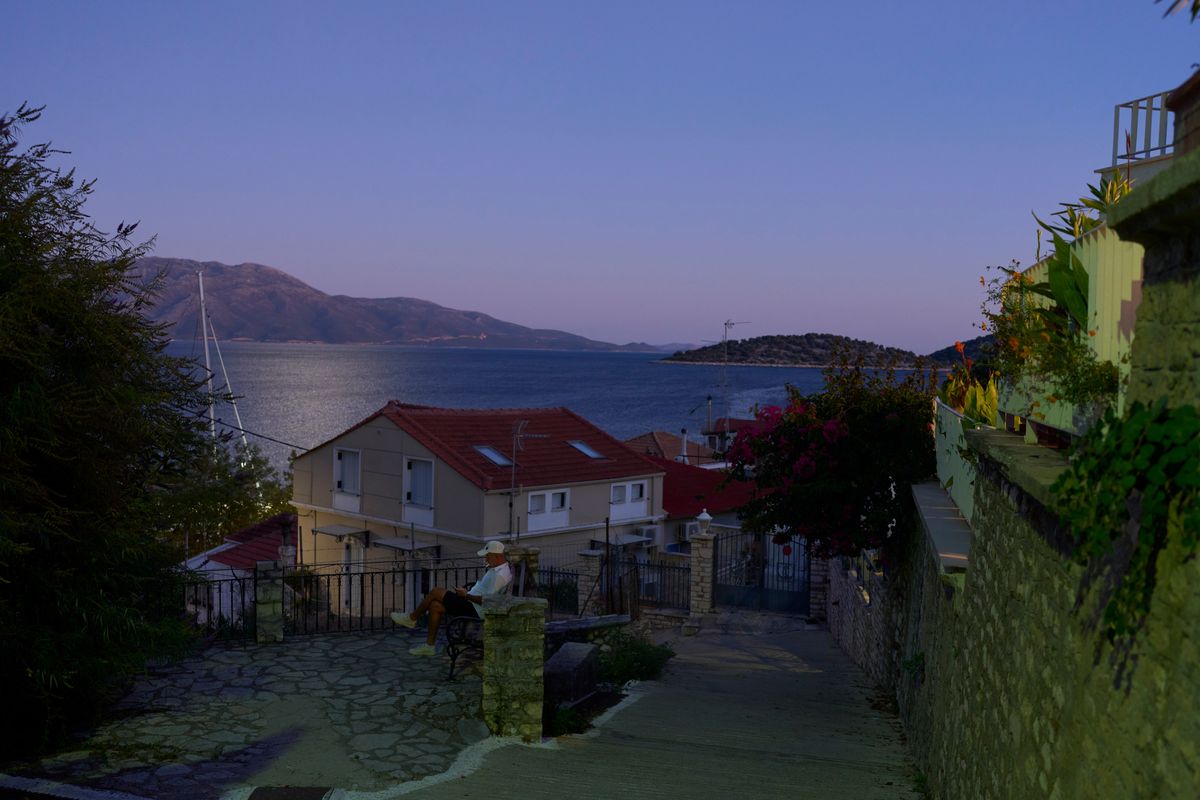
Kalamos’ year-round population is just 80. A decade ago, it had 40 children in local schools and public daycare.
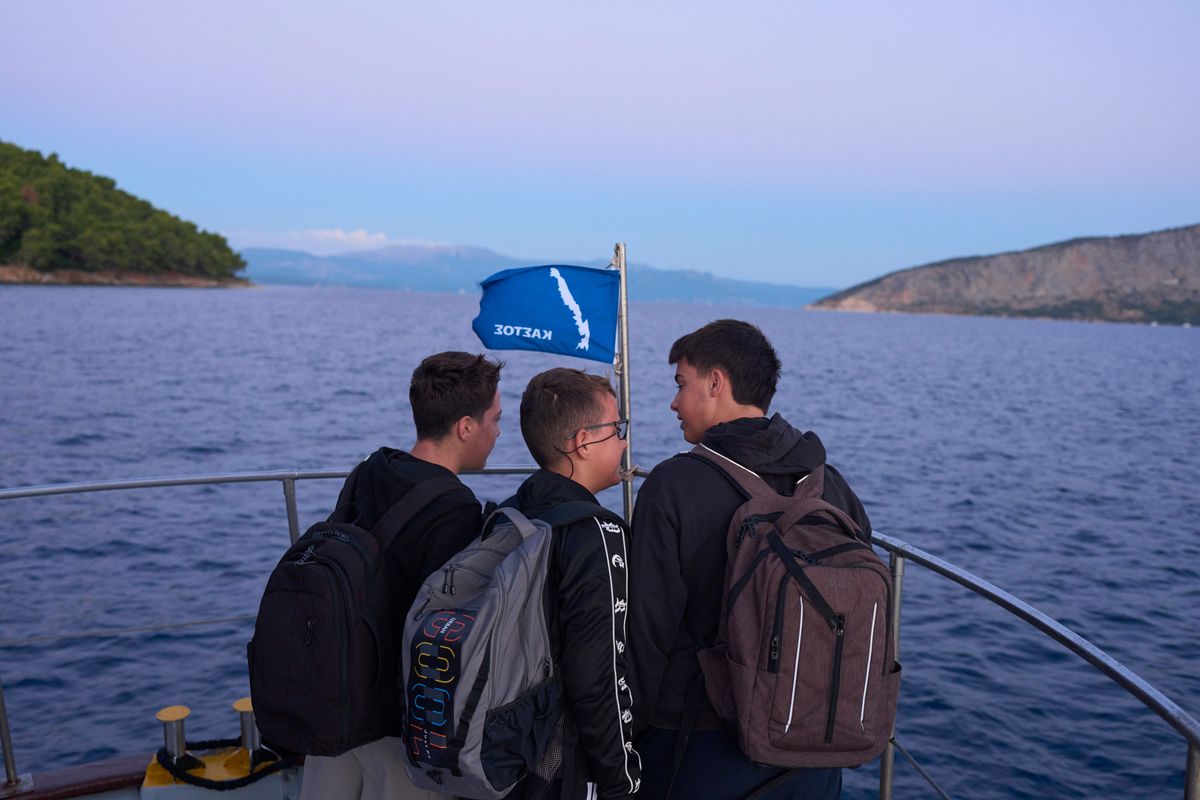
“It was very nice. We played together every day. We went to (primary) school every morning,” Antonis Aivaliotis, a high school senior, said during a ferry ride in the predawn light.
Aivaliotis is among Kalamos’ seven teenagers who today make a choppy crossing to school on the mainland. They miss class on days when strong winds pose a risk.
He spent several years as a student of Ntalaka’s class, which at the time was a single room with children of all ages.
Ntalaka has often been the lone teacher during her 20 years at remote schools. Half that time was in Kalamos, located not far from Odysseus’ home island Ithaca in “The Odyssey.”
She fell in love with Kalamos’ unspoiled beaches that are a magnet for yacht tourists. She learned to dive and became an accomplished spearfisher. But she will have to leave.
All it would take for her school to remain open would be the arrival of two families. She and town officials have desperately sought to spread the word, but there’s no sign of any comers.
“We’re very welcoming and we’re trying. That’s what we want to do, even right now — for someone to hear us,” Ntalaka said. “The sooner, the better.”
As for Aivaliotis, he sees moving away after graduation as an inevitability.
“Of course I would like to stay here,” he said. “I love Kalamos. It is my home. But there’s no development at all.”
From Croatia to Japan, islands fight to keep schools open
Aging countries are struggling to keep their island schools open, with limited success.
Croatia has invested 4.6 billion euros ($5.1 billion) in its islands over the past 10 years, Prime Minister Andrej Plenkovic said in June. That includes 20 kindergartens being built or expanded, and renovation of primary schools and sports arenas. Croatia’s parliament, the Sabor, in January passed an Islands Act aimed at improving life for islanders. The rate of population decline on small, remote Croatian islands is similar to that of the mainland.
Japan faces grimmer demographics. In the decade through 2023, the population of over 250 remote islands covered by a government support program fell 19%, almost double the national rate, according to the most-recent government data. Nearly 1 million people lived on those islands in 1955, and 340,000 by 2020.
This has led to a shortage of people to operate ferries and other transportation, worsening economic contraction on remote islands. Japan’s government says maintaining residents is crucial to national security and has provided subsidies to lure people to work in tourism, fishing and other industries.
Some islands have managed to recruit students from elsewhere. On remote Oki Islands, for example, 74 of the 132 students at a fisheries high school were drawn there through family relocation programs.
And on the Italian island of Stromboli, formed by the tip of a volcano, a school reopened last month after 20 years with a single student. Italian elementary schools normally need at least 15 pupils, but exceptions are granted to remote islands because a school’s closure can accelerate depopulation.
Images broadcast on Italian television showed 6-year-old Aysha wearing a purple backpack almost as big as her body and holding her mom’s hand as she walked through the narrow streets of Ginostra to her first class inside the village’s local church.
Europe’s population is growing older
Aris Alexopoulos, head of the OECD’s Crete Center on Population Dynamics, says Greece’s population will fall as low as 8 million, from 10.5 million, by 2050. Young people are becoming a minority, he said on the sidelines of a demographics conference in Athens on Sept. 21.
The trend extends across the European Union: 3.55 million babies were born in 2024, roughly half the 1964 peak. Its fertility rate dropped to a record low of 1.34 children per woman, well below the 2.1 level needed to maintain a stable population. Greece was among few countries with rates below 1.25.
In June, the EU announced it would develop a strategy for islands, aiming to address the problem of shrinking populations, among others.
Themis Christophidou, director-general for regional and urban policy at the European Commission, told AP in an email that the EU has spent 146 million euros ($164 million) over the past five years to modernize schools on four Greek island clusters, specifically to counter demographic decline.
“Mobility is one of Europe’s strengths, but people should leave by choice, never because of neglect or missing investment,” she wrote. “That starts with quality public services, with education at their heart.”
___
Gatopoulos reported from Athens, Greece. Associated Press journalists Theodora Tongas in Athens, Greece, Menelaos Hadjicostis in Nicosia, Cyprus, Giada Zampano in Rome and Mari Yamaguchi and Yuri Kageyama in Tokyo contributed to this report.
By LEFTERIS PITARAKIS and DEREK GATOPOULOS
Associated Press