




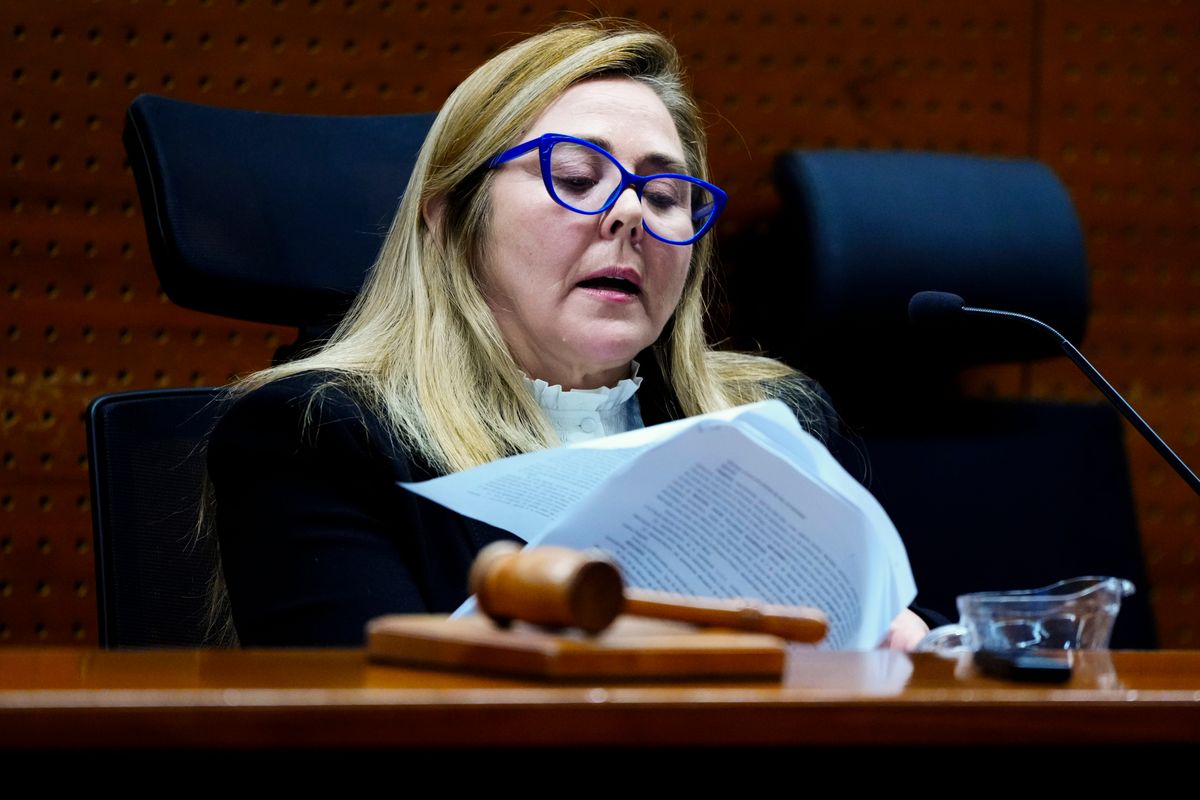
SANTIAGO, Chile (AP) — A Chilean court on Thursday sentenced a Venezuelan man extradited from Costa Rica to 20 years in prison for his role in the kidnapping and killing of former Venezuelan military officer and dissident Ronald Ojeda, a politically charged case that has raised concerns in Chile about organized crime.
Maickel David Villegas Rodríguez, 28, identified by prosecutors as a member of a local offshoot of Tren de Aragua, the Venezuelan crime group designated by the Trump administration as a foreign terrorist organization, was the first defendant in Ojeda’s killing to face a full trial. Sixteen other defendants are set to go on trial next week.
Prosecutors said Villegas Rodríguez kept watch outside Ojeda’s apartment and filmed his kidnapping to send proof to gang leaders. The court found him guilty of helping carry out the abduction, which resulted in Ojeda’s death. The 20-year sentence was the maximum prosecutors could seek under commitments Chile made to Costa Rica during his extradition.
“We are satisfied that his participation was proven. (Villegas Rodríguez) played a strategic role in Ronald Ojeda’s kidnapping and killing,” said Alejandra Valdivieso, a lawyer representing Ojeda’s family. “No sentence can repair the harm the family suffered. But each conviction will give them a little more peace and help them move forward.”
Ojeda, 32, fled Venezuela in 2017 after being accused of conspiring against the government of former President Nicolás Maduro. In February 2024, soon after Chile granted him refugee status, Ojeda was abducted from his apartment in Santiago, the capital, by men posing as police officers. His body was later found inside a suitcase, buried under concrete.
The killing rattled Venezuelan exiles in Chile, home to one of the largest Venezuelan communities in Latin America. Chilean prosecutors allege Venezuelan Interior Minister Diosdado Cabello ordered Ojeda’s killing and paid a Tren de Aragua leader to carry it out — a claim that, if proven, would raise serious questions about Chile’s ability to protect political exiles on its own soil.
The Venezuelan government denies involvement in the killing.
The allegation remains under investigation and was not addressed in Villegas Rodríguez’s trial.
“No defendant in the upcoming trial is directly linked to an order from abroad to commit this crime,” said Alex Cortés Mesa, the prosecutor in Villegas Rodríguez’s case. “There is a separate investigation into that possible motive, and it remains open.”