




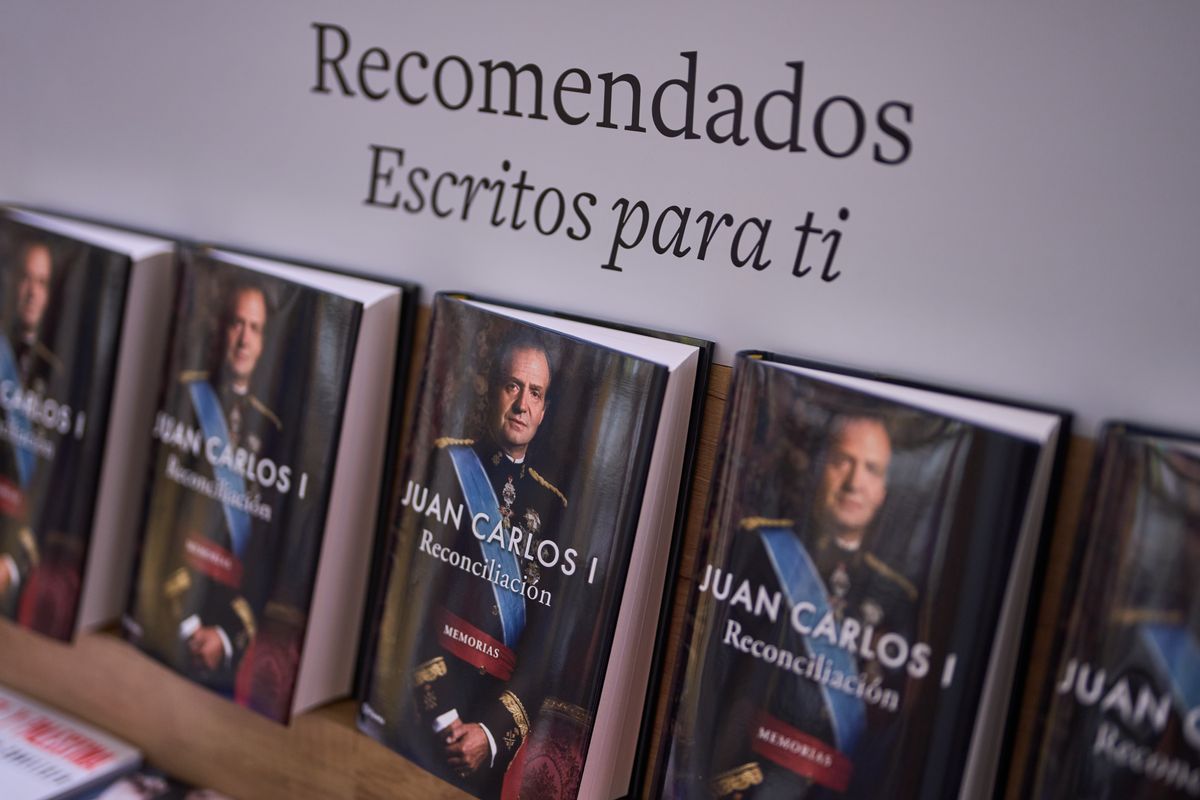
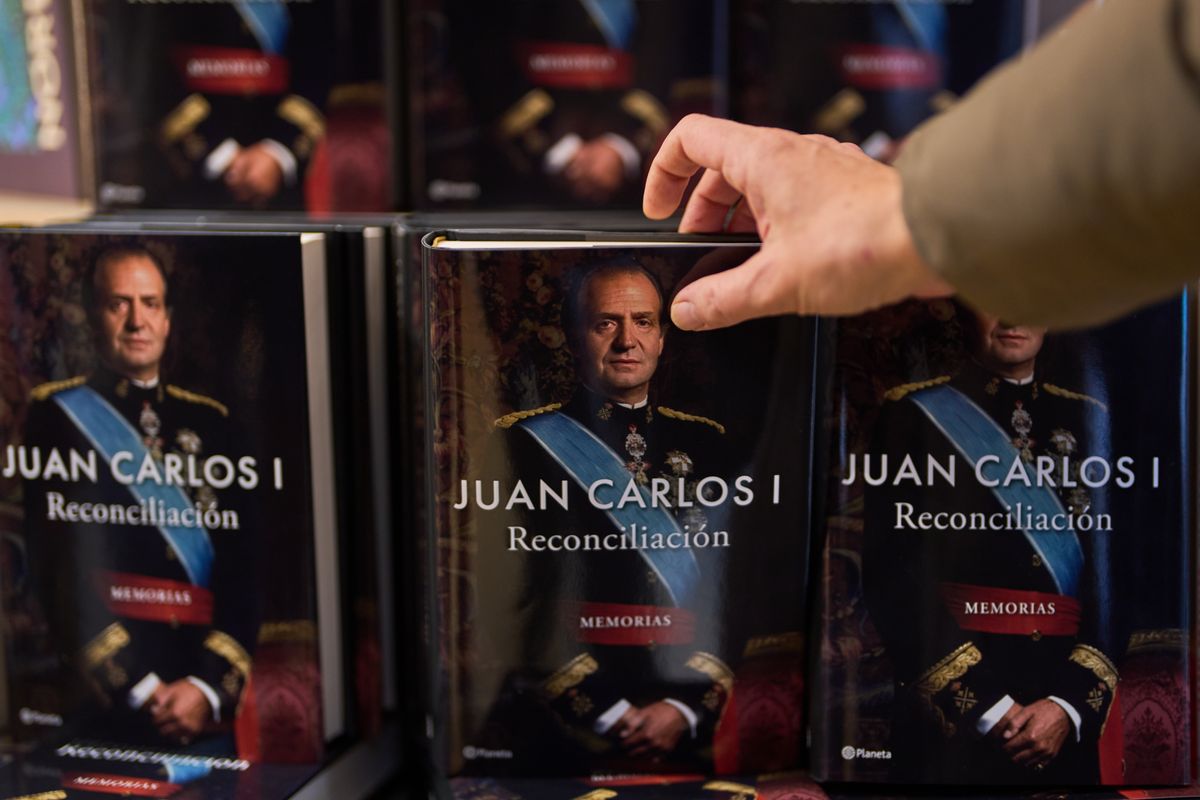
MADRID (AP) — With his reputation in tatters, Spain’s former King Juan Carlos I abdicated in favor of his son in 2014 and left Spain years later for self-imposed exile in the United Arab Emirates. Now, he is trying to rehabilitate his image — but struggling to make headway.
The disgraced former monarch published a memoir on Wednesday called “Reconciliation,” saying on the first page he needed to write it because, “in recent years, misinterpretations and false truths about my life have been growing.”
Juan Carlos, 87, was for decades deemed a national savior after he oversaw Spain’s return to democracy and stood down a military coup. Then came the womanizing, the spending on safaris to shoot African elephants during a worldwide recession, and finally the unseemly wealth of Saudi origin sloshing around in foreign bank accounts.
While the book contains nuggets of historical interest, including details on Juan Carlos’ accidental shooting of his brother, it appears to have driven father and son, King Felipe VI, further apart.
Promoting the book earlier this week, Juan Carlos addressed Spaniards in a video quickly splashed across Spanish media, appealing to people: “I ask you to support my son, King Felipe, in the difficult job that is unifying Spain.”
The royal house, which rarely airs Felipe’s views, reacted swiftly.
“We don’t understand the purpose of that video, and we don’t see it as necessary or appropriate,” Rosa Lerchundi, communications director for the royal house, said in a message to the media, including The Associated Press.
Legacy not enough to mend bridges
Felipe, who took the throne in 2014, has for years distanced himself from Juan Carlos. When his father’s financial dealings came under scrutiny, Felipe renounced any future personal inheritance he could receive from Juan Carlos and stripped his father of his annual stipend.
Investigations into Juan Carlos’ finances in Spain and Switzerland were eventually dropped, as was a harassment case against a former lover taken to court in Britain, but the damage to his public image was done.
The Spanish Royal House under Felipe makes every effort to appear to be a service to the country while avoiding lavish spending. Its yearly budget is less than a tenth of what the British royal house receives in public funding.
In the book, Juan Carlos said he understands Felipe’s need to protect the monarchy, but laments their estrangement.
“I understand that, as King, he must keep a certain distance from me,” Juan Carlos wrote. “But I have suffered as a father. In those difficult moments, I felt the need for affection and family support.”
The French faux pas
The release in Spain comes a full month after the book originally appeared in France. At that time, talk of the memoir was all over Spanish news, tabloids and podcasts. Coverage was overall unfavorable, and any hopes of convincing Spaniards to welcome him home appeared to be of little avail.
“The problem is that they (the memoirs) were ghostwritten by a French author who is not particularly well informed about contemporary Spanish affairs,” said Charles Powell, director of the Elcano Royal Institute in Madrid, a think-tank.
“That rather undermines the credibility and the seriousness of the whole effort, frankly,” added Powell, a royal expert.
What readers think
Pablo García popped into a department store in downtown Madrid on Wednesday morning to pick up a copy. The 32-year-old who works in advertising said he thinks Juan Carlos’ legacy should be more fairly considered.
“Especially at his age now, there comes a point where you have to weigh what matters more, whether the good things he contributed to Spanish democracy outweigh the mistakes he made,” García said.
Other shoppers said they would pass.
“With each day that passes, I feel more repulsed by that man’s figure,” said Tamara Sanchez, a 38-year-old social worker.
Historical value
The book does provide information for those interested in the turbulent history of his life.
Juan Carlos details an accident that he said shaped his life forever: the moment he accidentally shot and killed his younger brother in a gun accident. The incident is well-known in Spain, but the former king has never recounted it firsthand.
In 1956, when Spain’s royals were exiled in Portugal, Juan Carlos and his 14 year-old brother “were having fun playing with a .22 caliber pistol.”
The brothers didn’t realize there was a bullet left in the chamber.
“A shot went off, the bullet ricocheted and struck my brother in the forehead. He died in my father’s arms,” Juan Carlos wrote. “Even today, it’s difficult for me to talk about what happened, but I think about it every day.”
___
Wilson reported from Barcelona.
By JOSEPH WILSON and SUMAN NAISHADHAM
Associated Press