




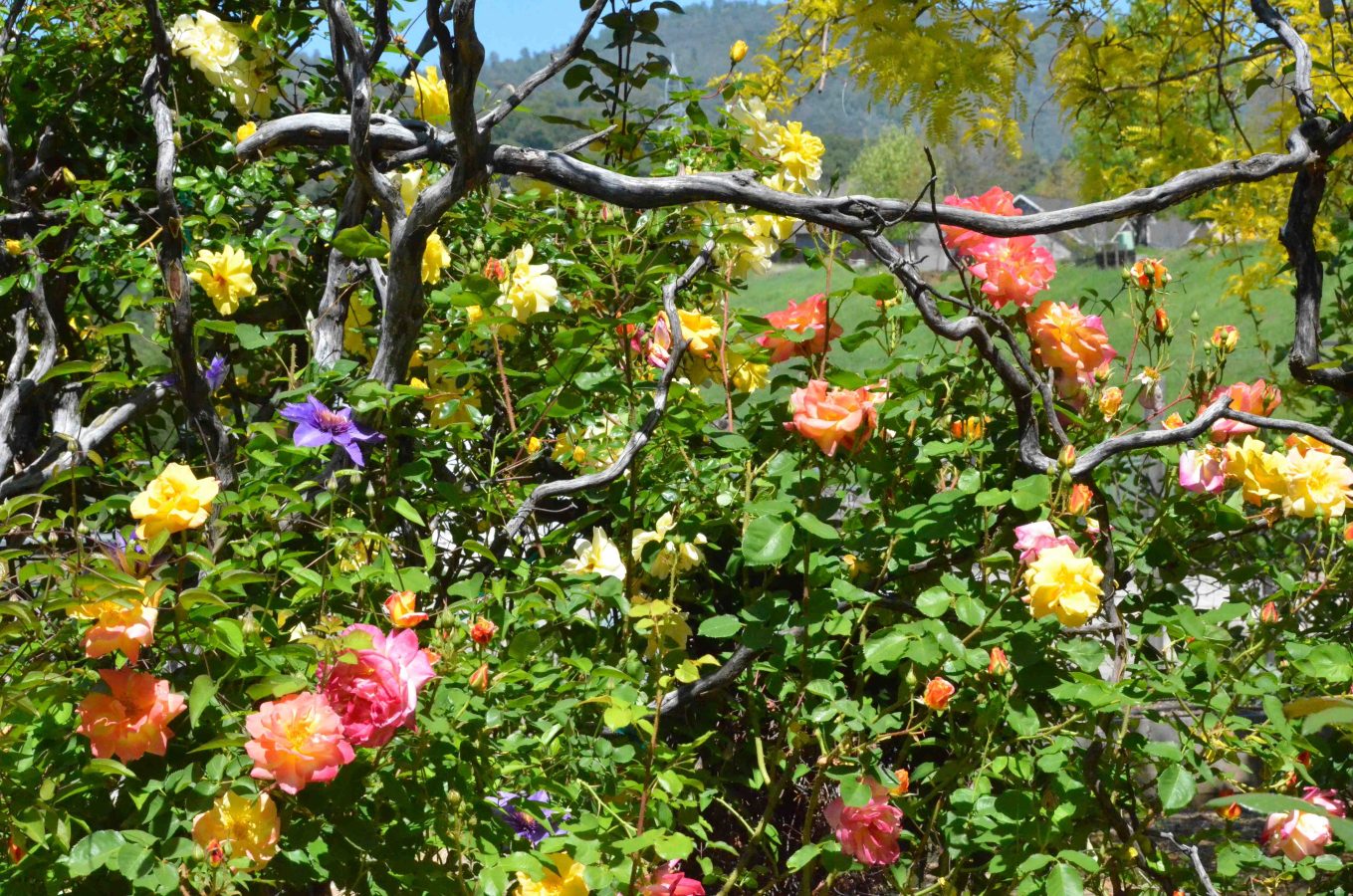
For foothill gardeners with roses, it’s pruning time. However, there are two exceptions.
Pruning Exceptions: Single blooming roses should be pruned after blooming. Two types of single-blooming roses that are common throughout the foothills are ramblers and wild roses.
Ramblers look similar to climbing roses with vigorous, long canes that produce clusters of flowers in late spring to early summer. Unlike climbing roses, once ramblers have finished their spring bloom, they’re done for the year.
Wild roses can be identified by their single blooms, often with yellow centers, and thin stems covered with fine, very sharp thorns. They also bloom once in the spring with sweet-scented pink, red or white blossoms and then produce abundant rose hips.
Roses that only bloom once per year form buds on last year’s canes. So, pruning at the “normal” dormant pruning time removes all the new flower buds (latent within the canes) resulting in no blooms during the current year. Both ramblers and wild roses can be shaped after their bloom season is finished, allowing them to form buds within the new growth for next summer’s bloom.
General Pruning Instructions: Why prune roses? Pruning provides an opportunity to direct growth and invigorate rose plants. It improves flower quality; removes unproductive, diseased or dead branches; leaves a few of the best, strongest canes to stimulate renewed growth; and gives the plant an attractive shape and desired size for your landscape.
Always cut to a strong outside bud. Cut at an approximately 45-degree angle ¼ inch above the bud or bud-union. If a longer section remains, die-back will occur. Cut the cane with the sharp side of the pruners opposite the bud to assure a clean cut and that the non-cutting side will be pressing against the part of the stem that will be discarded.
Types of Roses: According to the UC Integrated Pest Management website: “Pruning requirements vary among types of rose plants. Hybrid teas, grandifloras, and many floribundas benefit from annual pruning in which most top growth and dead wood is removed leaving 3 to 5 canes in a vase-shaped configuration. Landscape varieties may be hedged or left unpruned, although rejuvenation pruning or removal of older stems and dead wood every 2 to 3 years will renew vigor in the planting.
In most of California, pruning should be done in winter before buds swell, although it may be delayed where late spring frosts are common. A starting point in pruning is to remove diseased and damaged wood. Between one- to two-thirds of healthy wood may be removed through a combination of heading and thinning cuts.
Removal of more wood results in fewer but larger flowers with longer stems suitable for cut flowers. Less pruning preserves the size of plants and results in a greater number of smaller flowers which can result in a pleasing landscape display. Pruning paint or other wound dressings are not necessary.”
Compiled of information provided by former UC Master Gardener Carolee James, current UC Master Gardener Rebecca Miller-Cripps and the University of California Agriculture and Natural Resources Integrated Pest Management program