




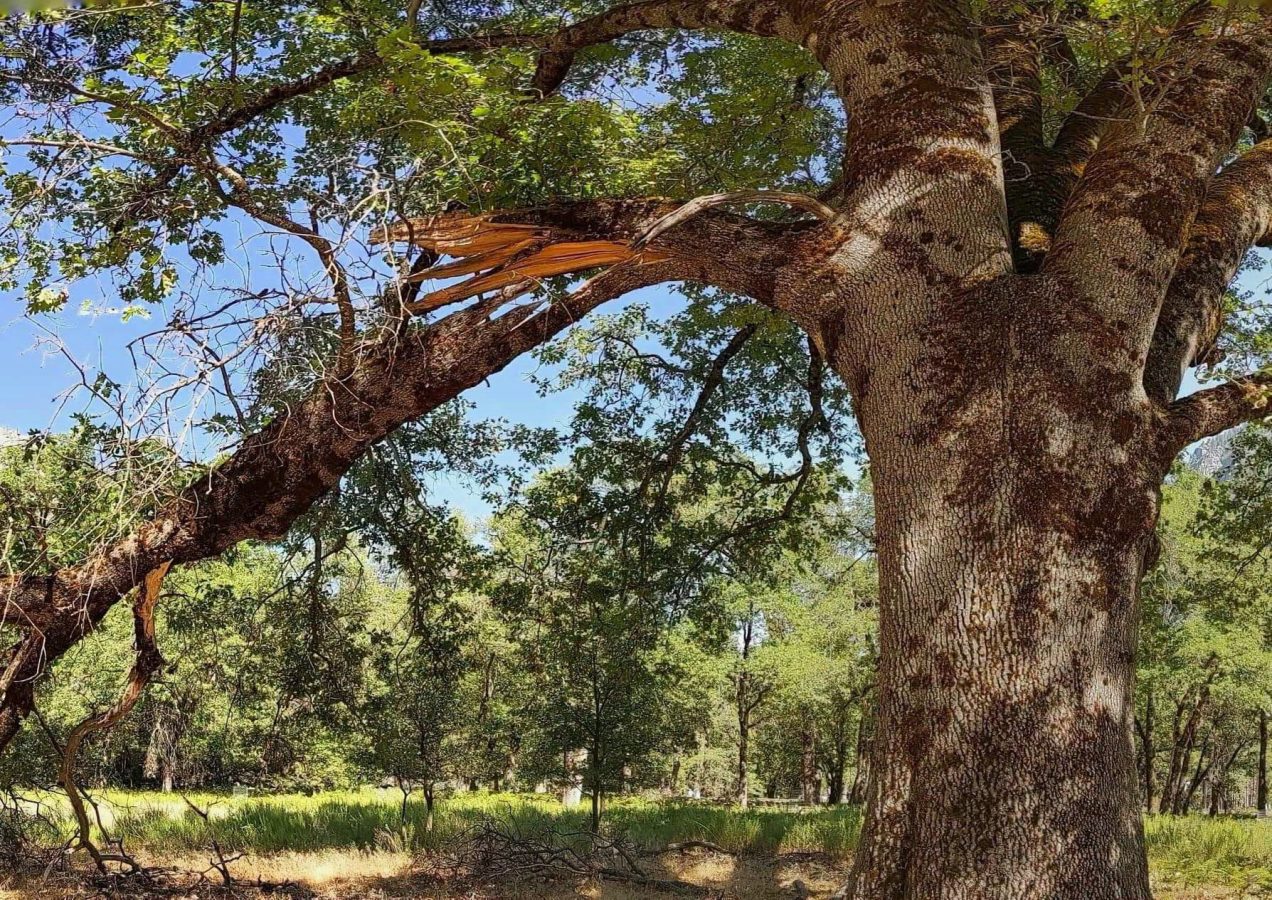
Yosemite, CA—Hot summer weather brings more than high temperatures to Yosemite National Park. It also marks the season for summer branch drop, a phenomenon in which seemingly healthy tree limbs can suddenly fall without warning.
Summer branch drop occurs most frequently in black oak trees around Yosemite and is most common during particularly hot, calm afternoons when there is little or no wind. Unlike branches that break during windy conditions, summer branch drop typically occurs along the length of a limb, usually 3 to 12 feet from the trunk. The affected branches are generally long and horizontal, often extending to or beyond the tree’s typical canopy.
Some branches that fall show signs of wounds or decay, but many appear healthy before breaking. Older, less vigorous trees also appear to be more susceptible to summer branch drop. A tree that has already lost a limb to summer branch drop is also more likely to experience another branch failure. There is no way to predict exactly when a branch will fall, but visitors can take steps to reduce their risk. Park officials recommend that visitors avoid sitting or pitching tents directly beneath large oak trees on hot days. Infants, elderly people, and others who may have difficulty moving quickly should not be left directly beneath large oak trees.
Visitors who hear a loud crack overhead should move quickly away from the tree. Staying away from trees that have already lost branches can also help visitors avoid additional hazards while allowing park personnel to assess and maintain the affected trees.
Anyone who sees a fallen tree or branch is encouraged to report it to the nearest park ranger.