




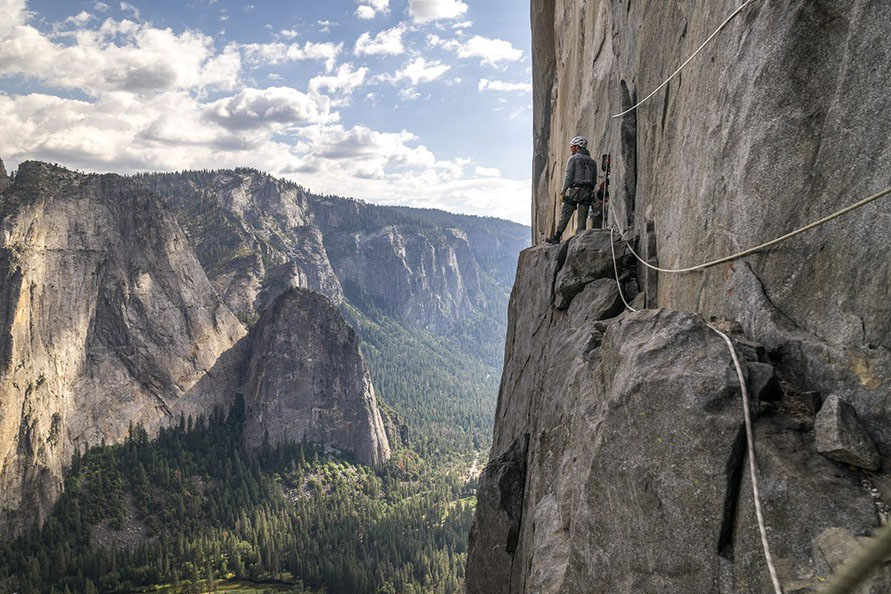
Sonora, CA – Time is running out to leave a comment about new rules that the U.S. Forest Service has proposed in a first-ever national policy for managing recreational climbing on public lands. The Mother Lode is home to world-class rock climbing in Yosemite and in many areas including the Stanislaus National Forest and Emigrant Wilderness.
The 30-day comment period is set to end this Friday, July 17, 2026 although the American Alpine Club states an extension request has been pending, the comment period opened June 17, 2026.
The USFS proposal includes guidance on fixed anchors and equipment. It replaces a 2023 draft to align with the EXPLORE Act of 2025. It recognizes climbing as an appropriate use in wilderness areas and includes the PARC (Protect America’s Rock Climbing) Act, formally protecting previously installed bolts and anchors. The usage of bolts on rock has been a controversial issue since the Wilderness Act was passed in 1964, with some wilderness supporters believing that rock-climbing anchors and protection may violate “Leave No Trace” principles. However, bolts, camming devices, and chalk have long been regarded as suitable for usage in wilderness by governmental agencies, according to U.S. Forest Service officials.
The Forest Service issued a single, comprehensive new directive “Climbing Opportunities on National Forest System Lands” covering both wilderness and non-wilderness National Forest System lands. The proposal is described by the USFS as a way to establish a national direction for climbing activities, allowing local decision-makers to collaborate with partners, tribes, and organizations and aims to promote safe, responsible, and accessible outdoor climbing experiences.
Overall there are four federal land management agencies that have released draft guidance recognizing recreational climbing as part of implementing the EXPLORE Act, and defining climbing as an appropriate wilderness activity. The public comment deadline for all three is August 14, 2026. The three agencies are the National Park Service, Bureau of Land Management, and U.S. Fish & Wildlife Service.
The American Alpine Club provides an excellent overview here detailing each of the agencies. The National Park Service (NPS) has issued two complementary draft documents (FSM 2355) here. They revise climbing-related provisions in the policy known as Director’s Order 41 and the climbing-related provisions in Reference Manual 41 on implementation guidance. Comments are welcome on the proposed framework that will provide a way for wilderness climbing across all national park units, including the recognition of rock climbing, mountaineering, canyoneering, snow and ice climbing, and caving as legitimate wilderness uses. Via ferrata (climbing using fixed steel cables, iron rungs, and ladders embedded in the rock), slacklining, and highlining are defined as forbidden and excluded and will be governed separately.
The Bureau of Land Management (BLM) proposes incorporating climbing guidance as a new Section of the BLM Manual 6340. Section 1.6.C.13.f, would cover bouldering, rock climbing, mountaineering, canyoneering, caving, and ice climbing and defines what climbing equipment qualifies as casual use; a placement must involve five or fewer anchors with no less than 100 feet of separation (in any direction) from other human-placed objects. Routes with more than five anchors, or those in areas with existing infrastructure closer than 100 feet, fall outside casual use and require formal BLM authorization — potentially including a Minimum Requirements Analysis (MRA) and NEPA review. The order does allow for emergency placements without prior authorization, but also requires post-incident reporting to the park.
The U.S. Fish & Wildlife Service (FWS) issued its guidance as a memorandum from the Director to Regional Directors 1–8, covering the National Wildlife Refuge System (NWRS) and, secondarily, National Fish Hatchery System (NFHS) lands. Until now recreational climbing on refuges is not permitted related to its wildlife-first mission. Rock climbing is not known to occur on any NFHS lands according to the American Alpine Club, so the guidance proposal defines a way to propose climbing routes and places where before the EXPLORE Act, no formal process or opportunity existed.
All the new orders must comply with Executive Order 14219, “Ensuring Lawful Governance and Implementing the President’s Department of Government Efficiency Deregulatory Initiative,” and support the outdoor recreation economy. According to the Outdoor Industry Association’s 2022 report on outdoor participation trends, there are an estimated 10.3 million climbers in the United States, with approximately 2.3 million participating in sport or boulder climbing and approximately 2.4 million in traditional ice or mountaineering climbing. Our earlier story about the Order is here.