




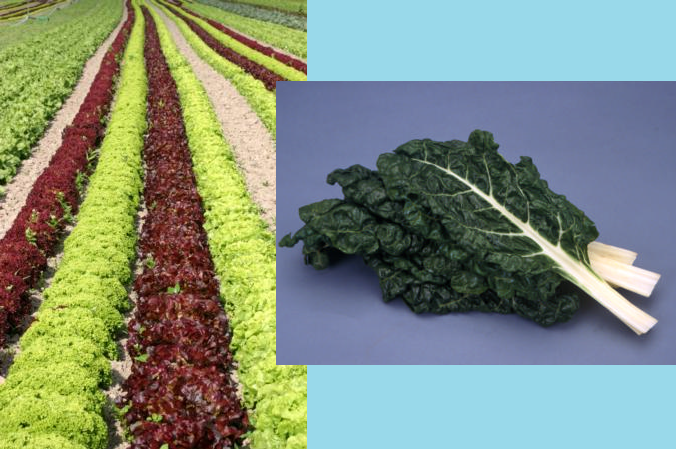
Even though we’re experiencing high summer temperatures, it’s not too early to be thinking about fall and winter gardening. Many people think that this area is too cold for a winter garden – it’s not!
Here are some growing tips for various groups of plants:
Leafy greens: Many leafy greens, especially lettuce, will not sprout quickly until they’ve been cool and moist for a while. You may want to start them growing a little sooner than those conditions are available in your garden. This will ensure they’re sturdy enough once cooler temperatures arrive. Put seeds on a damp paper towel in a plastic bag and put them in the refrigerator for 3-7 days before planting so they will sprout immediately. You’ll see just a speck of white at the base of the seed. Plant them in the garden (if in the 70s) or in pots. These seeds should only be started about 3 to 4 weeks before you expect cooler temperatures. Lettuce needs frost protection if grown into the winter.
Crucifers: Broccoli can either be planted for fall or spring harvest. If planting for fall harvest, plant in the ground around Labor Day at low-to-mid elevations (start seeds 8-10 weeks before planting out) and a bit earlier at high elevations. For harvest in late winter or early spring, plant when plant stalks will be no bigger than a pencil when cold weather arrives. If they’re larger, they will “button” in the spring and produce useless very small heads. Many varieties of broccoli will produce another head after the first is cut off.
Cabbage can be grown like winter broccoli (it will bolt instead of button if the stem is too big when planted in fall).
Kale can be grown from seed planted in summer where it will get water. It will grow into a large plant with very sweet leaves once cold weather arrives. I prefer Russian kale for its tender leaves.
Onions & related: Garlic should be planted once temperatures start to cool, generally in October. Softneck garlic grows well at our lower elevations (this is all that’s usually sold at places like Lowes or Walmart). Hardneck garlic grows well under colder conditions. Some hardneck garlic varieties are hotter than the standard store varieties. Peaceful Valley Farm & Garden Supply in Grass Valley has several kinds available. Their web site has a tool to select the best variety using USDA zones.
If growing onions in this region, you must select a variety for medium day length so they will turn into bulbs in the summer. They should be planted in fall and allowed to grow through the winter. Onion seeds are only good for one year.
Leeks are very cold tolerant. Plant early enough (as soon as temperatures don’t exceed 80 degrees) to get some size before significant snow arrives. Seeds are ok for 2 years. Some varieties such as Carentan can be grown as perennials and produce small bulbs at the base of older plants. These can be moved so they have enough room to produce large roots by next winter and spring.
Nan Piekarczyk is a University of California Cooperative Extension Master Gardener of Tuolumne County.