




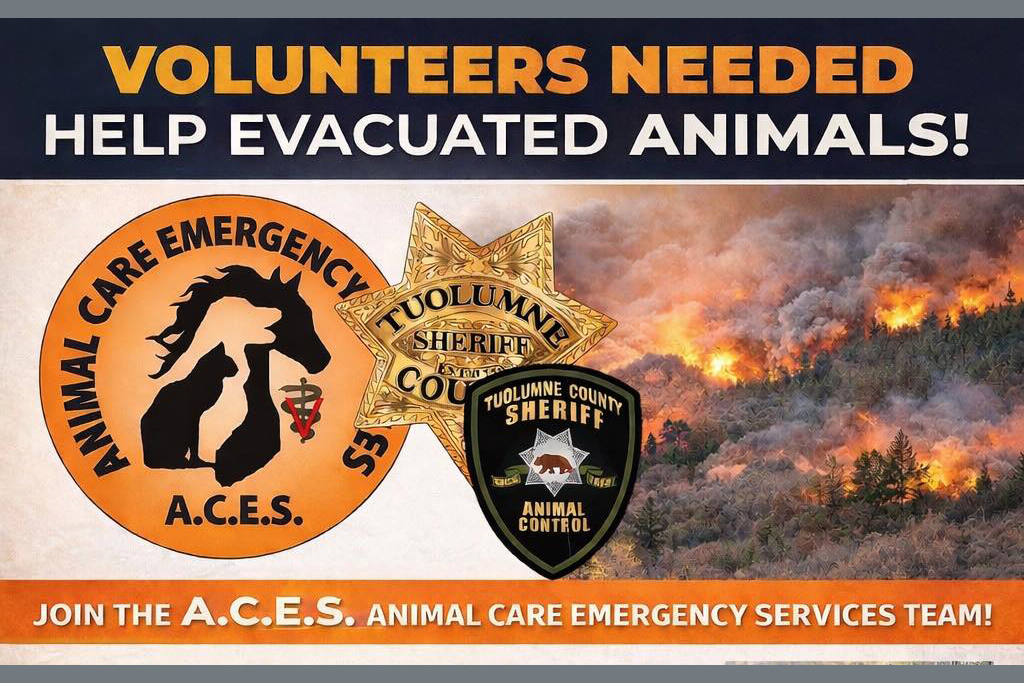
Jamestown, CA—The Tuolumne County Sheriff’s Animal Control is calling on all those with experience in helping and rescuing animals when emergencies arise to volunteer those vital skills.
Noting that when there is a fire, a flood, or any emergency, animals rely on animal control, which is further developing its Animal Care Emergency Services team, or A.C.E.S., they are asking for committed volunteers to help provide emergency shelter and care for animals evacuated during natural disasters in the community.
Shelter officials provided this list of work the A.C.E.S. team assists with:
- Setting up emergency animal sheltering areas
- Caring for evacuated livestock and farm animals
- Feeding, cleaning, and monitoring dogs and cats
- Assisting with medications and treatments under the supervision of our DVM and RVT
- Maintaining clean, safe shelter areas during disaster operations
“We are looking for people with animal experience who are calm under pressure and willing to help during emergency situations,” stated animal control officials. “Experience with large animals, livestock, dogs, or cats is highly valued.”
All approved volunteers will be designated as California OES Disaster Service Workers, allowing them to provide official assistance during county emergency activations. In preparation and before deployment, volunteers must complete basic Incident Command System (ICS) training through Federal Emergency Management Agency (FEMA) online courses.
Animal control provided this list of required FEMA online courses:
- IS-100: Introduction to Incident Command System
- IS-200: Basic Incident Command System
- IS-700: National Incident Management System
Click here for those courses on the FEMA training portal.
Those interested in volunteering can email shelter officials at cwhitcomb@co.tuolumne.ca.us to go over volunteer requirements, onboarding steps, and training details.
“It takes a community to protect animals during disasters—and we are building that team now,” advised shelter officials.