




Lettuce has been making headlines lately—it can be physically contaminated and economically pricey. Growing your own salad makings is all of a sudden very worthwhile. With one-hundred-degree heat in the summer and snow on the ground in the winter, you would think growing greens is a lost cause, but it is not.
Salad is not all about lettuce. Swiss chard, bok choy, baby kale and spinach all make a great salad. Baby mustard greens, beet greens and turnip greens will work, and cucumbers and cabbage fit in well. In truly extreme climates, you can grow sprouts indoors.
Not all lettuce is created equal. Some varieties are more cold tolerant than others, while others can actually take a little heat. A loose-leaf lettuce like Royal Oak or Red Sails is heat tolerant. A romaine such as Jericho also is a good summer choice. Heat tolerance also means it needs to be slow to bolt or flower, as this ends its productive life.
Other varieties do better in winter. Rouge d’Hiver is a French heirloom variety that does very well in the cold. The accurately named North Pole is a great butter head lettuce that is also winter hardy. Read seed packets to discover many other varieties. Better yet, explore seed catalogs on line.
Start seed indoors unless your timing and climate happen to be just right. Since I am a veteran procrastinator, I usually miss this “perfect” time. Lettuce seeds will germinate between 40 and 80 degrees; 65 to 75 degrees is perfect. A well-drained seed starting mix that is damp but not soaked is best.
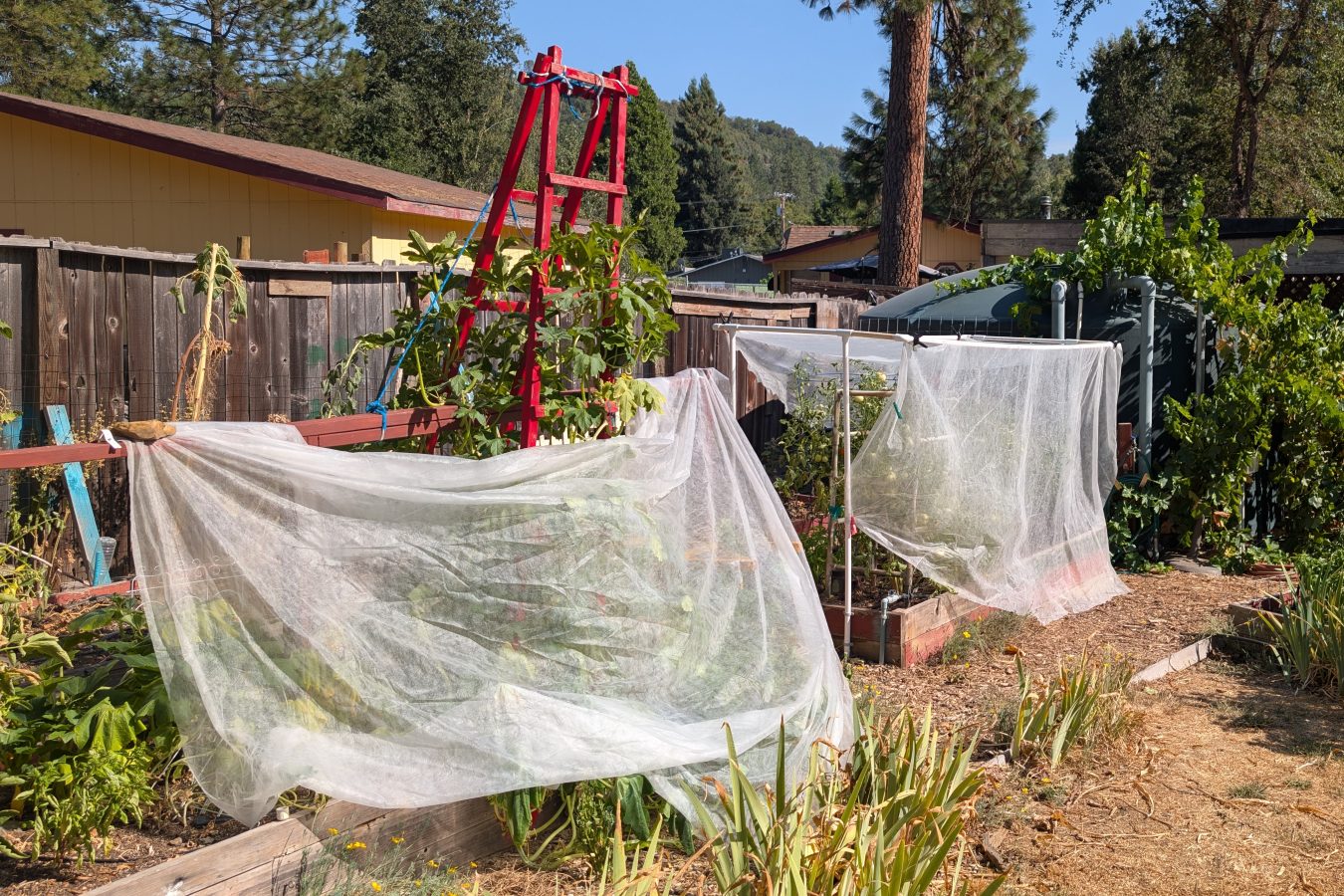
Given that nineteen degrees is too cold and one hundred degrees is too hot, I am forced to physically modify the climate where I grow salad crops. The first thing for both summer and winter is a good mulch. This helps keep the soil temperature cooler in the summer and warmer in the winter. Think of it as an insulating blanket.
In the winter I use a low tunnel. This can be as simple as half-inch PVC hoops stuck in the ground covered with polyethylene sheeting. On one hoop house I keep an old string of incandescent Christmas lights on a timer for temperature control on especially cold nights.
In the summer, I use light shade cloth to let in morning light and shield them in the heat of the day. I also plant greens underneath other leafier crops like tomatoes.
In both summer and winter, it is important to water well. Hoop houses shield the ground from rain in winter and there is no rain here in the summer so pay attention to watering.
Most of our harvesting is done with a cut-and-come-again method. It is really easy! Go out to the garden and use scissors to cut outer leaves for your salad. Leave enough in the garden so that the plant continues to grow and you can cut more later. Almost all salad crops I grow are loose leaf. They seem to handle temperature extremes better and harvest can be spread over a couple of weeks. Succession planting is necessary, since all of this planning and trouble is designed to give you year around salad.
Jim Bliss is a University of California Cooperative Extension Master Gardener of Tuolumne County.