




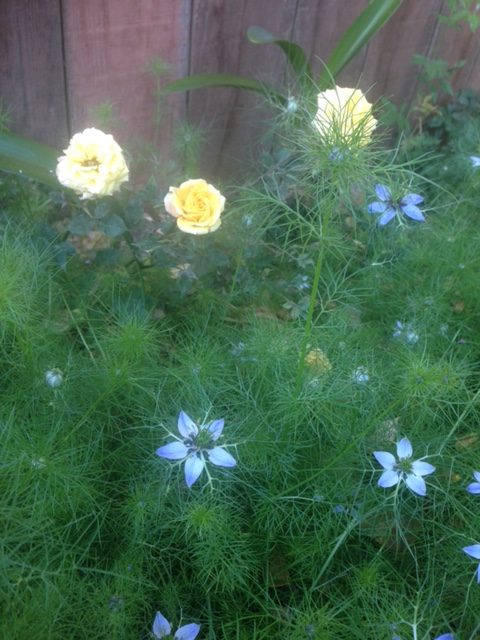
Summertime brings to mind vibrant sunflowers, colorful zinnias, and delicate love in a mist gently blowing in the breeze. If you get excited in the spring, pull out the seed catalogs and go crazy, purchasing every color and variety of flower, you may sentence yourself to weeks of labor. Growing delicate seedlings under indoor grow lights or in a greenhouse, transplanting in May, digging, tilling, mulching, and irrigation set up can be quite daunting. Only to have fall arrive, pull everything up, toss it into the compost and wait until next season, telling yourself you will not do that again as you review your “lessons learned.”
What if having your flower field could be less time intensive, less sweat, less aches and pains and more enjoyment?
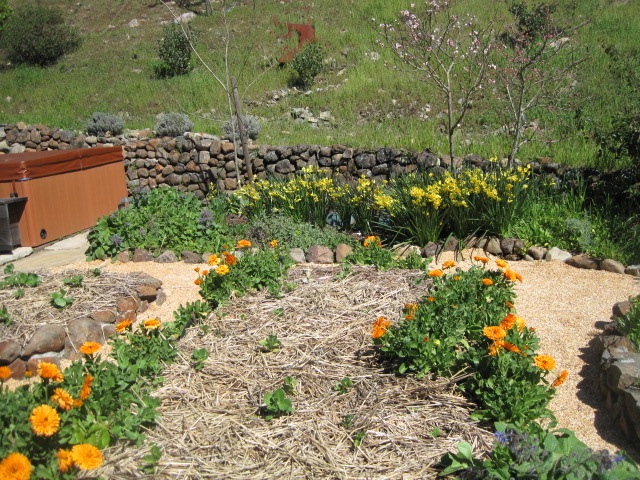
It’s possible to have low maintenance flower fields of any size by following a few simple steps. First, consider no-till soil. This allows for the use of materials, like cardboard, as a mulch layer to prevent weeds and create amazing soil over time with no need for fertilizers. Start by overlapping cardboard and staking down. Then water it and let it sit for about 8 weeks. Simply cover the cardboard with about 6 inches of compost and it’s ready to directly plant seedlings or seeds. Seedlings will easily push their roots through the cardboard and into native soil. Weeds will be nearly eliminated the first season and by year two, the soil will be nutrient rich and have excellent moisture retention. In subsequent years, simply add 1 inch of new compost and mulch to prevent weeds.
Now that your soil is complete, determine what flowers to grow. Overwintering flowers and bouquet filler is a great way to reduce the burden and enjoy a much longer growing season. Some excellent choices include: snapdragons, statice, daisies, yarrow, dahlias, eucalyptus, lavender, stock and peonies.
Simply plant seedlings or tubers outside in the first year and then follow these steps in the fall.
Snapdragons – cut back to about 2-3 inches above the ground, mulch and leave alone until spring. Snaps overwintered will be much stronger and larger than those grown for one year only. In fact, stems are often so sturdy they do not need to be staked.
Dahlias – in warmer zones (not many frost days under 28 degrees), it is perfectly fine to overwinter in the ground. After first frost in the fall, cut dahlias back to about 2 inches above the ground and heavily mulch. That’s it.
Statice, daisies, stock and yarrow – cut back in the fall after first frost; they will come back beautifully in the spring.
Peonies – gorgeous during June. Simply plant one time and cut back in the fall. They come back each year and have lovely foliage when not in bloom.
Eucalyptus and lavender – overwinter if temperatures don’t fall below 20 degrees. In spring, prune lavender back a few inches and enjoy gorgeous new blooms spring through fall.
It is important to mulch in winter and spring to avoid weeds in summer. Adding fresh compost in spring will fertilize flowers naturally. Other than that, ensure your irrigation is working well and enjoy your cut flower field!
Tracy White-Urrutia is a University of California Cooperative Extension Master Gardener of Tuolumne County.