




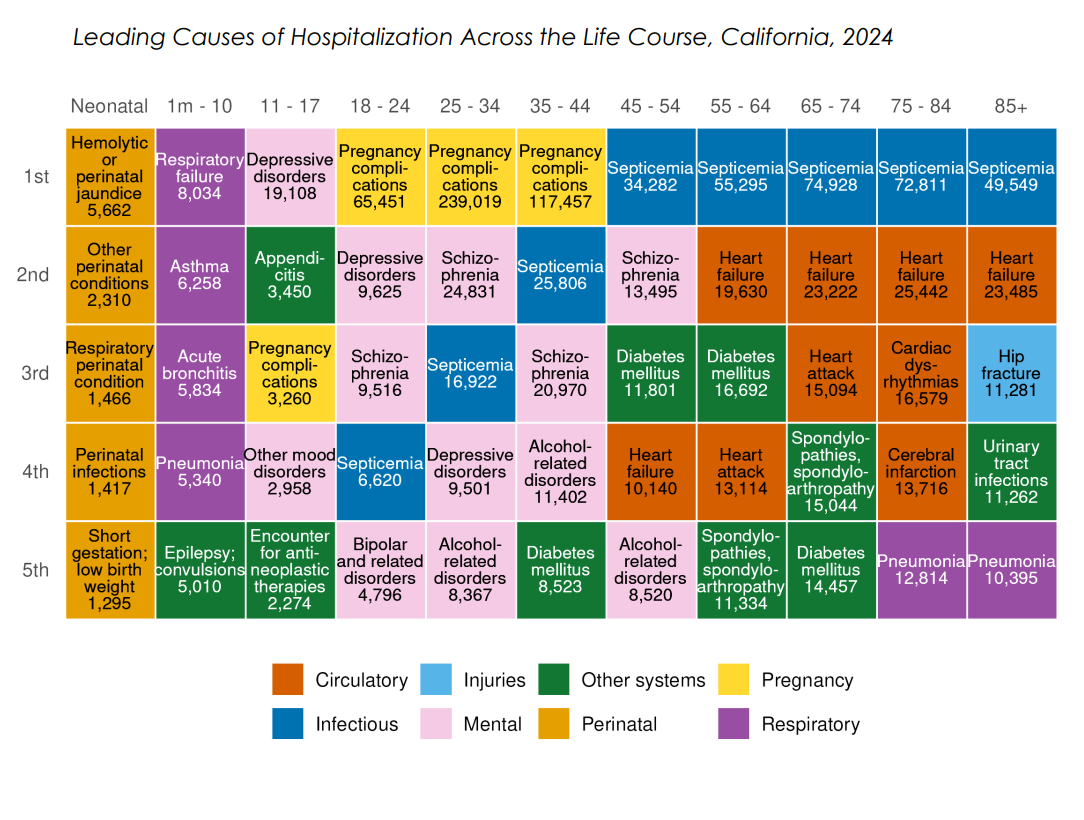
Sonora, CA — Tuolumne County Public Health shares the state recently released the 2026 California State of Public Health Report. The 146-page report defines that public health’s focus is to prevent injury and diseases before they occur and promote factors that foster good health among all people. The report details, the purpose of public health in California is to encompass a broad spectrum of activities aimed at improving the health and well-being of its diverse residents. The report specifically states, “Public health efforts have contributed to significant and measurable improvements in the health of Californians over the past 50 plus years.”
A key responsibility of public health is to collect, analyze, and interpret health data to inform timely public health interventions, policies, and resource planning. The State of Public Health Report is one tool among a suite of data dashboards and reports that the California Department of Public Health (CDPH) produces as part of its foundational function of health promotion, surveillance, and response. This highlight summarizes the unprecedented challenges to public health posed by ongoing federal policy, workforce, and federal funding changes.
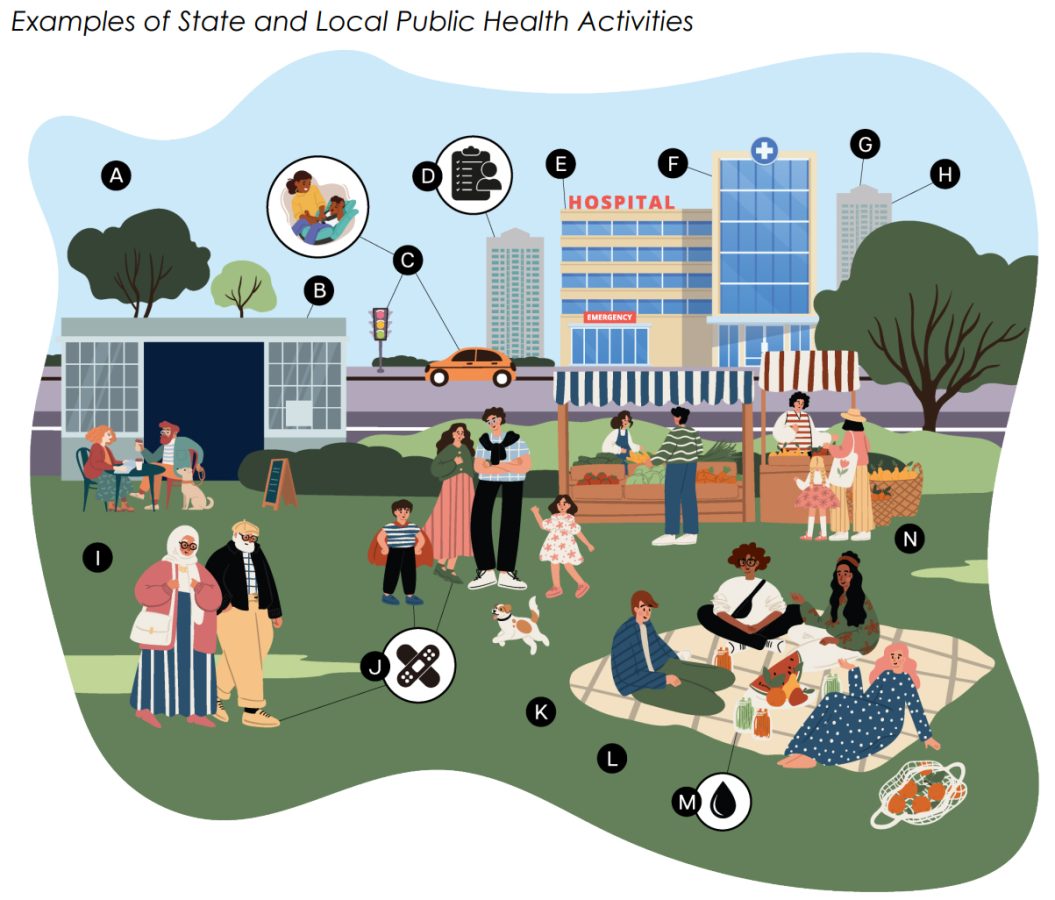
B. Inspecting restaurant hygiene to ensure food safety
C. Promoting seatbelts and safe roads to prevent fatalities
D. Responding as disease detectives to outbreaks like COVID-19 and H5N1
E. Ensuring patient safety in healthcare facilities
F. Coordinating prenatal and newborn screenings for genetic disorders
G. Recording and registering births, deaths, and marriage
H. Advancing health equity through programs and policies
I. Designing environments to promote health and resilience to climate change
J. Managing immunizations for adults and children
K. Promoting social connection and mental well-being
L. Promoting healthy behaviors and reducing access to harmful products like cigarettes, vapes, and sweetened beverages to prevent chronic disease
M. Ensuring clean drinking water
N. Promoting nutrition education and supplemental food to women, infants, and children
Early in 2025, the report notes the federal administration targeted the elimination or reduction of more than $1 billion of California’s public health funding. California has responded to protect public health dollars through legal action resulting in injunctions that prohibited the federal government from terminating those grants. Through early 2026, hundreds of millions in federal funding have been proposed for reduction through grant terminations, recissions, and the federal budget process, which has yet to be finalized.
The report states “Already, some local health jurisdictions have experienced cuts, with rural and smaller counties most impacted due to limited resources.”
The report states the immediate impact the funding cuts cause is technical assistance losses for State and local public health emergency preparedness response and recovery efforts; Loss of grant-funded staff working on health effects of heat, smoke, and other climate effects at the local level. Additional impacts in the mid- to long-term are worse impacts from extreme weather events and less resources for recovery and resilience building; increased climate-related health impacts and disasters resulting in loss of livelihood, injury, death. Other long-term impacts: reduced ability to prevent, detect, and reduce the impacts from novel viruses and emerging diseases leading to increases in morbidity and mortality, particularly among communities already facing health inequities.
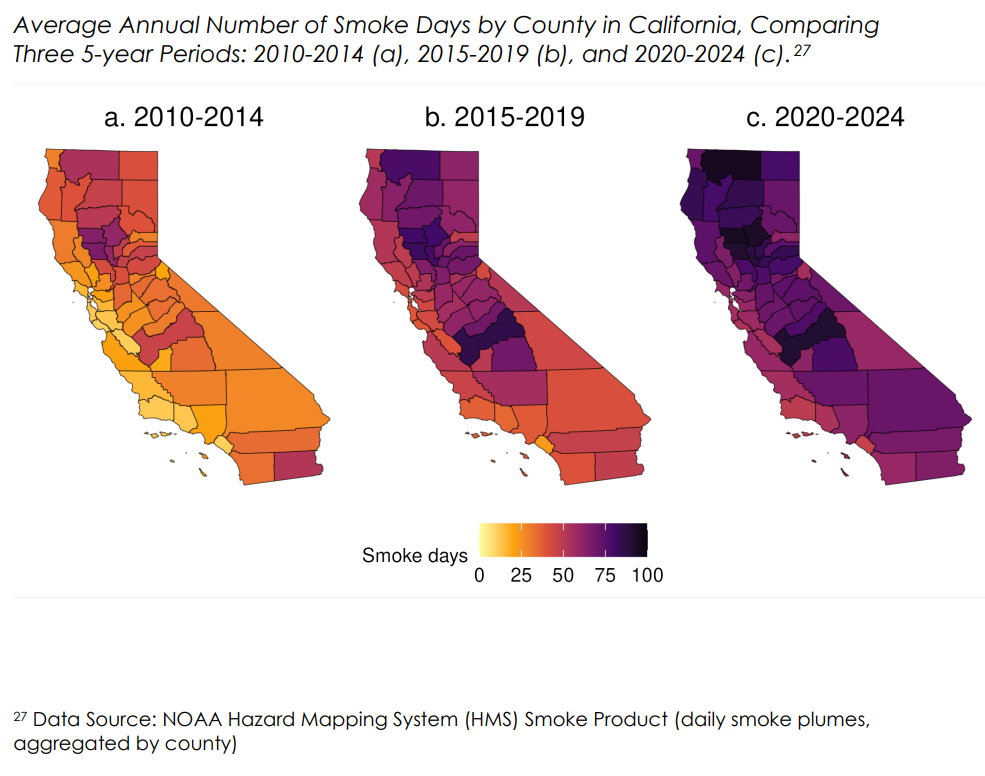 The report states California’s climate makes it naturally prone to wildfires, but climate change is increasing their frequency and severity. Several of the state’s largest and most destructive wildfires have occurred in recent years, creating public health, environmental, and economic challenges. Smoke, debris, and ash can contain hazardous substances and contaminate water, creating environmental health risks. Wildfires also disrupt access to healthcare, education and employment; increase housing insecurity; and strain support systems. These impacts are often more severe and longer-lasting for lower income communities.
Wildfire smoke contains fine particulate matter less than 2.5 micrometers in diameter (PM2.5) that can enter the lungs and bloodstream. Even short-term exposures to PM2.5 have been associated with increased risk of asthma exacerbations, respiratory illness, allergic reactions, stroke, and heart attacks, contributing to higher use of emergency care and hospitalizations.
In California, more counties have been impacted by wildfire smoke over time, with the average annual number of days with smoke per county more than doubling between 2010-2014 and 2020-2024 (Figure 50).
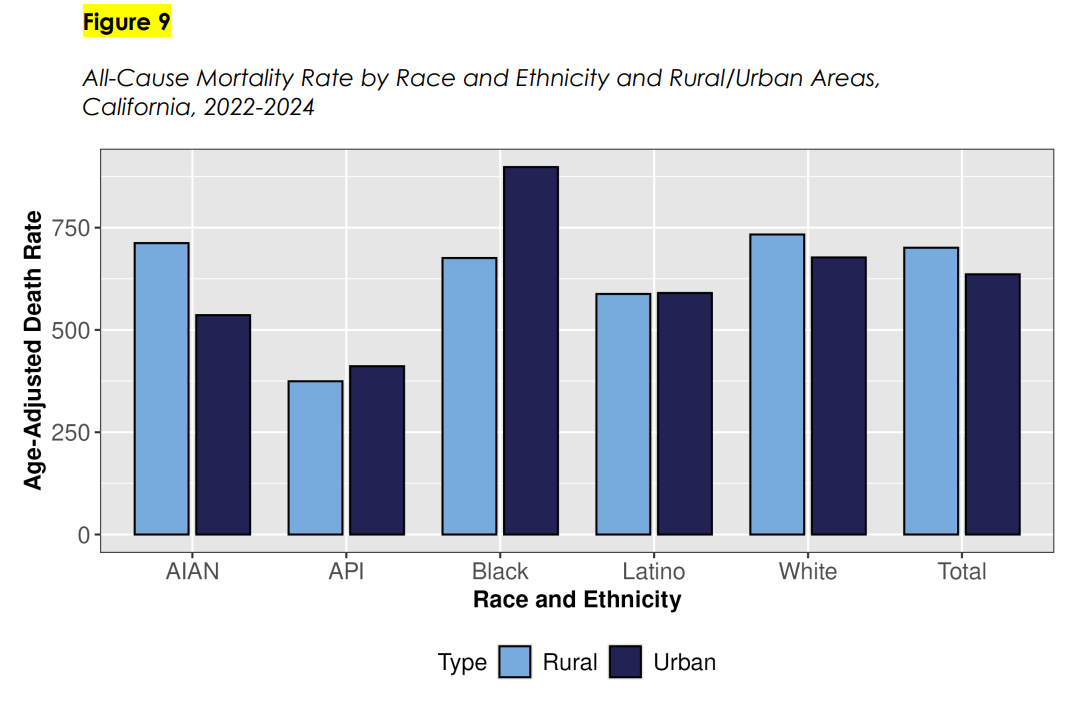
California, 2022-2024
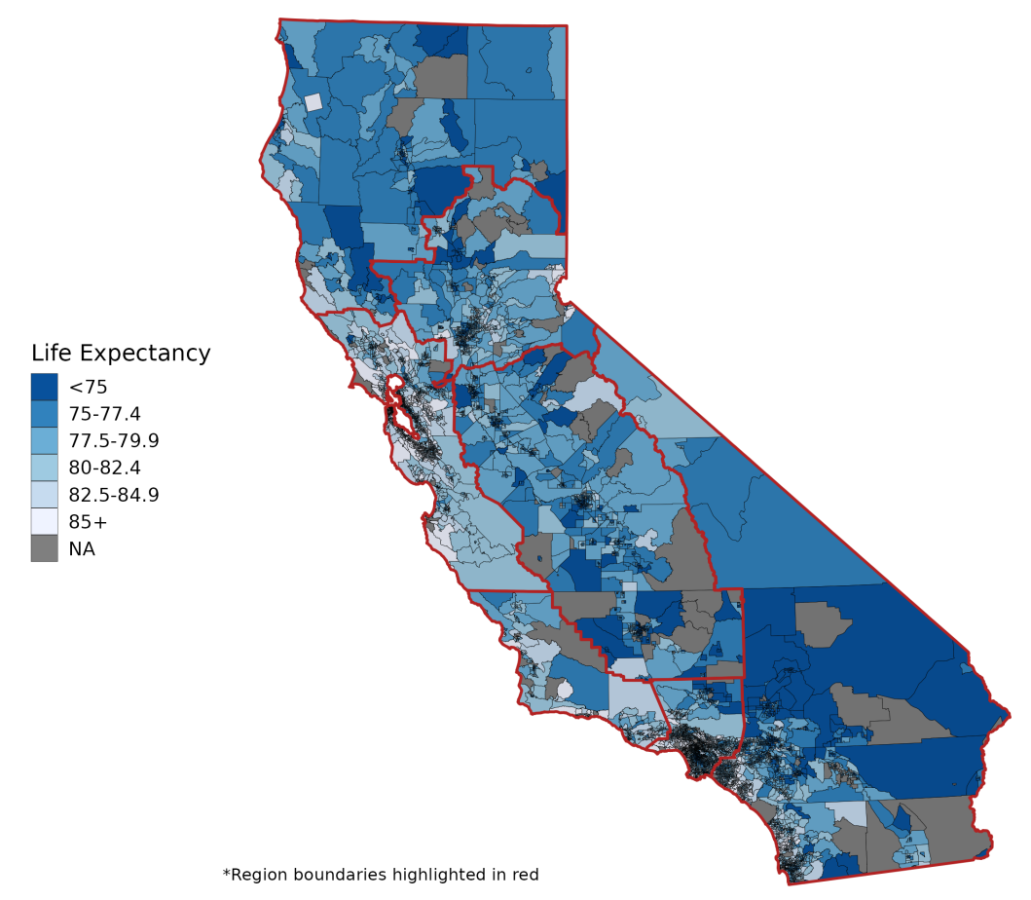
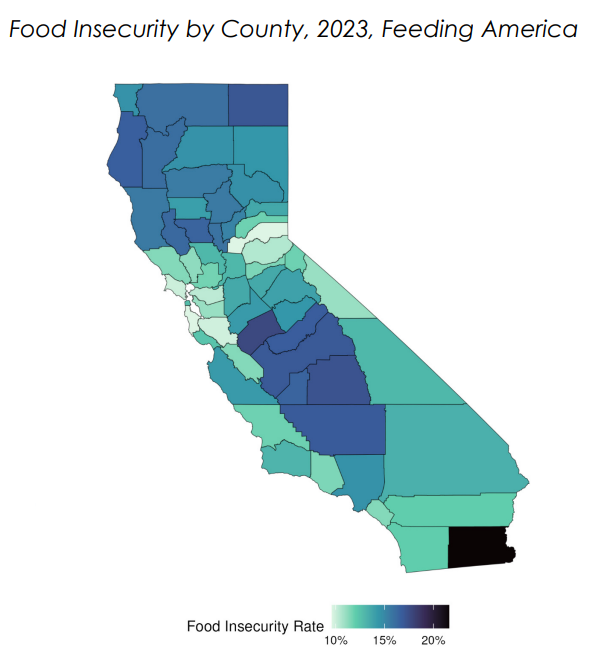
Some highlights of the 146 page report are that mortality rates are higher in rural areas (Figure 9). “Economic decline and disinvestment in rural communities contribute to higher rates of poverty among rural residents and increased barriers to protective factors that benefit health. Rural Californians also experience limited access to healthcare, particularly specialty providers, and fewer upward mobility opportunities. Socioeconomic disadvantage may contribute to increased stress and trauma, as well as rates of health risk behaviors such as smoking. These can be compounded by other challenges often present in rural areas, such as social and geographic isolation and limited public transportation options.” The report adds, “Due to these factors, rural populations often experience worse health outcomes compared to urban populations. Specifically all-cause mortality rates were around 17% higher in rural areas compared to urban areas in California. Patterns differed across racial and ethnic groups. For example, rates were higher among Black or African American individuals living in urban areas, while rates were higher among American Indian or Alaska Native and White individuals living in rural areas.”
Rates of most injury-related causes of death were higher in rural areas. Rates of deaths from road injuries, drug overdose, suicide, and alcohol-related conditions were 1.4 to 1.8 times higher in rural populations.
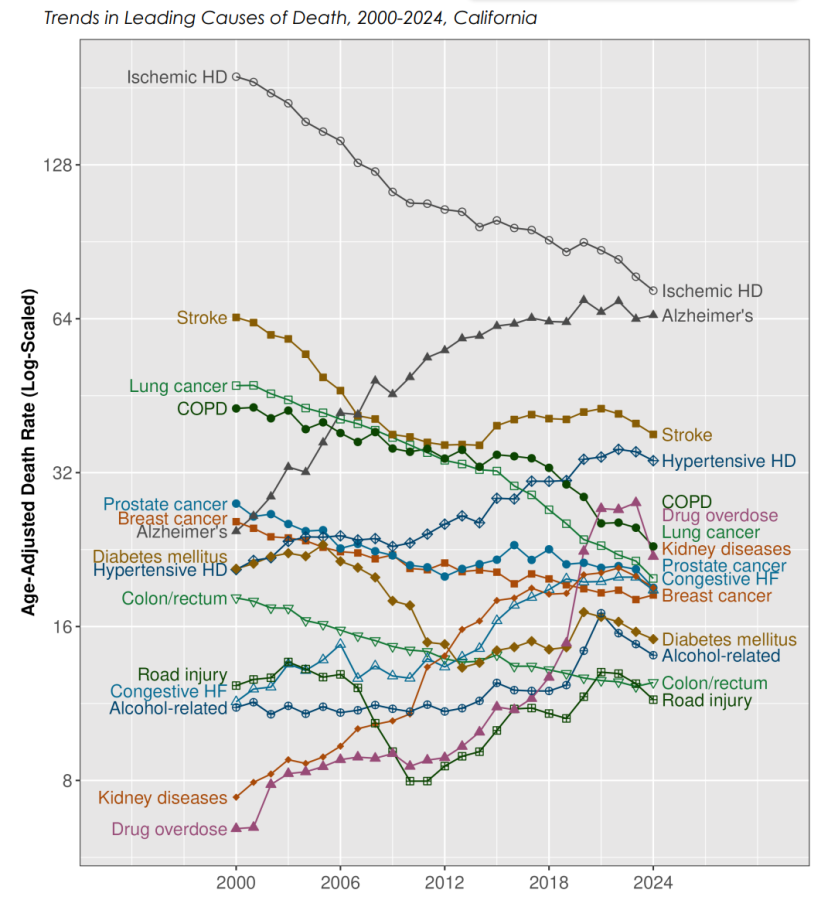
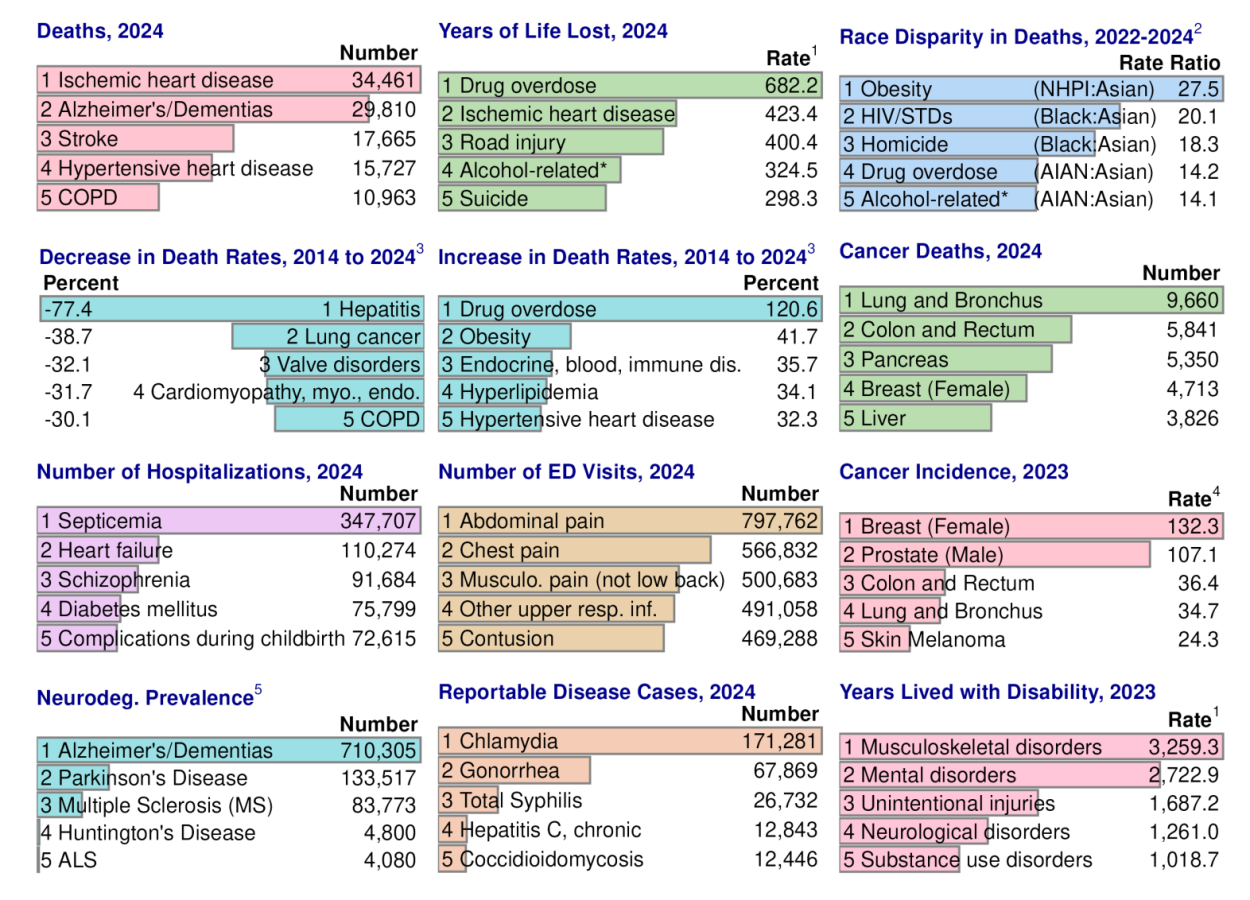
While lung cancer remains a leading cause of cancer death, its death rate has declined by 38.7% in the last 10 years.
Musculoskeletal pain was the leading cause of years lived with disability and 3rd leading cause of emergency department visits.
Hepatitis deaths decreased sharply over the past decade, reflecting new highly effective medication to treat hepatitis C, changes in drug use, updated screening and treatment guidelines, expansion of harm reduction, changes in healthcare seeking behaviors, and investments in public health services.
The most common reportable diseases are sexually transmitted diseases (STDs).
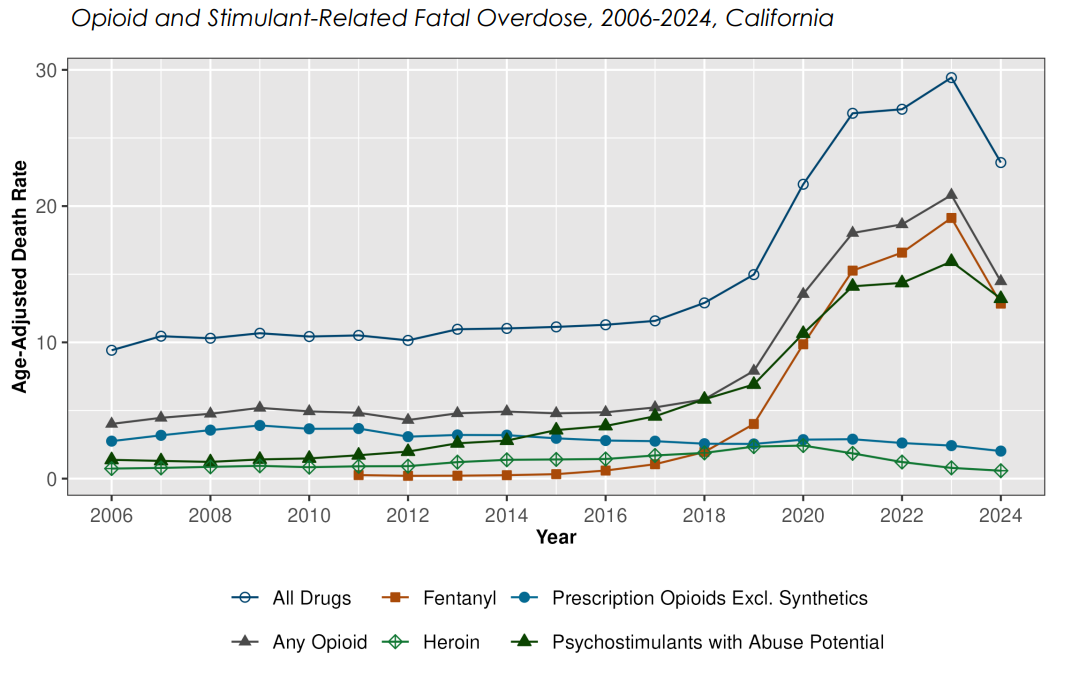
Men are disproportionately impacted by drug overdoses. The overdose death rate for men in 2024 was more than three times the rate for women.
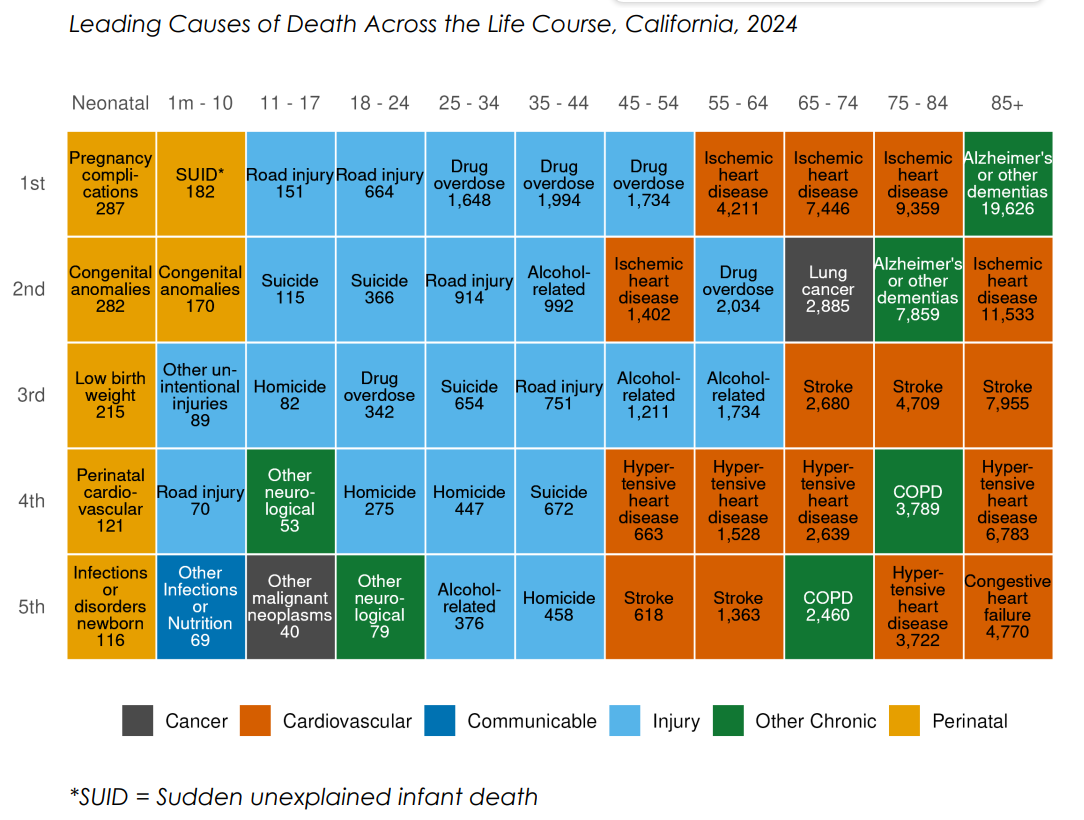
In 2024, drug overdoses were the leading cause of death among individuals aged 25-54, and among the top three leading causes among individuals aged 15-24 and 55-64. Individuals in the age groups 25-34 and 35-44 had the most drug-related overdose deaths where opioids and stimulants were both detected.
The full 2026 California State of Public Health Report is available online here.