




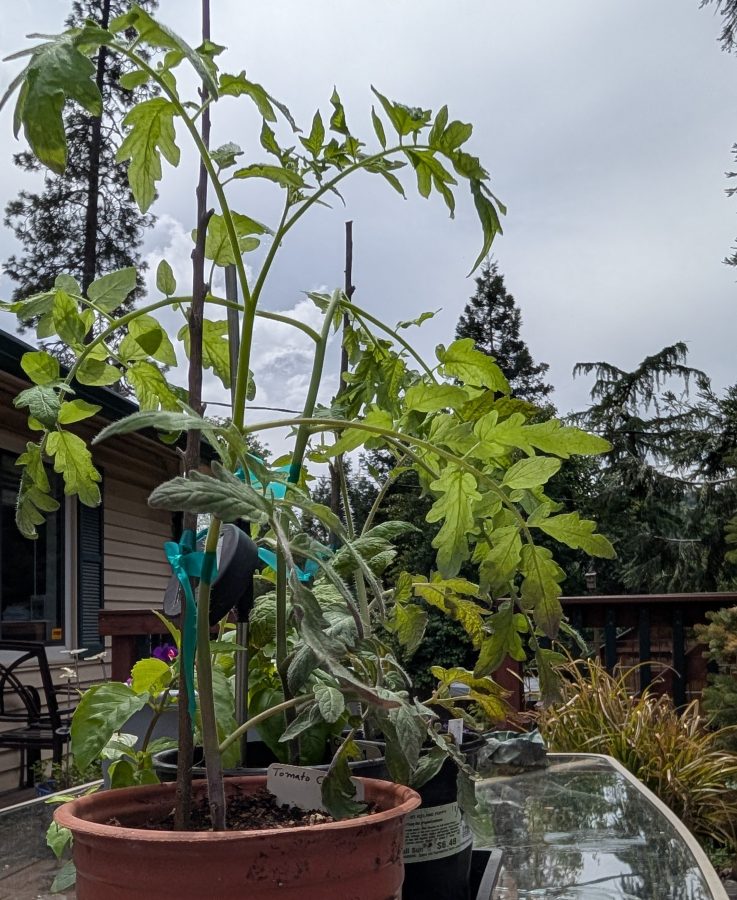
As we get ready for this year’s vegetable garden planting season, I begin thinking about summer heat. Pretty much every year in late July, my family slides into a tomato depression thinking that all those beautiful green tomatoes will never get ripe. It depresses me to even think about it. However, this year we are starting early, putting out what may turn out to be sacrificial tomatoes to get an earlier harvest. Even with all that drama, I will not give in to commercial cardboard tomatoes.
Where I live, we really have four distinct seasons and transitions are hard. Temperatures can vary wildly. Folk wisdom tells us that winter is not over until there is snow on the dogwood blossoms and experience has taught me the truth of that statement. We can’t plant tomatoes or squash before Mother’s Day, and frost can come early and hard in the fall. This means that our growing season can vary from 120 days to 160 plus. What can I say? I live in the mountains.
A lot of the vegetables we like need a fairly long growing season. So, our first challenge is time. Roma tomatoes, which we grow for tomato sauce, take 80 days from seedling to that fully ripened goodness. No sense in getting upset in July; it will be mid to late August before harvest.
A second issue is heat. In the Sierra foothills, summer temperatures in the mid 90’s to low 100’s are not that uncommon. Tomatoes, like most vegetables, like temperatures that range between 60 and 75 degrees. There has been a lot of research done on the effect of heat on plants. For example, I used to believe that hot sunny days were just the thing to speed up ripening, but temperatures above 86 degrees reduce the chemical reactions needed for the process. Heat also increases blossom end rot. Ninety-five-degree heat creates problems with pollen, blocking fertilization and preventing fruit production. The goldilocks zone of 60 to 75 degrees is again the key.
It sounds hopeless, but the mountains also offer solutions. Our cool nights create morning and evening time zones when plants grow very well. Daily temperature is a curve ranging from low to high and back. Plants have developed sophisticated systems to take advantage of rising and falling temperatures. We can help our veggies by taking advantage of these same systems.
Create a tiny microclimate by providing shade directly over your plants when the sun is right overhead during the heat of the day. As the sun angles down, shade is no longer effective, and plants receive the direct sun they need. Plants spend more time in the goldilocks zone, growing better and ripening faster. Only cover the area above the plant so you don’t block needed sunlight. (This might be a good use for those worn umbrellas you can’t bear to throw out.)
Jim Bliss is a University of California Cooperative Extension Master Gardener of Tuolumne County. UCCE Central Sierra Master Gardeners can answer home gardening questions, from rainwater tanks to drought-resistant plants.