




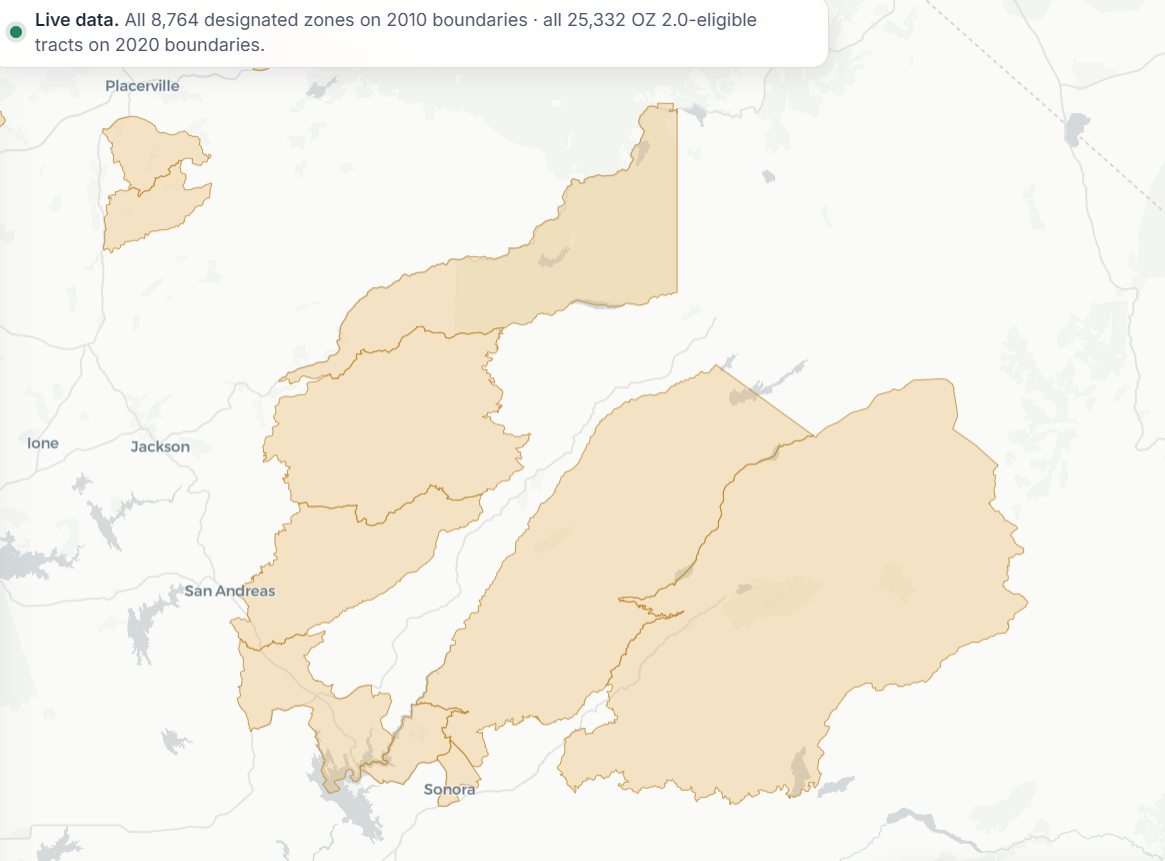
Sonora, CA — At the most recent meeting the Sonora City Council approved a resolution in support of becoming a federally designated Opportunity Zone. Opportunity Zones are economically distressed communities, defined by individual census tract, nominated by America’s Governors, and certified by the U.S. Secretary of the Treasury via the authority of the IRS. Under certain conditions, new investments in Opportunity Zones may be eligible for preferential tax incentives, including to defer or eliminate federal taxes on capital gains.
The City of Sonora’s approved resolution includes Census Tract 06109001200, encompassing Downtown Sonora and the surrounding area. The designation identifies the Tuolumne County Transportation Council as a coordinating authority. The City’s interest in the designation for Downtown Sonora, according to the resolution is “grounded in the opportunity to support reinvestment in older building stock, adaptive reuse, housing near jobs and services, walkable mixed-use development, small-business activity, historic downtown revitalization, and continued strengthening of Sonora’s role as the county’s civic, commercial, healthcare, and cultural center.” The resolution further states, “Downtown Sonora’s impact would be strengthened if paired with designation of other eligible Tuolumne County rural tracts, including nearby Columbia, because a broader regional designation can support linked investment in housing, workforce development, education, tourism, transportation access, airport-adjacent economic activity, and rural infrastructure and includes county land.”
At the Tuolumne County Board of Supervisor meeting on Tuesday the City’s Resolution was brought up in public comment by Mike Lemke. He spoke as a member of the Tuolumne County Development Process Workgroup noting the current Opportunity Zone designation has led to significant investments despite not being tailored to use in rural areas. The new designations do have specific framework for rural areas but the each state Governor can only pick a few. In California only 614 out of several thousand qualified census areas can be chosen. Several maps show Calaveras and Amador each have one qualifying area, Mariposa has two and there are several non-rural qualifying areas around Modesto, Stockton, Sacramento and Merced.
Lemke stated more is needed from the county to qualify for Opportunity Zone designation with at least a proclamation, record of action taken, or resolution. In Board Reports District 1 Supervisor Mike Holland noted the City of Sonora’s resolution and his support. District 1 encompasses Sonora, the other eligible areas are in Groveland which is represented by Stephen Griefer in District 4 and Columbia in Jaron Brandon’s District 5. Brandon shared he didn’t understand why the Jamestown area did not qualify. He was also in support, and stated he supports efforts to designate or hire someone one in the county to work “within the economic development sphere.”
Griefer noted he has been contacted by and said he is working with the Groveland Community Services District and “a couple other organizations to try and pull something together.” He noted the goal post was moved, indicating the governor’s office recently moved up the submission deadline five days from July 25, to July 20, 2026. The change was explained by the state as necessary to allow additional time for the Public Comment Period in August.
California currently has 879 Qualified Opportunity Zones with two in Tuolumne County as seen below. The zones were established under the Tax Cuts and Jobs Act of 2017. The new designations will remain for 10 years.
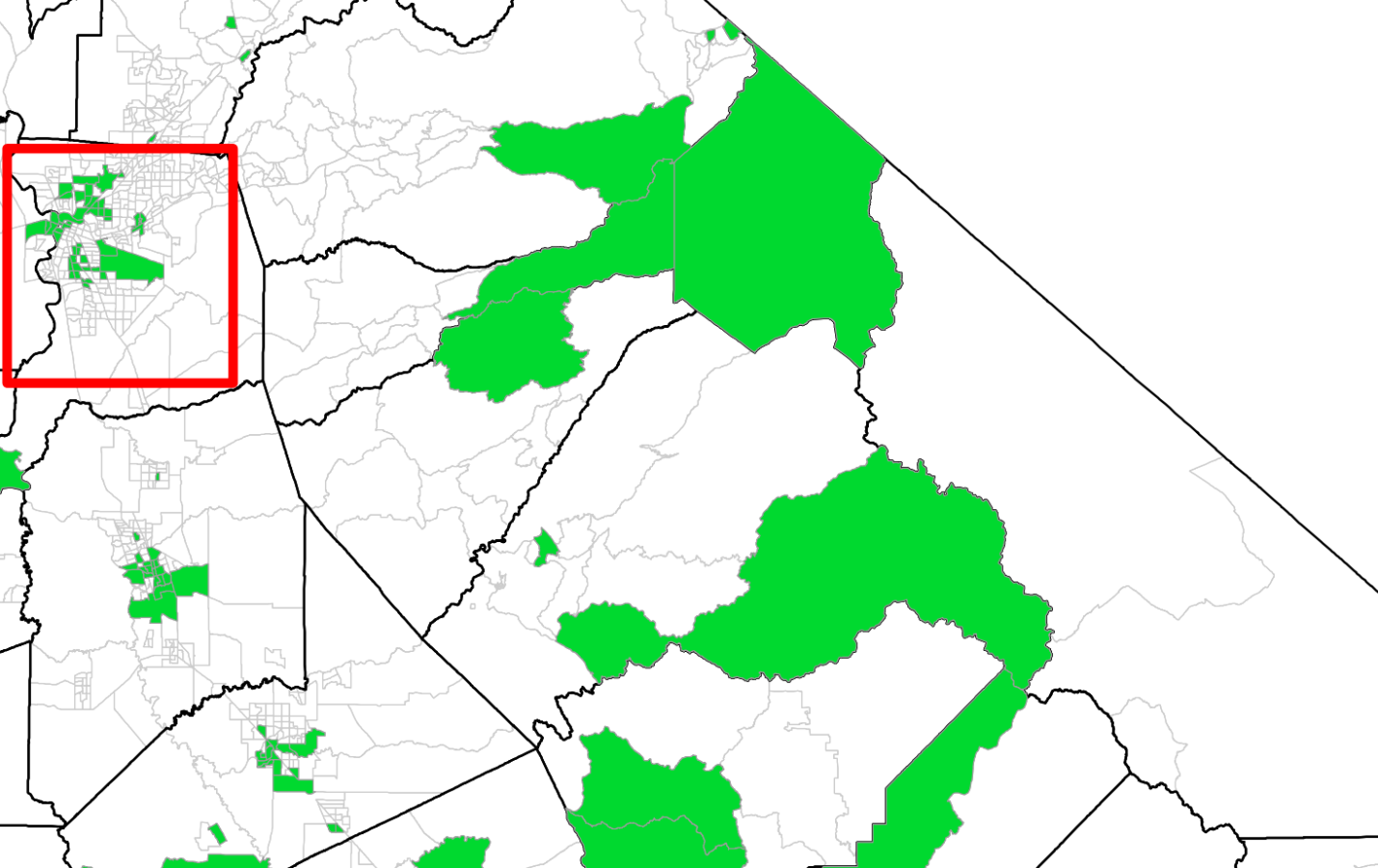
To determine if a property address is located within the boundaries of a New Opportunity Zone visit the U.S. Department of Housing and Urban Development’s map here.