




 View Video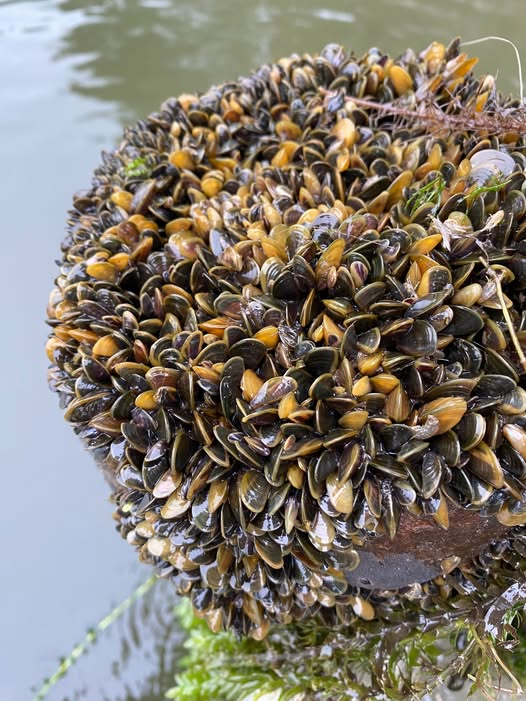
Tuolumne County, CA— Some lakes in the Mother Lode region have implemented restrictions for the 2026 boating season. Precautions are related to the danger that the small amounts of water inside boats can contain and spread golden mussels from one place to another.
Notably the restrictions below are in addition to current boating registration, current mussel fee sticker, proper safety equipment, and operators having a valid boating license.
New Melones Lake Marina is decontaminating boats for a fee, the Bureau of Reclamation requires all other boats launching at New Melones Lake participate in a 30 day seal program as detailed here. More information and to make an appointment go to the decontamination website. No walk-ins are allowed, fees are on a sliding scale from $50 to $200+ depending on the complexity of the watercraft with a non-refundable deposit of $50 at the time of booking and applied to the total price. The watercraft, Live wells and ballast tanks must be clean and dry upon arrival (no water can come out.) The Bureau of Reclamation partnered with Mussel Dogs, who employ canines specially trained to detect the quagga, zebra mussels, and their larva at New Melones last year.
Lake Tulloch the Calaveras side, as detailed by the Tri-Dam Project has no public access with specific home owners association (HOA) allowed only able to launch from designated launch sites under specific conditions. Boaters may take their vessel to New Melones, receive an approved decontamination, and then proceed to Tulloch Reservoir for same-day entry. A valid decontamination from New Melones will be honored at Tulloch. Launching from private properties or any unauthorized locations is strictly prohibited. The authorized watercraft may only launch after getting a Tri-Dam sticker from: Black Jack Bluff HOA, Calypso Bay HOA, Conner Estates HOA, Copper Cove HOA, Lake Tulloch Shores / Poker Flat HOA, and Peninsula Estates HOA. All watercraft launched in Tulloch Reservoir must display a current Tri-Dam sticker or have an been issued a day pass by New Melones. This is in addition to the State Department of Motor Vehicles (DMV) sticker that is proof of the State’s mussel fee payment.
Lake Tulloch/Tri-Dam only allows a one-way agreement after a decontamination appointment at New Melones for same-day entry to Tulloch. A 30-day quarantine band or re-entry band from New Melones does not qualify for entry at Tulloch. In addition all non-motorized users must complete this Self-Inspection Permit prior to launching including: Canoes, Kayaks, Car-top boats, Float tubes, Rafts, Wind surfers/boards, Boogey boards, paddle boats, and sail boats that are 8 feet or less in length.
Tri-Dam notes “Please be sure to call ahead to confirm availability of decontamination services. Additionally, ensure your vessel is properly recorded and eligible for launch in the national database by requesting a text or digital receipt at the time of service.”
The Tuolumne County side of Lake Tulloch remains closed as detailed here.
Beardsley as detailed here Beardsley Lake Boat Ramp was closed by Stanislaus National Forest officials for two months, April 15, through June 15, 2026 as requested by Tri-Dam. The Tri-Dam Project states on its web page under “Notification of Beardsley Boat Ramp Closure – 2026” that Beardsley Reservoir will “remain closed to recreational boating until further notice” as seen here.
Lake Don Pedro remains open to boaters, the Don Pedro Recreation Agency (DPRA) asks boaters to self-inspect their craft before entering the lake. The Don Pedro Recreation Agency requires that all boaters certify that their boats are cleaned, drained, and dry (free of Quagga and Zebra Mussels). Boaters may save time at the entrance station by printing and filling out a certification form here for presentation upon arrival at the lake.
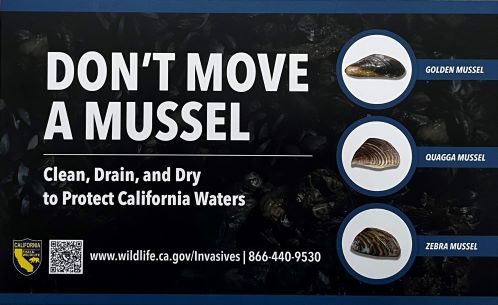
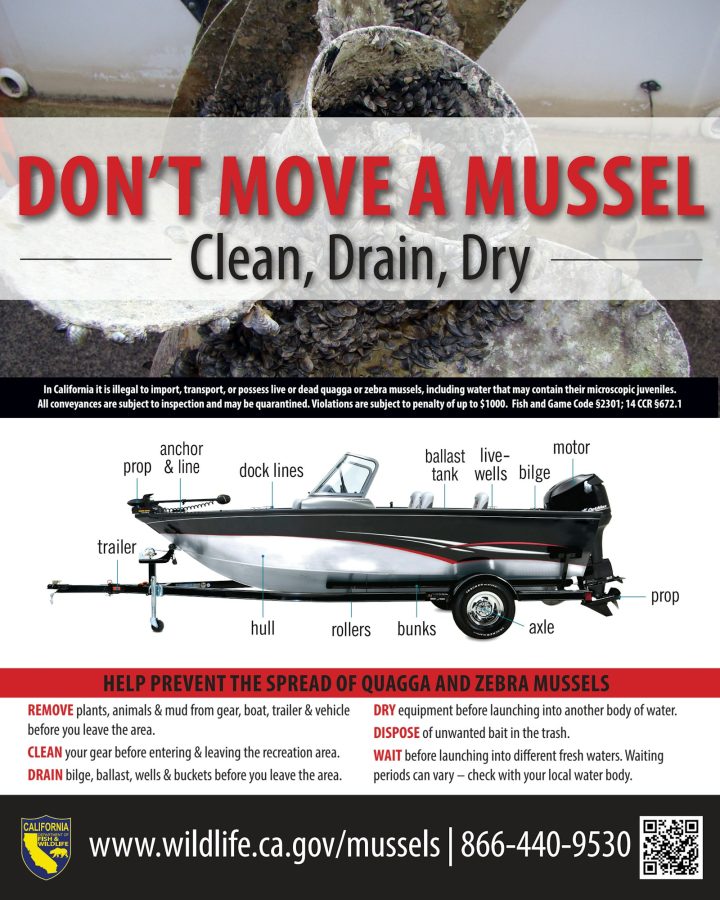 Pinecrest remains open with no boating restrictions at this time. Stanislaus National Forest officials ask for help in preventing the spread of invasive mussels noting the slogan “Don’t Move a Mussel! Clean, Drain, Dry!” The advice is to:
- CLEAN off visible aquatic plants, animals and mud from all equipment before leaving water access.
- DRAIN motor, bilge, livewell and other water containing devices before leaving water access.
- Clean boat and gear with hot water or DRY everything for at least five days.
Pine Mountain Lake remains open to local HOA members required to register boats and inspections required. Last year’s frequently asked questions is here.
Woodward Reservoir in the Oakdale area has motorized vessel (including jet ski) inspections and banding for a 30-day quarantine. All inspections will be available by appointment only, Tuesday through Thursday from 8:00 AM to 3:00 PM. All boats must be Clean, Drained, and Dry to qualify for inspection and banding. To make an appointment, please call (209) 848-3304
New Hogan Dam and Lake will be performing random vessel inspections for invasive mussels at Fiddleneck Day Use Area throughout the recreation season. Golden mussels have been identified within 30 miles of New Hogan Lake, classifying New Hogan Lake as a high-risk reservoir by the California Department of Fish and Wildlife. All vessels must be clean, drained, and dry prior to launching. Vessels that do not pass inspections will not be allowed to launch.
Pardee/Camanche Camanche Reservoir South Shore is open with inspection appointments and banding required by the East Bay Municipal Utility District (EBMUD). The North Shore and Pardee Reservoir are closed as detailed on the EBMUD website here.
Golden Mussel And Boating Inspection Authority Background
June 6 – June 14, 2026 is California Invasive Species Action Week (CISAW) to increase public awareness of invasive species in California and promote public participation year round in invasive species management. Details are in our events calendar here.
The US Department of Fish and Wildlife Service states that Golden mussels are native to China, Korea and Southeast Asia and were first discovered in California’s Sacramento-San Joaquin Delta in October 2024. The California Department of Fish and Wildlife (CDFW) states that Golden mussels pose a significant and immediate threat to the natural ecosystems, water conveyance systems, infrastructure and water quality in California and across the U.S. Golden mussels are similar in appearance, biology, and impacts to the invasive quagga and zebra mussels, but can establish in waters with low calcium levels and higher salinity than required by quagga and zebra mussels. The mussels have free-floating (planktonic) larvae that are microscopic and cannot be seen by the unaided eye. Mussels may clog water intakes and fish screens, impacting power plant operations and impeding distribution of municipal water supplies and agricultural irrigation. Golden mussels can also impact recreation by limiting recreational opportunities, encrusting docks and beaches, colonizing recreational equipment including watercraft hulls, engines, and steering components.
The most recent information from the CDFW is the April 14, 2025 Golden Mussel Response Framework. In summary since 2008, CDFW has invested over $43.9 million dollars to control the spread of quagga and zebra mussels. The framework calls those efforts “largely successful, with only two waterbodies believed to have become infested as a result of the overland transport of quagga mussels.” It also states the discovery of the golden mussel in the Delta presents “a considerably more challenging place to contain invasive mussels” and the framework stresses “action is imperative” to protect unconnected bodies of water in California and across the US.
The framework notes the Vessel Incidental Discharge Act (VIDA) that was passed by congress and signed into law December 4, 2018 by President Trump designating the U.S. Environmental Protection Agency (U.S. EPA) as the lead authority to establish national water quality standards for vessel discharges with the Coast Guard (USGS) enforcing national standards for vessels. According to the USGS website for small vessels and fishing vessels of any size, “The existing ballast water discharge requirements established through the EPA 2013 VGP and the USCG ballast water regulations, and any applicable state and local government requirements apply.”