




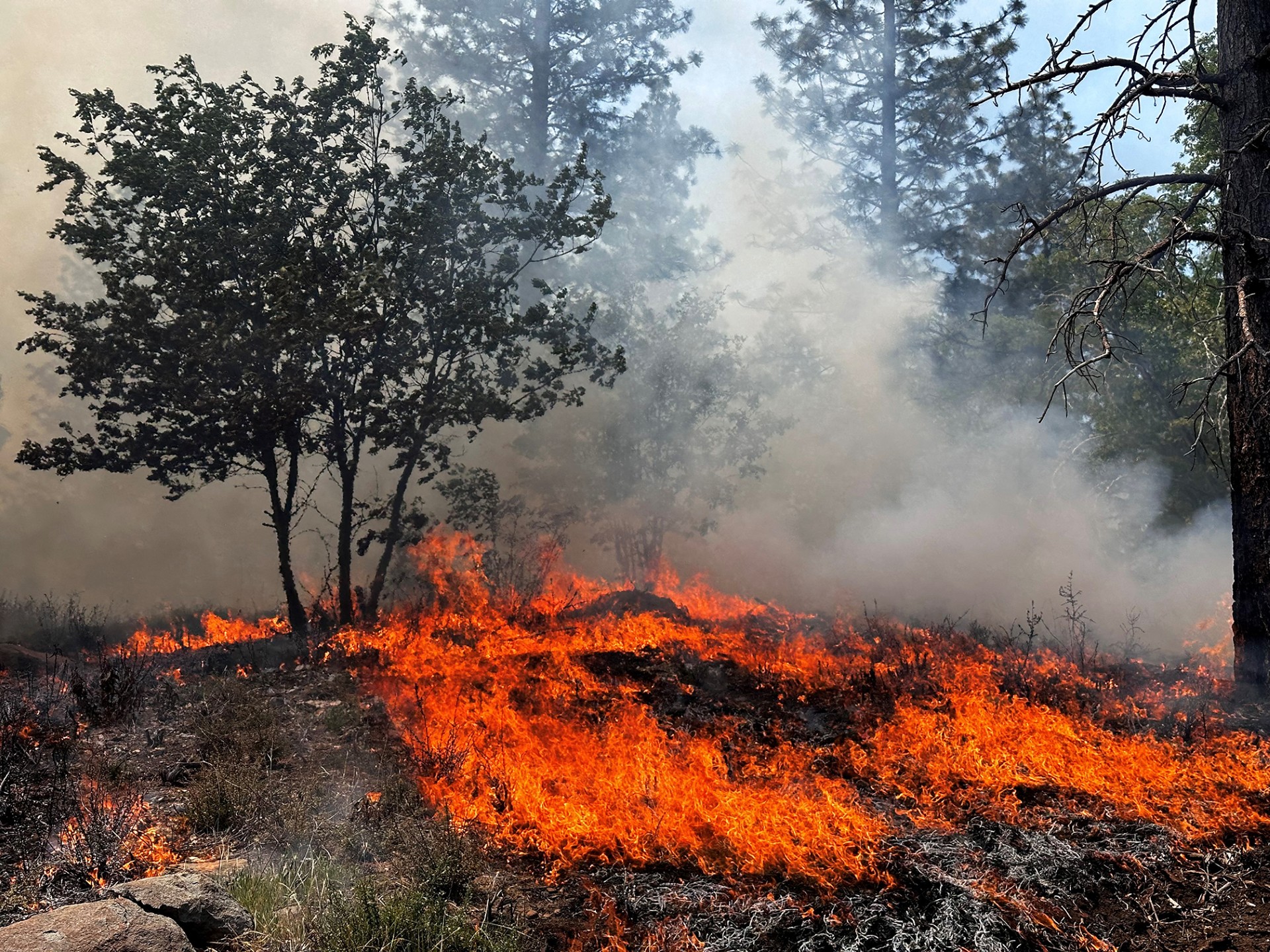
Sonora, CA – The Stanislaus National Forest plans to ignite more than 500 acres in the Calaveras Ranger District through the end of the month, taking advantage of the warm weather that creates good burning conditions.
The Irish Prescribed Burn is scheduled to begin on Monday, May 18, 2026, during daylight hours. The areas to be burned are north of Highway 4 between San Antonio Creek and O’Neil Creek along Forest Road 5N56 and Forest Road 5N52, with the planned units primarily residing within Township 5N, Range.
“The goal of this prescribed burn is to enhance public and firefighter safety by reducing the build-up of dead and down fuels. Reducing the threat of high-intensity wildfire while protecting watershed values and wildlife habitat by creating a mosaic pattern of vegetation,” noted forest officials.
Fire crews will set ablaze a total of 550 acres with low-intensity fire, with daily ignitions ranging from 50 to 200 acres, depending on climatic conditions and smoke output. Neighboring communities and those traveling Highway 4 will see smoke during or immediately after the burning, contingent on weather, fuel moisture, and air quality.
Forest officials provided these tips regarding prescribed burns:
- During prescribed burns, smoke may settle in low-lying areas overnight and in the early morning hours.
- To learn more about wildfire smoke, please visit the Stanislaus National Forest’s Smoke Ready page.
- All residents are encouraged to close doors and windows at night to avoid smoke impacts.
- If available, use a portable air cleaner. Air cleaners work best running with doors and windows closed. You can also create a DIY air cleaner.
- If you have a central air system, use it to filter air. Use high-efficiency filters if possible.
- When driving in smoky areas, drivers should slow down, turn on headlights and turn air to recirculating.
- If you have heart or lung disease, asthma, or other chronic conditions, pay attention to how you feel, and if symptoms of heart or lung disease worsen, consider contacting your health care professional.
- Visit When Smoke is in the Air for more smoke-preparedness resources.