




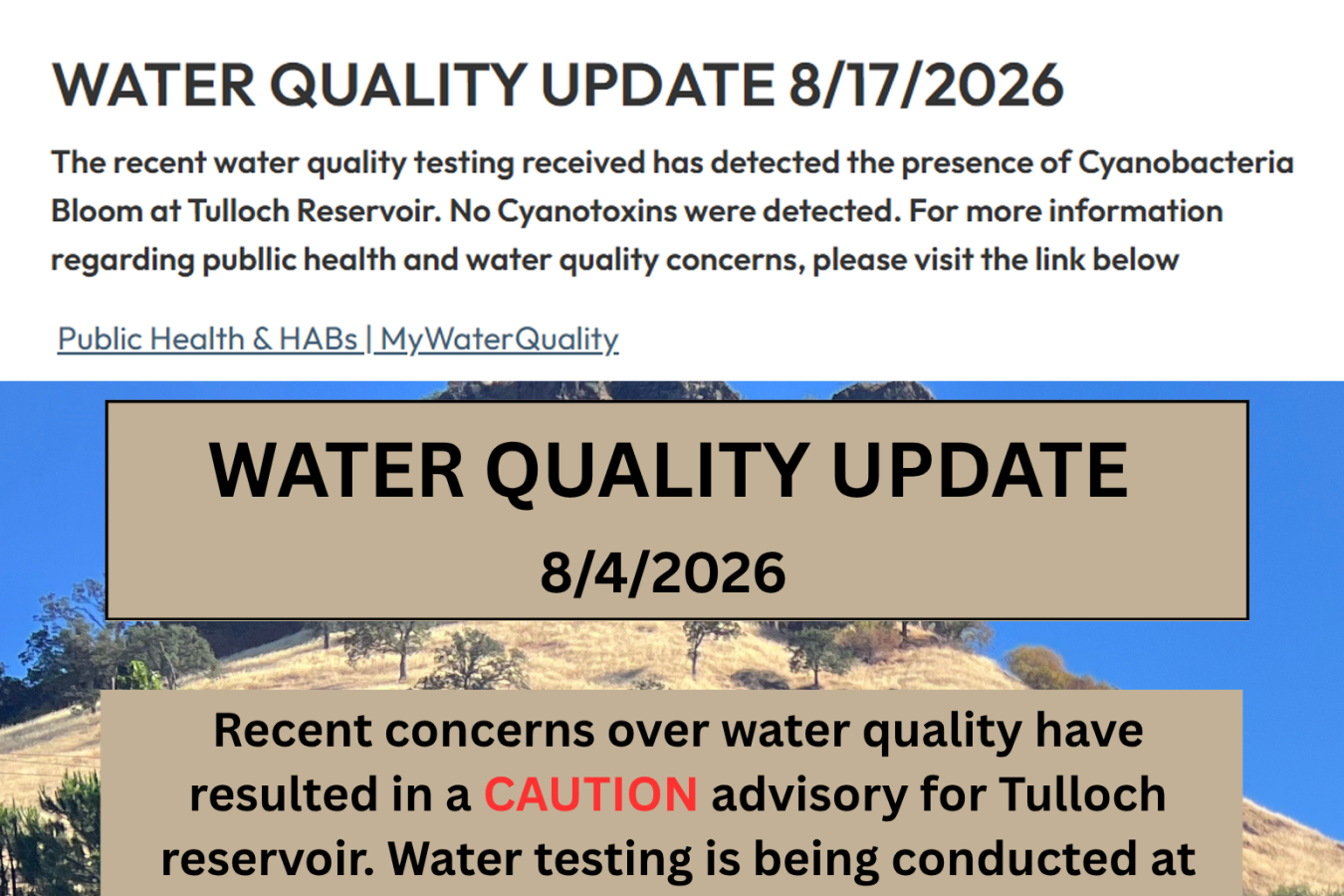
Copperopolis CA — Test results at Lake Tulloch detected Cyanobacteria also called blue-green algae but not Cyanotoxins. Calaveras County Water District (CCWD) reports drinking water quality has not been impacted.
Tri-Dam Project who handles recreation at Lake Tulloch for project partners, Oakdale Irrigation (OID) and South San Joaquin (SSJID) irrigation districts posted a water quality update after an August 4 update stated “Recent concerns over water qualify have resulted in a Caution Advisory for Tulloch reservoir.” The Caution advisory has six recommendations:
- You can swim in this water but stay away from algae and scum in the water.
- Do not let pets and other animals go into or drink the water, or eat scum on the shore.
- Keep children away from algae in the water and on the shore.
- Do not drink the water or use it for cooking.
- For fish caught here, throw away guts and clean fillets with tap water or bottled water before cooking.
- Do not eat shellfish from this water.
Water testing was conducted and an August 17 update states the test results detected the presence of a Cyanobacteria Bloom at Tulloch Reservoir. The update also states “No Cyanotoxins were detected.” Algal Blooms are more likely to occur at the end of hot and dry summers, California’s map for tracking reports is here with reports of the Caution Advisory at seven areas in Lake Tulloch appearing as yellow circles below. Currently Lake Tulloch is the only body of water with a recently reported bloom.
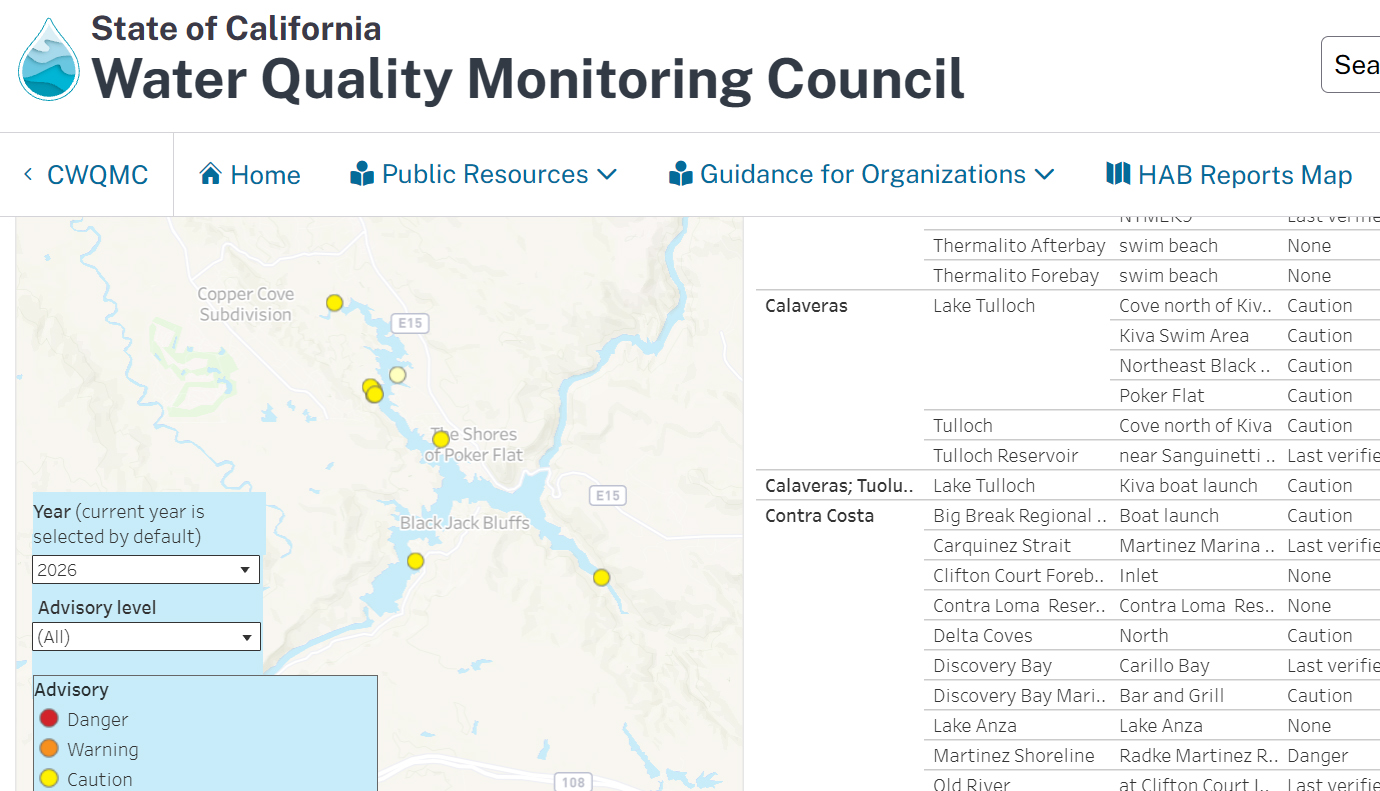
Source: mywaterquality.ca.gov/habs/resources/reports-map/ 8/20/26
California’s Water Quality Monitoring Council’s public health and HABs (Harmful Algal Bloom) information is at: mywaterquality.ca.gov/habs/resources/public-health. A blog with information is also available here, and in 2020 New Melones was monitored as detailed here.
A statement from CCWD released on August 14 shares, “CCWD continuously monitors, tests, and treats water throughout its systems to protect public health. Recent testing of raw water from Lake Tulloch, which supplies CCWD’s Copper Cove Water Treatment Plant, found non-detect levels of cyanotoxins, the toxins that can sometimes be associated with harmful algal blooms (HABs).”
Damon Wyckoff, Director of Operations for CCWD says, “Providing safe, high-quality drinking water is our highest priority.” Wyckoff further states, “Recent testing confirmed non-detect levels of cyanotoxins in our raw water supply, and customers can remain confident in the safety and reliability of the water delivered to their homes and businesses.”
The CCWD statement further details, “While algae can occur naturally in lakes, rivers, and reservoirs, public drinking water systems utilize treatment, monitoring, testing, and regulatory oversight to protect public health. Even if cyanotoxins were detected in source water, CCWD’s treatment and monitoring programs provide multiple layers of protection to ensure drinking water delivered to customers continues to meet state and federal drinking water standards.”